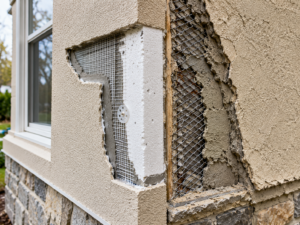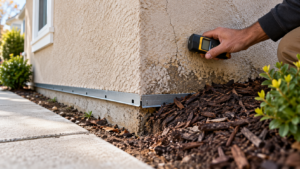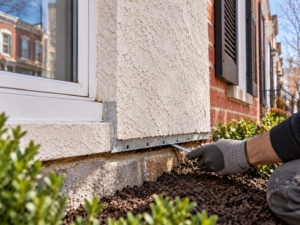

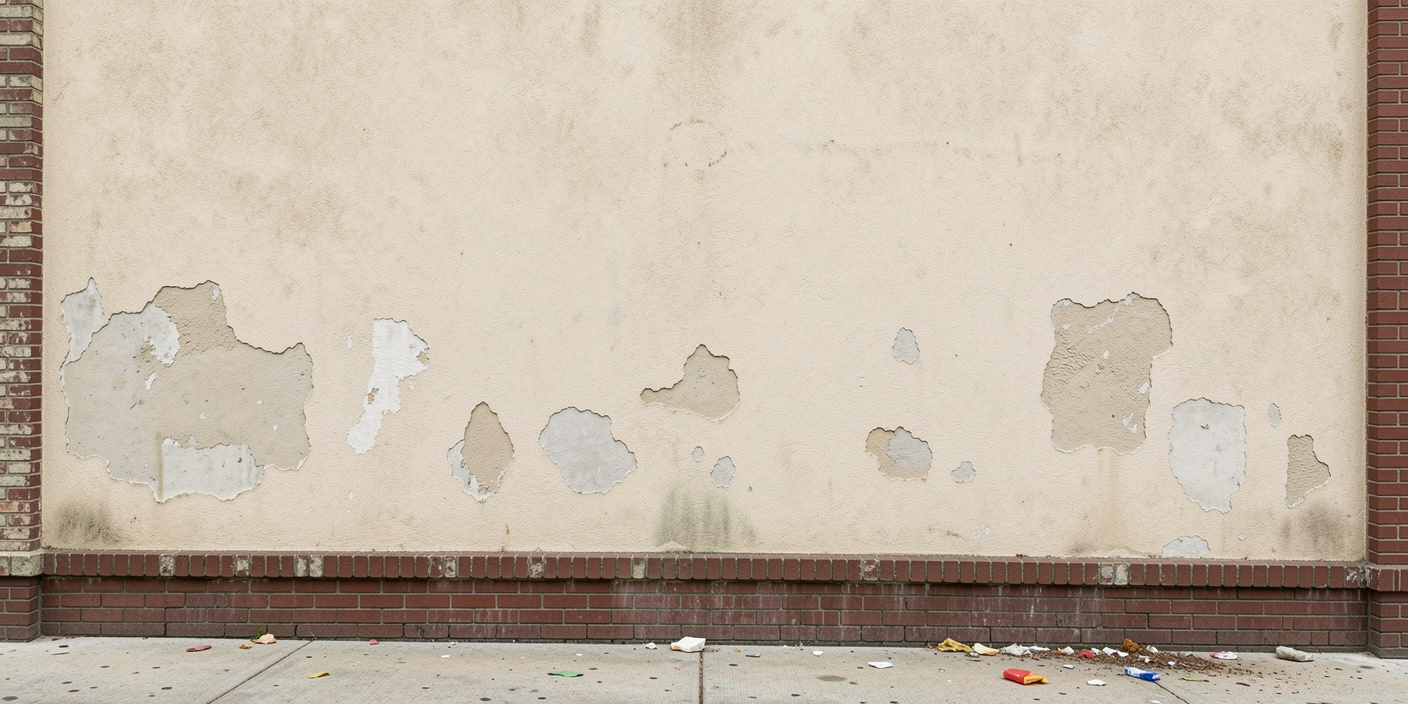
White staining on stucco is often labeled efflorescence, but appearance alone does not prove the cause. Mineral deposits can move with moisture through cement-based materials, while runoff, chalking coatings, and residue can create similar marks.
Read the Problem Before Choosing the Material
Roxborough and Manayunk exteriors can be exposed to roof runoff, sloped sites, masonry transitions, and wind-driven rain. Stains below sills, coping, roof edges, or cracks should be evaluated in relation to those upper water sources.
Local Construction Adds These Constraints
Look at where the stain begins, whether it changes after rain, and whether cracking or sealant failure is nearby. If soluble salts are moving through the wall, the deposit is evidence of a moisture path rather than the primary defect.
Coordinate These Items Before Installation
Aggressive pressure washing or harsh chemicals can damage some stucco finishes and drive water deeper into porous surfaces. Cleaning methods and coatings should be compatible with the existing system.
The Practical Standard for a Better Result
If staining returns after cleaning, shift the investigation toward windows, parapets, flashing, roof runoff, cracks, and the wall’s drainage path instead of repeating cosmetic treatment.
Frequently Asked Questions
Is efflorescence harmful to stucco?
The deposit itself is often a symptom, but recurring moisture movement may indicate conditions that deserve attention.
Can white stains be pressure-washed away?
High pressure can damage some stucco and coatings, so the cleaning method should fit the material and condition.
Will repainting stop efflorescence?
Not when moisture is still moving through the wall. The source should be evaluated before coating.
Plan the Next Step
Philadelphia Stucco Experts can inspect staining patterns, cracks, openings, and wall transitions to determine whether the repair is cosmetic or moisture-driven.
Helpful source: U.S. EPA – Mold and Moisture