
Homeowners usually inspect stucco at eye level.
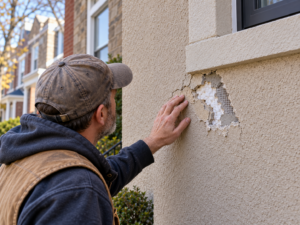
They notice cracks, staining, discoloration around windows, and visible patches.
The lowest edge of the wall receives far less attention.
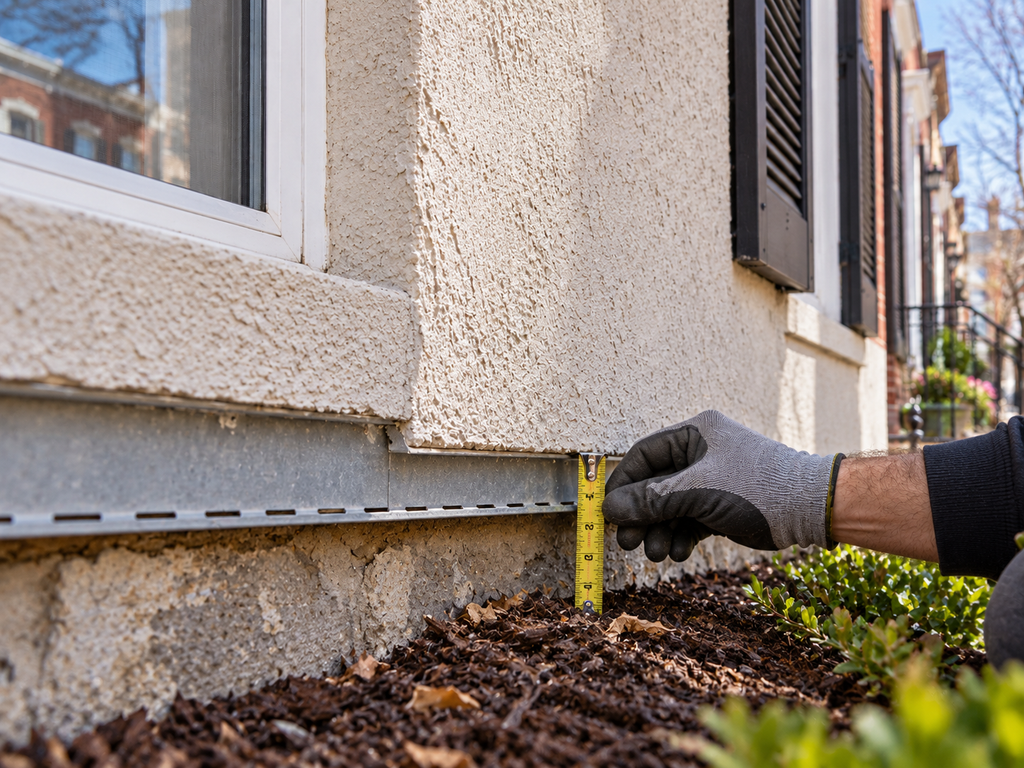
Yet in many stucco assemblies, the base termination is an important part of how incidental moisture can exit the wall system.
When the bottom is buried, sealed incorrectly, blocked by landscaping, or altered during later construction, drainage conditions may change.
Stucco Is Part of a Wall Assembly
Stucco is not simply a decorative coating applied over a house.
Traditional hard-coat systems normally work with underlying water-resistive and drainage components intended to manage moisture that gets behind the exterior surface.
Philadelphia Stucco Experts’ stucco repair and moisture-remediation services focus on evaluating the system rather than treating every visible defect as a surface-only problem.
What Is a Weep Screed?
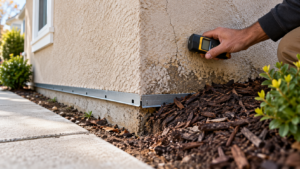
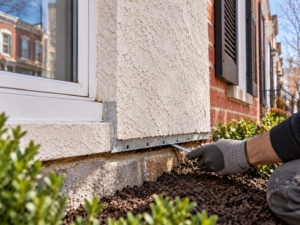
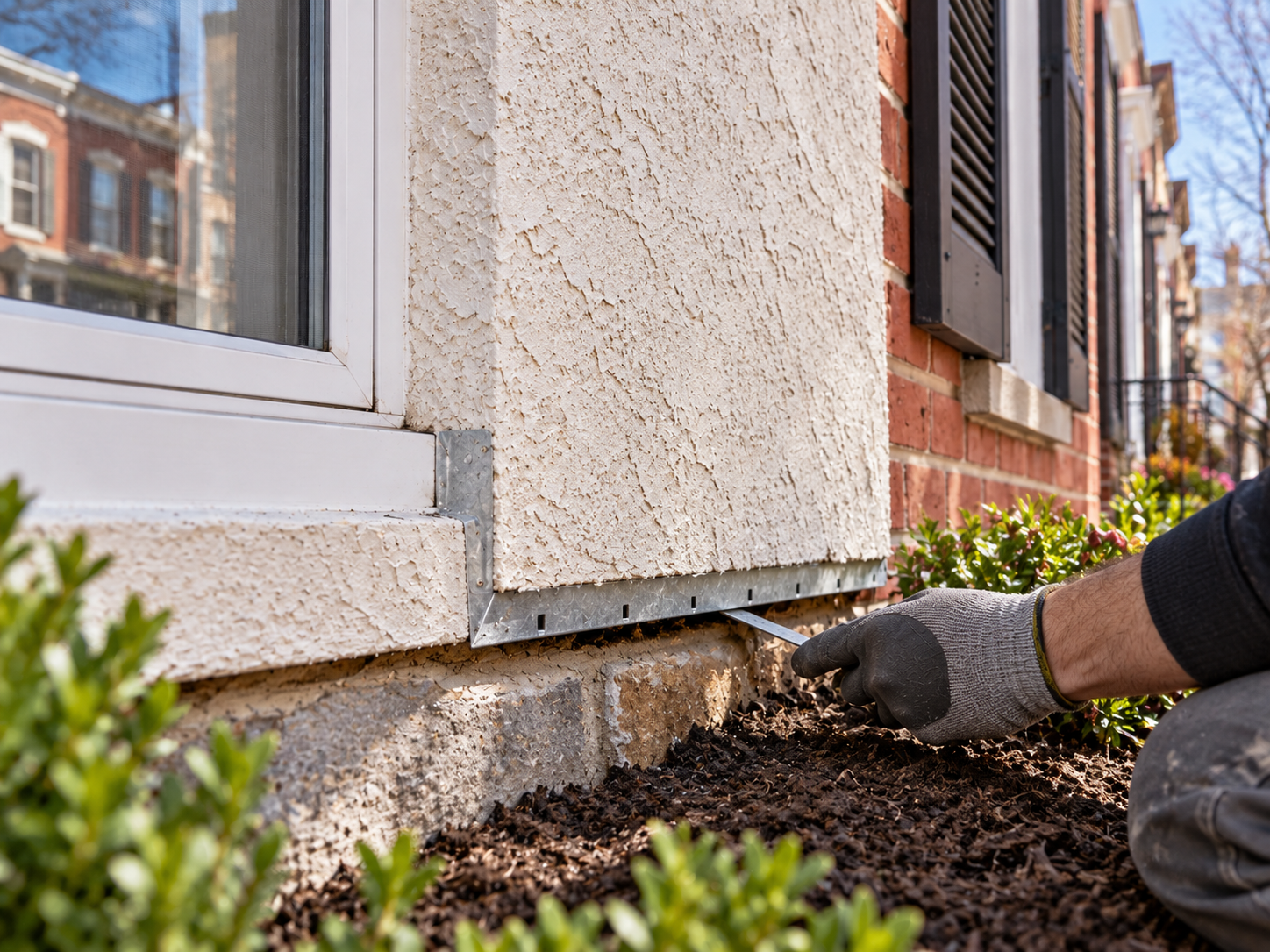
In applicable stucco assemblies, a weep screed is a termination component located near the bottom of the wall.
It helps create a defined edge for the plaster while allowing drainage from behind the stucco.
The exact component, clearance, and installation requirements depend on the wall system and applicable code.
Not every older building will have a modern detail that looks the same.
That is why existing conditions need to be identified before repair recommendations are made.
Landscaping Can Hide the Termination
Soil, mulch, patios, decks, and later hardscaping can gradually cover the bottom of a stucco wall.
When this happens, the termination may become difficult to inspect.
Organic material can also hold moisture against the wall.
Restoring appropriate clearance may be part of exterior maintenance, depending on the system.
Paving and Concrete Can Change Drainage
A patio or walkway added years after the stucco installation can raise the exterior grade.
The new surface may cover the original drainage edge or direct splashback onto the lower wall.
Repairing stained or damaged stucco without evaluating the adjacent paving can miss an important contributing condition.
Do Not Seal Every Opening at the Bottom
Homeowners sometimes assume that every opening should be caulked shut to keep water out.
But drainage components need pathways to function.
Indiscriminately filling designed drainage gaps with sealant may interfere with the assembly.
Before sealing an unfamiliar joint, determine whether it is a defect or an intentional part of the system.
Lower-Wall Damage Can Have Multiple Causes
Cracking or deterioration near the base of a stucco wall does not automatically prove the drainage termination is defective.
Impact damage, foundation movement, splashback, salt exposure, incompatible repairs, soil contact, and other conditions may also contribute.
The visible pattern needs to be interpreted in the context of the building.
Repair Should Restore the Assembly
If the termination has been damaged or buried, the repair may require more than applying new finish coat.
Depending on conditions, stucco may need to be selectively removed so underlying materials and edge details can be evaluated.
The replacement should integrate with the existing water-management strategy rather than simply conceal it.
Substantial exterior repairs may also involve local permit or code considerations. Philadelphia homeowners can review municipal information through the city’s building and repair permit guidance.
Look at the Entire Wall From Top to Bottom
Stucco diagnosis works best when contractors consider the full drainage path.
Water may enter higher on the wall around a window, roof intersection, penetration, or crack and travel downward before appearing at the base.
A lower-wall symptom does not necessarily mean the source is located nearby.
FAQ
Does every stucco home have a visible weep screed?
No. Construction varies by age, stucco system, and building configuration.
Should the bottom of stucco touch soil?
Appropriate clearance depends on the system and applicable requirements, but prolonged soil contact can create moisture concerns.
Can I caulk the bottom edge of the wall?
Do not seal an opening until you know whether it is intended to provide drainage.
Why is my stucco damaged only near the ground?
Splashback, grade conditions, drainage, impact, salts, and other moisture conditions may contribute.
If staining, cracking, or deterioration is concentrated near the bottom of a stucco wall, Philadelphia Stucco Experts can evaluate whether the visible problem connects to the wall’s drainage and termination details.