
Stucco is designed to get wet. Rain soaks into the cement layers, runs down behind them along the weather-resistive barrier, and is supposed to exit at the bottom of the wall. That exit point is the weep screed, a perforated metal or vinyl trim installed at the base of the stucco. When the weep screed is missing, buried, or blocked, water has nowhere to go.
In Philadelphia and its suburbs, many stucco homes built or re-clad over the past few decades show the same pattern: cracking, staining, and soft sheathing concentrated along the bottom few feet of the wall. Often, the cause is right at ground level.
1. What the Weep Screed Does
- Drainage Exit: Lets water that gets behind the stucco drain out at the base of the wall.
- Termination Edge: Provides a clean, straight bottom edge for the stucco system.
- Separation from Grade: Keeps the stucco from wicking moisture directly out of soil, mulch, or concrete.
2. Clearance Requirements and Common Mistakes
Weep Screed Inspection Checklist:
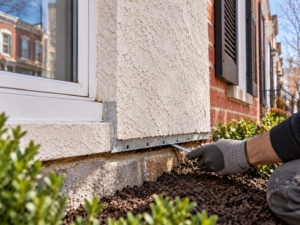
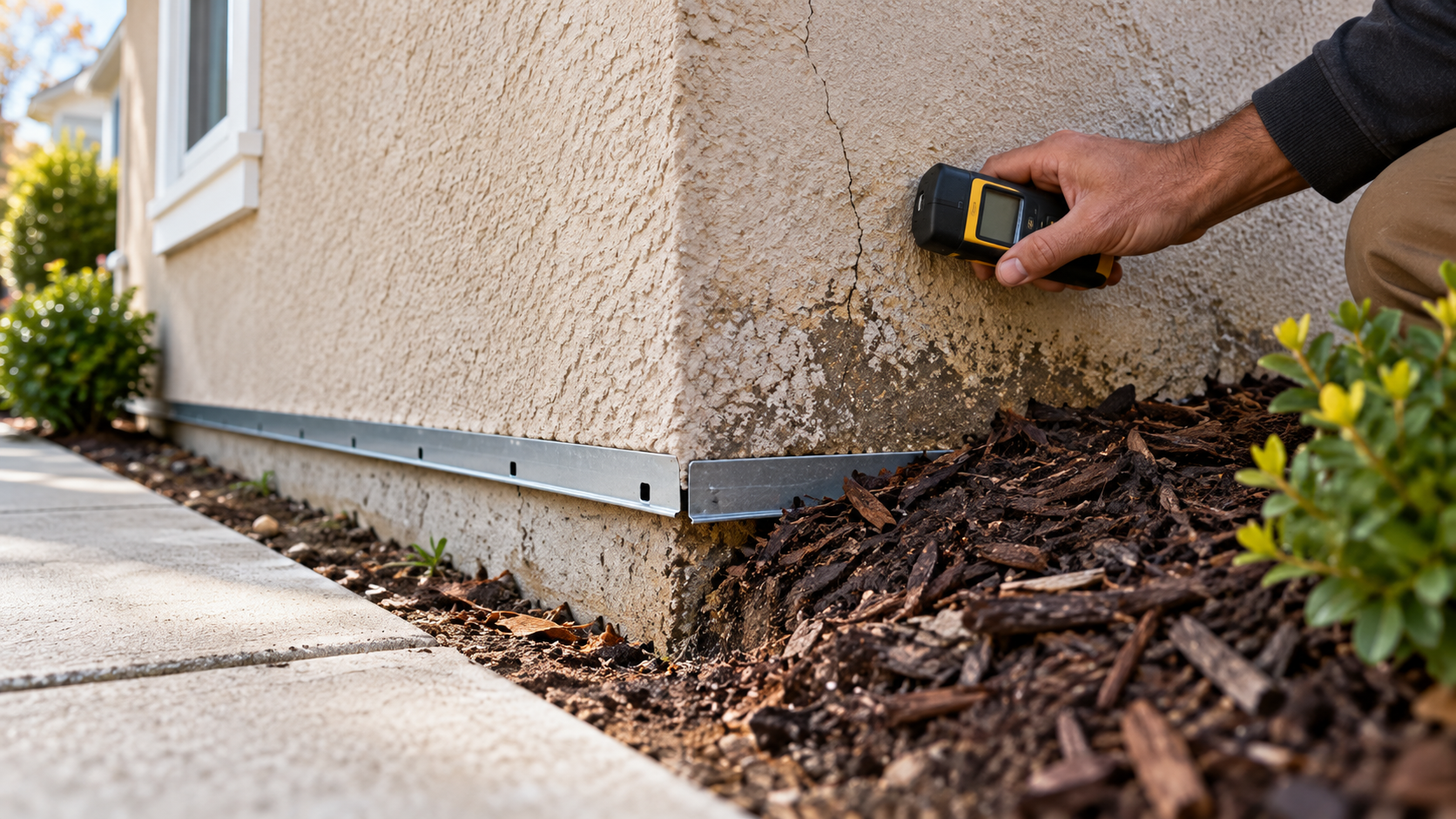
- Clearance Above Earth and Paving: Residential building codes generally require the weep screed to sit at least 4 inches above soil and at least 2 inches above paved surfaces such as patios, sidewalks, and driveways.
- Buried Screeds: Landscaping, raised mulch beds, and new patios often bury the weep screed over time, sealing the drainage path.
- Stucco Run to Grade: Older or poorly installed systems may have no weep screed at all, with stucco extending straight into the ground or onto a concrete slab.
- Sealed Weep Openings: Paint, sealant, or stucco patching that closes the screed openings blocks drainage.
3. Warning Signs of Trapped Moisture
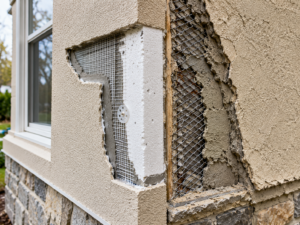
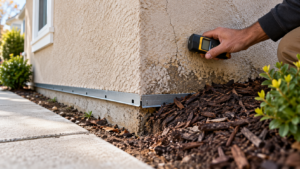
Look for dark staining or efflorescence along the bottom of the wall, cracks that run horizontally a few inches above grade, stucco that sounds hollow when tapped, and soft or damp drywall and baseboards on the inside of exterior walls. Moisture probe testing at the base of the wall can confirm whether water is accumulating before visible damage spreads.
4. Repair Approaches
Depending on the condition of the wall, repairs may include regrading soil and lowering mulch beds, cutting back stucco and installing a new weep screed, or removing and rebuilding the lower section of the wall with a proper drainage system. If sheathing or framing is damaged, the scope expands. Structural repairs and larger re-cladding projects may require permits, so review current Philadelphia building permit guidelines when planning the work.
Addressing the base of the wall early is one of the most cost-effective ways to protect a stucco home. Explore our stucco repair services to schedule an inspection with Philadelphia Stucco Experts.