
From the sidewalk, EIFS and traditional stucco can look almost identical. Both have a textured, cement-like finish, and both appear on homes and commercial buildings across Philadelphia and its suburbs. But they are very different wall systems underneath. They handle water differently, they fail in different ways, and they need different repair materials.
Knowing which one you have is the first step before any stucco repair, inspection or remediation. This guide explains the difference, the simple field checks that point to one or the other, and why using the wrong repair approach can make a moisture problem worse.
What Traditional Stucco Is
Traditional stucco, often called hard-coat stucco, is a cement-based plaster. It has been used for well over a century.
A typical traditional stucco wall includes:
•The substrate: masonry, or wood framing with sheathing.
•A water-resistive barrier over sheathing on framed walls.
•Metal lath fastened to the wall to hold the plaster.
•Cement plaster coats: traditionally a scratch coat, brown coat and finish coat, though one-coat systems also exist.
•Accessories: weep screeds at the bottom of the wall, control joints and casing beads around openings.
The result is a hard, heavy, rigid surface. Traditional stucco is applied directly on masonry in many older Philadelphia buildings, and over lath and sheathing on framed homes.
What EIFS Is
EIFS stands for Exterior Insulation and Finish System. It is sometimes called “synthetic stucco,” but that name is misleading. The EIFS Industry Members Association represents manufacturers of these systems, which generally consist of:
•Insulation board, usually expanded polystyrene foam, attached to the wall.
•A reinforced base coat with embedded fiberglass mesh.
•A textured finish coat, typically acrylic-based.
There are two broad types:
•Barrier EIFS, an earlier design that relies on the outer surface and sealant joints to keep all water out.
•Drainage EIFS, which adds a water-resistive barrier and a drainage path behind the foam so water that gets in can drain out.
Simple Ways to Tell the Difference
These checks can point you in the right direction. None is definitive on its own, and some hybrid systems can confuse the results.
The tap test
Tap the wall firmly with your knuckles. Traditional stucco usually sounds solid, like concrete. EIFS often sounds hollow because of the foam board behind the thin outer layers.
The press test
Press firmly with your thumb. Traditional stucco does not give at all. EIFS may give slightly because of the foam underneath.
Look at the bottom edge
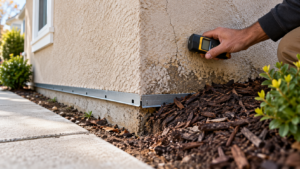
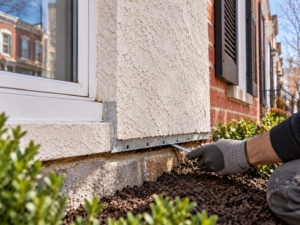
Traditional stucco on framed walls typically ends at a metal weep screed near the foundation. EIFS often terminates with a wrapped mesh edge or a different flashing detail.
Look at damaged spots and cut edges
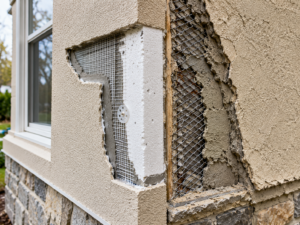
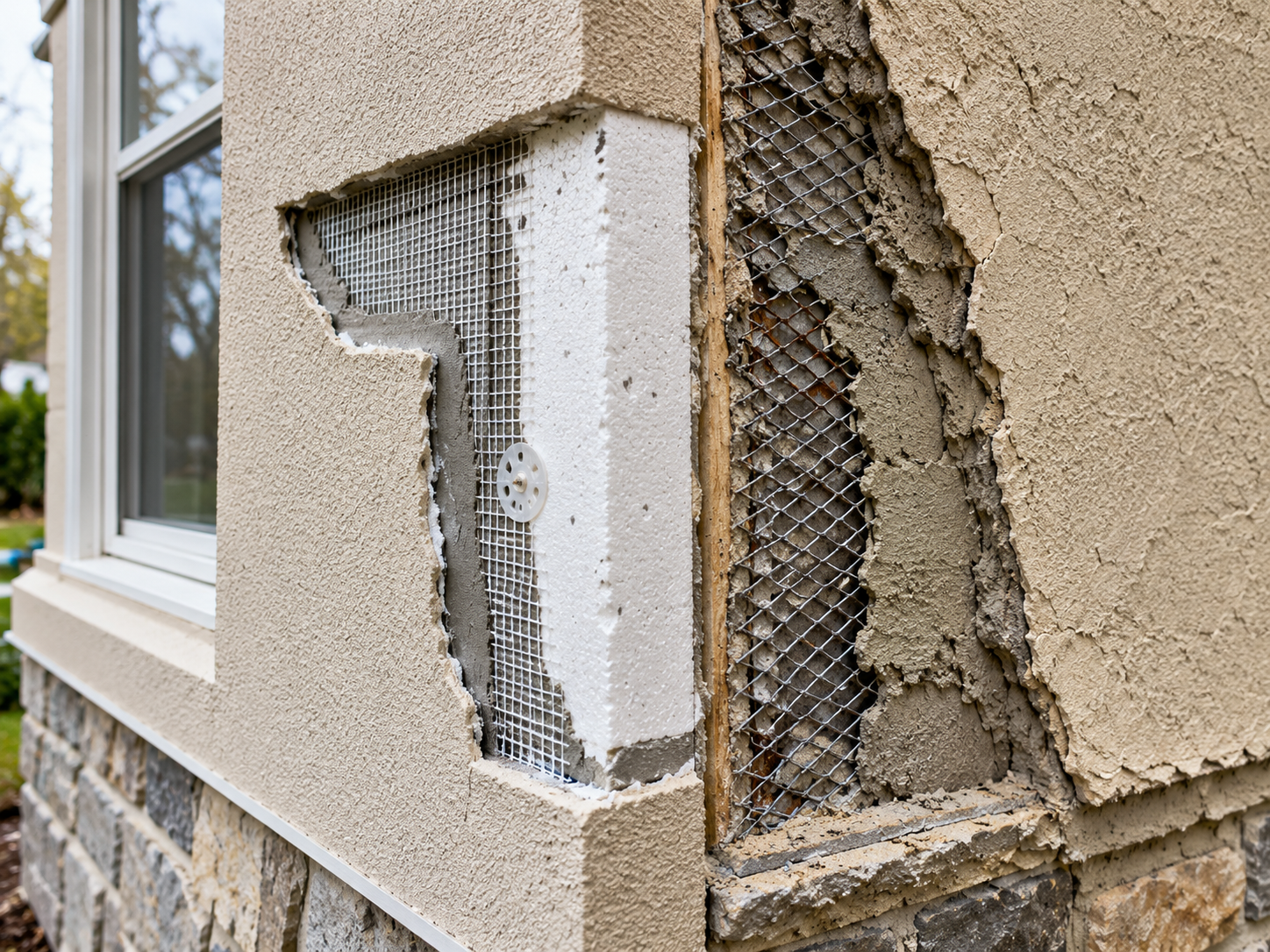
Around a dryer vent, electrical box or damaged corner, EIFS often shows white or colored foam behind a thin layer. Traditional stucco shows gray cement, sometimes with metal lath.
Check the paperwork
Home inspection reports, original plans, permit records or warranty documents sometimes name the cladding system or manufacturer.
Watch out for hybrids
Some walls are traditional stucco with foam trim “plant-ons” at windows and corners. Some systems apply a cement-based coating over foam board. When in doubt, a professional inspection is more reliable than any single test.
Why the Difference Matters
Repair materials are not interchangeable
Patching EIFS with cement plaster, or patching traditional stucco with an EIFS finish, creates a mismatched repair that may crack, separate or trap water. Each system has compatible base coats, meshes and finishes.
Water behaves differently
Traditional stucco is porous; it absorbs some water and releases it, relying on the drainage plane behind it. Barrier EIFS relies on the surface and sealant joints. When sealant joints around windows fail, water can get behind the foam and stay there.
Moisture testing differs
Invasive moisture testing typically means drilling small holes and probing the substrate behind the cladding. The method, probe placement and patching of test holes should match the system, so the inspector needs to know which system is installed.
Remediation scope differs
When a traditional stucco wall has hidden moisture damage, remediation usually means removing the cement plaster, repairing sheathing and framing, and rebuilding the wall with a proper drainage system. EIFS remediation may involve removing foam and lamina, repairing the substrate, and installing a drainage-capable system. Some owners replace one with the other, which is a design decision that should be made deliberately.
Common Problem Areas on Both Systems
Whatever system you have, these locations are where water usually gets in:
•Windows and doors: missing or failed head flashing, sill pans, and sealant joints.
•Roof-to-wall intersections: especially where a roof edge meets the wall without kick-out flashing.
•Penetrations: dryer vents, light fixtures, hose bibs, railing anchors and electrical boxes.
•The base of the wall: stucco buried in soil or mulch, or a missing or blocked weep screed.
•Decks and balconies: ledger connections and railing posts.
Signs That Need a Closer Look
•Cracks around window corners and at roof lines.
•Staining or streaks below windows.
•Soft, spongy or hollow-sounding areas.
•Bulging or delaminating sections.
•Interior signs like stained drywall below windows, musty odors or swollen baseboards.
Frequently Asked Questions
Is EIFS the same as stucco?
No. EIFS is a foam-based insulation and finish system with a thin reinforced coating. Traditional stucco is a thick cement plaster over lath or masonry. They can look similar but are built and repaired differently.
How do I know if my house has EIFS?
A hollow sound when tapped, slight give when pressed, and visible foam at damaged spots point to EIFS. Because hybrid systems exist, a professional inspection is the reliable way to confirm.
Is EIFS bad?
Not inherently. Many problems historically came from barrier systems without drainage, and from poor flashing and sealant details at windows and penetrations. Installation and maintenance matter a great deal.
Can I paint or seal over stucco cracks myself?
Sealing over cracks without understanding the cause can trap water. Identifying the system and whether moisture is already behind the surface comes first.
Identify the System First
Before anyone patches, coats or tests your exterior walls, confirm whether you have traditional stucco, EIFS or a hybrid. That single step guides the repair materials, the testing method and the scope of any remediation.
Philadelphia Stucco Experts LLC inspects and repairs stucco and exterior wall systems on homes and buildings across Philadelphia. Learn about our stucco installation and repair services.