

Stucco is a resilient, time-tested cladding that defines the architectural character of many properties across South Philadelphia, Graduate Hospital, and West Philadelphia. Because stucco is a rigid cementitious material applied over structural framing or masonry, it is naturally subjected to mechanical and environmental stress. When hairline fractures or wider fissures appear across an exterior wall, property owners are often unsure whether they can rely on a basic cosmetic patch or if the opening indicates a more complex building-envelope condition. Distinguishing between normal surface weathering and symptoms requiring further evaluation is essential for protecting your home from moisture infiltration and structural deterioration.
Evaluating Common Stucco Crack Classifications
Not every crack in an exterior stucco wall indicates impending structural failure. Understanding the physical mechanics of different crack patterns helps property owners gauge their significance:
- Hairline Surface Cracking: Tiny, non-directional cracks measuring less than one-sixteenth of an inch wide are common in traditional cement stucco. These fissures typically result from normal shrinkage during the initial curing process or minor thermal expansion and contraction across the Philadelphia seasons.
- Corner and Penetration Fractures: Cracks that radiate diagonally from the top or bottom corners of windows, doors, and utility penetrations occur where building framing experiences stress concentrations. While common, these openings can allow wind-driven rain to enter the wall cavity if left unsealed.
- Horizontal and Vertical Separation: Longer linear cracks running horizontally across a facade or tracking vertically along building corners often point to movement in the underlying wood sheathing, improper lath attachment, or settlement of the foundation footing.
- Repeatedly Re-Cracking Joints: When a previously patched crack reopens along the exact same fracture line within a short timeframe, it confirms that active structural movement or persistent moisture cycling is occurring beneath the finished surface.
Why Crack Width Alone Can Be Misleading
A common misconception among homeowners is that narrow cracks are harmless while wide cracks are catastrophic. In building science, crack width is only one variable in a complex diagnostic equation. A relatively wide, stable settlement crack that occurred decades ago may remain completely dry inside, whereas a narrow, unsealed hairline crack situated directly below a leaking window sill can continuously channel bulk rainwater into the wood sheathing behind the stucco. Evaluating the physical environment surrounding the fracture—including flashing conditions, sealant integrity, and exterior drainage—is vital for determining whether a crack is an isolated defect or an active moisture portal.
When Localized Crack Patching Is Practical
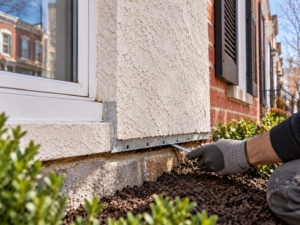
If an evaluation confirms that the building envelope is dry, the underlying lath is securely anchored, and the cracking is strictly related to material shrinkage or minor thermal cycling, a localized repair is appropriate. Qualified technicians utilize specialized masonry-grade elastomeric sealants or acrylic patch compounds that bridge the fracture while retaining the flexibility needed to absorb subtle building movement. Following National Park Service historic stucco preservation guidance, matching the compressive strength, texture, and aggregate profiles of the repair material to the surrounding wall is essential for preventing future perimeter fracturing and maintaining visual continuity across older rowhome facades.
Warning Signs That Justify Further Evaluation
While basic patching resolves isolated surface defects, applying surface compound over active moisture infiltration traps water inside the wall assembly. Property owners should arrange a specialized exterior evaluation when visible cracking is accompanied by any of the following warning signs:
- Persistent Surface Staining: Dark brown, copper, or green vertical streaks extending downward from a crack indicate that water is entering the assembly higher up the wall and weeping out through the fracture.
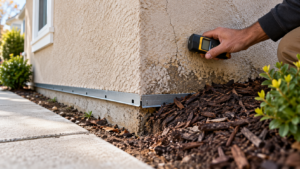
- Soft or Spongy Stucco: When pressing firmly against the wall surface near a crack reveals movement, sponginess, or hollow sounds, the underlying timber sheathing or framing studs may have softened from chronic moisture exposure.
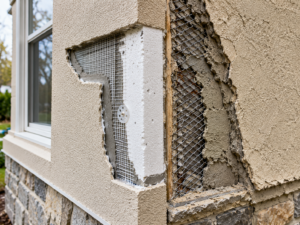
- Bulging and Delamination: Stucco that appears bowed outward or has separated from the backing lath indicates that the mechanical bond has failed, creating an unsupported cladding section that can detach from the building.
- Interior Moisture Symptoms: The appearance of peeling paint, bubbling plaster, or musty odors on interior drywall directly opposite an exterior stucco crack suggests that moisture has breached the weather-resistant barrier.
Property owners should avoid climbing unsecured ladders to inspect elevated third-story rowhome cracks independently, as working at heights without professional fall-protection equipment presents severe safety hazards. Partnering with an experienced provider for stucco crack repair services in Philadelphia ensures your exterior walls are evaluated safely from ground level to roofline. Whether your property requires flexible elastomeric sealing or localized exterior stucco repair, Philadelphia Stucco Experts delivers precision craftsmanship designed to protect your home. Contact our team today to schedule an expert crack evaluation.
Are hairline cracks normal in traditional Philadelphia stucco? Yes. Fine hairline cracks measuring less than one-sixteenth of an inch are common in traditional cement stucco and typically result from natural shrinkage during the initial curing phase or minor seasonal temperature cycling.
Why does a repaired stucco crack reopen in the exact same spot? A repaired crack reopens when the repair was executed using rigid, inflexible cement patching compound over an area experiencing continuous building movement, or when active moisture behind the wall continues to exert pressure on the cladding.
Can I use standard silicone caulk to fill a crack in my exterior stucco? No. Standard clear or white silicone caulk cannot be painted, does not match the granular texture of stucco, and can trap moisture within the wall cavity. Professional repairs require textured, breathable masonry-grade elastomeric sealants.
Does a diagonal crack above a window always mean my foundation is sinking? Not necessarily. While diagonal cracks can indicate foundation settlement, they frequently occur at window and door corners simply because these right-angle openings represent natural stress concentration points in the building’s timber framing.
When should a cracked stucco wall receive an invasive moisture evaluation? An evaluation should be scheduled when visible cracks are accompanied by dark vertical water staining, bulging cladding, hollow sounds when tapped, or interior drywall moisture symptoms directly inside the affected wall area.