
Across Center City commercial conversions, sprawling Northeast Philadelphia residential complexes, and modern developments in Roxborough, Exterior Insulation and Finish Systems (EIFS) are widely utilized as an energy-efficient exterior cladding. Commonly referred to as synthetic stucco, EIFS offers exceptional thermal insulation and architectural versatility, allowing for elaborate trim profiles and cornices. However, because EIFS relies on a completely different physical architecture than traditional cement-based stucco, it responds differently to impact, moisture, and structural movement. Understanding the unique properties of synthetic cladding is essential for property owners seeking to identify their wall type and execute appropriate, lasting repairs.
Understanding EIFS: Layers and Architectural Design
To the untrained eye, EIFS and traditional stucco look identical once painted or finished. However, tapping firmly on the wall reveals a clear difference: traditional hard-coat stucco feels completely solid and sounds like concrete, whereas EIFS yields slightly under pressure and emits a hollow sound due to the insulation board beneath the surface.
An Exterior Insulation and Finish System is a multi-layered composite cladding assembly consisting of specific structural components:
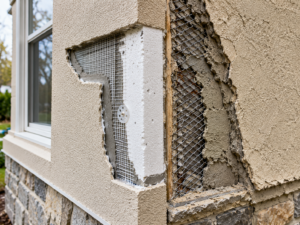
- The Insulation Board: Expanded polystyrene (EPS) or extruded polystyrene (XPS) foam insulation board is attached directly to the exterior wall sheathing using mechanical fasteners or specialized adhesive ribbons.
- The Reinforced Base Coat: A polymer-modified cementitious base coat is troweled directly over the foam insulation board.
- Alkali-Resistant Fiberglass Mesh: A heavy-duty woven fiberglass mesh is embedded completely into the wet base coat, providing impact resistance and tensile strength across the wall assembly.
- The Textured Finish Coat: A 100% acrylic or polymer-based textured finish coat is troweled over the reinforced base, providing exterior color, UV resistance, and weather protection.
How EIFS Repair Differs from Traditional Stucco Repair
Because traditional stucco is a thick, rigid concrete coating measuring up to one inch deep, repairs typically involve chiseling out cracked cement, repairing wire lath, and packing heavy mortar into the void. Attempting to repair EIFS using traditional heavy mortar or concrete patching compounds is a catastrophic mistake. Heavy cement will not bond properly to the synthetic acrylic base, creates rigid hard spots that crack the surrounding foam during thermal expansion, and voids manufacturer system warranties.
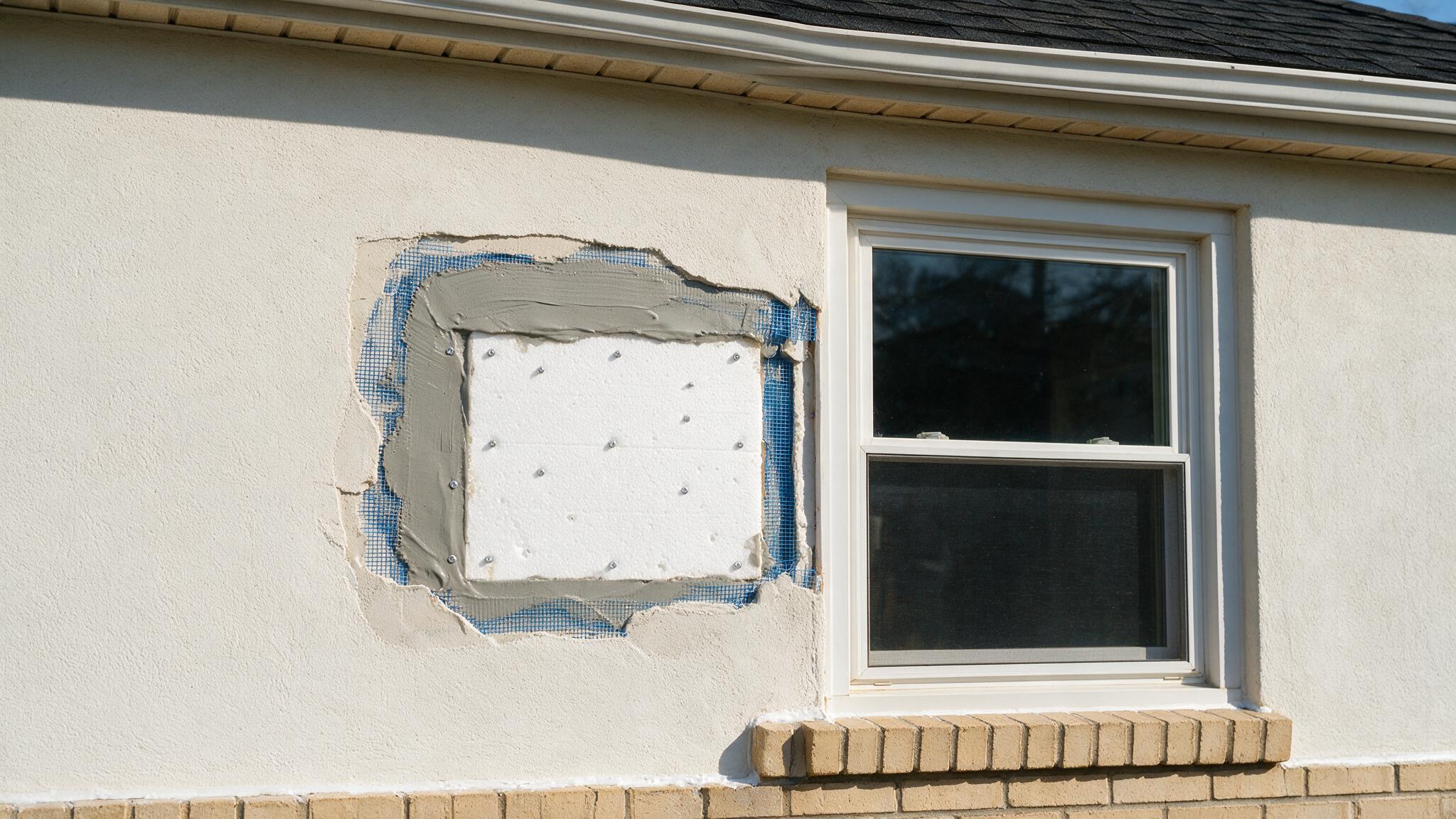
EIFS repair requires precise material compatibility and layered reconstruction. When repairing physical impact damage—such as a puncture from a vehicle bumper or delivery equipment—the technician must cut away the damaged acrylic finish and foam board down to the clean wood sheathing, creating a geometric opening. A new piece of EPS foam is cut to fit and adhered into the cavity.
Crucially, the technician must apply a new base coat and embed a fresh layer of fiberglass mesh that overlaps the existing, undamaged mesh by at least two and a half inches along the entire perimeter. This overlapping mesh technique restores the structural continuity of the synthetic skin, preventing stress cracks from forming around the patch edge. Adhering to EIFS Industry Members Association system standards ensures that all base coats, reinforcing meshes, and acrylic finishes maintain engineered vapor permeability and flexibility.
Common Signs That Your EIFS Cladding Requires Evaluation
While EIFS provides superior energy efficiency by eliminating thermal bridging across wall studs, older or improperly installed systems can experience specific maintenance failures. Property owners should arrange a professional assessment when observing:
- Impact Punctures and Cracking: Any breach in the thin outer acrylic skin exposes the white foam insulation beneath to moisture and solar degradation, while allowing birds and pests to excavate nesting cavities inside the foam.
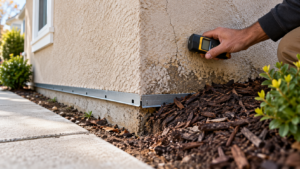
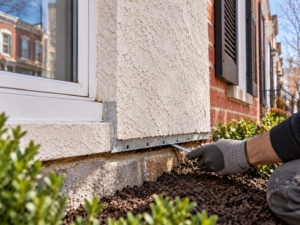
- Sealant Joint Failure: EIFS relies entirely on a continuous barrier at wall terminations. If the elastomeric sealant joints around window frames, door casings, utility pipes, or roofline intersections shrink, split, or pull away, bulk rainwater pours directly behind the insulation board.
- Delamination and Blistering: Noticeable bubbling, waviness, or areas where the finish coat feels separated from the backing foam indicate that moisture has become trapped within the assembly or that original base-coat adhesives have failed.
- Staining Around Architectural Details: Persistent dark streaking beneath decorative EIFS foam cornices, window sills, or banding channels suggests that horizontal architectural projections lack proper slope or metal flashing to shed water away from the facade.
Why Identifying Your Wall Type Is Critical Before Ordering Estimates
Before soliciting construction proposals, property owners must confirm whether their building utilizes EIFS or traditional hard-coat stucco. Unqualified general handymen frequently misidentify EIFS, presenting estimates for traditional stucco patching that will inevitably fail when applied over foam insulation.
By relying on specialists for EIFS repair services in Philadelphia, your property is evaluated using non-invasive thermal imaging and moisture diagnostics tailored to synthetic cladding assemblies. Whether your building requires complex synthetic mesh reconstruction or traditional stucco repair, Philadelphia Stucco Experts delivers compatible, high-performance solutions. Contact our team today to schedule an expert cladding identification and repair assessment.
How can I easily tell if my building exterior is EIFS or traditional stucco? Tap firmly on the exterior wall with your knuckles. Traditional cement stucco feels stone-hard and sounds solid like concrete. EIFS will sound slightly hollow and feel slightly resilient or padded under pressure due to the foam insulation board underneath.
Can I use traditional cement stucco patching compound to fix a hole in EIFS? No. Traditional cement patching compound is too heavy and rigid for EIFS; it will not bond chemically to the synthetic base coat and will cause perimeter cracking around the repair when the building expands and contracts with temperature shifts.
Why are sealant joints around windows more critical on EIFS than on traditional brick? EIFS is a barrier-style cladding system that relies on a completely sealed exterior face. If sealant caulk joints around windows fail, rainwater pours directly behind the foam insulation board, where it becomes trapped against the wood sheathing and causes rapid rot.
Does an EIFS exterior require specialized exterior paint? Yes. If you paint an EIFS building, you must use 100% acrylic or elastomeric coatings specifically formulated for synthetic stucco. Standard exterior house paints can seal the surface too tightly, trapping vapor and causing the finish coat to blister.
Why do woodpeckers and pests puncture EIFS wall surfaces? Because the EPS foam insulation beneath the thin acrylic outer skin is soft and easily excavated, woodpeckers, squirrels, and insects occasionally puncture the finish coat to burrow into the warm foam for nesting or food storage.