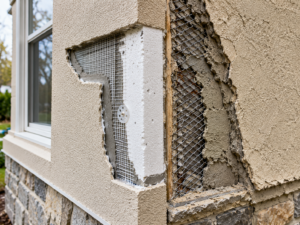

Stucco Testing and Moisture Inspections: Diagnosing Concealed DamageIn the real estate market of Philadelphia and its surrounding suburbs, a stucco exterior is often viewed with immense caution. Due to a highly publicized wave of construction defect litigation stemming from the early 2000s housing boom, buyers, sellers, and mortgage lenders frequently demand specialized stucco inspections before a property changes hands.The anxiety surrounding stucco is rooted in one fundamental truth: stucco fails from the inside out.
A stucco facade can look perfectly smooth and structurally sound on the outside, while the wooden Oriented Strand Board (OSB) sheathing directly behind it has completely rotted away.To determine the true health of an exterior wall, you must look beneath the surface. At Philadelphia Stucco Experts, we emphasize technical, data-driven diagnostics. Here is a comprehensive guide to understanding visual inspections, non-invasive scans, and the gold standard of diagnostics: invasive probe testing.The Limitations of Visual Stucco InspectionsA standard home inspection relies heavily on visual observation.
Philadelphia Stucco Experts — official website.
Philadelphia L&I: Building Permits.
While a trained eye can spot the warning signs of a failing drainage plane, visual symptoms only tell half the story.Common visual symptoms of stucco failure include:Tear-Staining: Dark, vertical stains running down the stucco below the corners of windows. This indicates that water is entering the window frame, bypassing the flashing, and bleeding out through the stucco.Efflorescence: A powdery, white mineral deposit on the surface of the stucco.
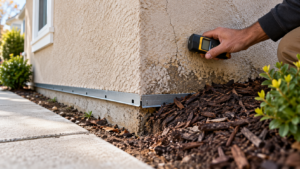
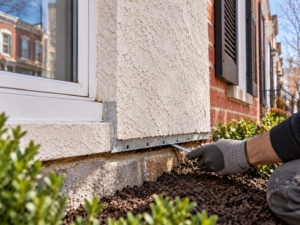
It occurs when water penetrates the wall, dissolves salts within the cement, and carries them to the surface as it evaporates.Missing Kick-out Flashing: A visual confirmation that the flashing where a sloped roof meets a vertical stucco wall is either missing or improperly installed, guaranteeing water intrusion.Buried Weep Screeds: The bottom edge of the stucco is buried in the dirt or concrete patio, preventing trapped water from exiting the wall assembly.The Limitation: Visual inspections cannot quantify the extent of the damage.
A small stain under a window could mean the OSB is slightly damp, or it could mean the framing studs have entirely disintegrated.Non-Invasive Moisture Testing (Surface Meters and Thermal Imaging)To gather more data without drilling holes in the house, inspectors often utilize non-invasive tools.1. Infrared ThermographyThermal imaging cameras detect minute temperature differences on the surface of the wall. Because wet insulation and damp wood retain heat differently than dry materials, a thermal camera can often highlight cool, anomalous “plumes” spreading beneath windows or roof-lines.2.
Dielectric Surface Moisture MetersThese specialized meters are pressed flat against the exterior stucco. They emit an electromagnetic radio frequency into the wall to detect the presence of moisture up to an inch deep without penetrating the surface.The Limitation: Neither of these methods is conclusive. Thermal imaging can be easily fooled by the sun warming the wall, shadow lines, or differing insulation densities.
Surface meters can register a “false positive” if the wall contains metal lath (which is highly conductive) or if the stucco was recently rained on.Non-invasive methods are excellent for identifying anomalies and guiding where to test further, but they cannot conclusively establish concealed structural damage or rot.Invasive Probe Testing: The Diagnostic Gold StandardTo definitively determine if the wooden structural sheathing behind a stucco wall is wet or rotted, you must physically access it.
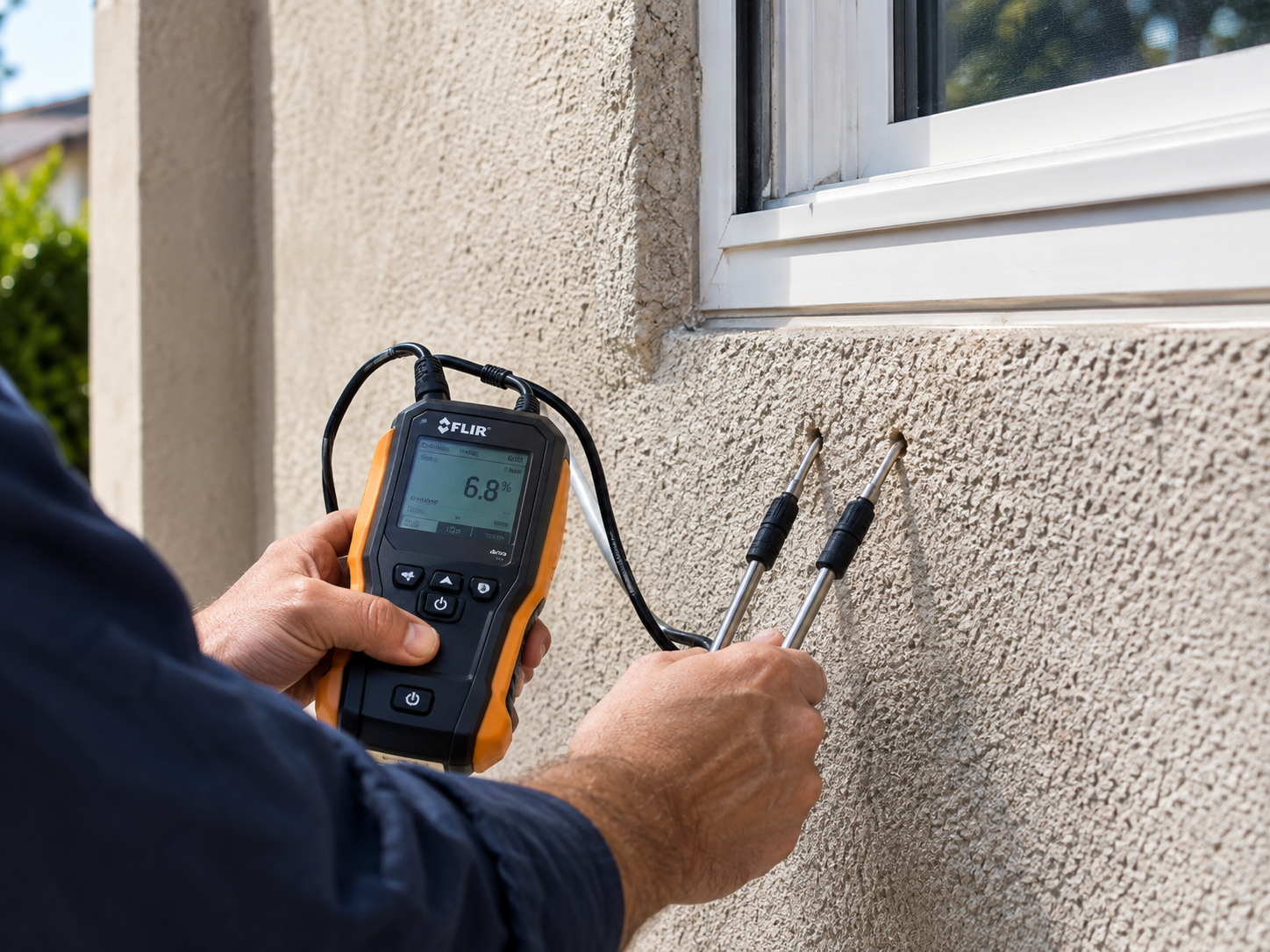
This requires Invasive Moisture Probe Testing.The Invasive MethodologyStrategic Drilling: The inspector drills two tiny, 1/4-inch holes side-by-side through the hard outer stucco layer. These holes are drilled in highly vulnerable locations—such as 6 inches below the corners of windows, beneath roof-to-wall intersections, and at the bottom of the wall assembly.Probe Insertion: Two long, insulated metal probes connected to a specialized moisture meter (such as a Delmhorst meter) are inserted through the holes and pushed firmly into the OSB or plywood sheathing.Resistance Testing: The technician gauges the physical resistance of the wood.
If the probes sink into the wood effortlessly like butter, the wood is severely rotted, regardless of its current moisture level.Moisture Readings: The meter passes an electrical current between the two probes. Wood’s electrical resistance changes based on its water content.
The meter provides a highly accurate Wood Moisture Equivalent (WME) percentage.Sealing: Once the reading is recorded, the holes are immediately injected with a color-matched, exterior-grade elastomeric sealant, rendering them virtually invisible and completely watertight.Interpreting the Moisture DataThe data collected during an invasive probe test dictates the required scope of repair.0% to 15% Moisture: The wood is dry and healthy. No structural action is required.16% to 19% Moisture: Elevated moisture. The wood is currently damp, but structural rot has likely not yet set in.
The source of the leak (usually defective flashing or caulking) must be repaired immediately to allow the wood to dry.20% or Higher: Critical failure. Sustained moisture levels at or above 20% create the ideal environment for wood-decay fungi. If readings are this high, or if the probes detect soft, degraded wood, partial or full structural stucco remediation is mandatory.
FAQs About Stucco InspectionsDo I have to disclose invasive stucco testing results when selling
my home?Yes. In Pennsylvania, sellers are legally obligated to disclose known material defects regarding the property. A stucco inspection report indicating elevated moisture or structural rot must be disclosed to potential buyers.Can I do stucco moisture testing from the inside of the house?While you can use a surface meter on interior drywall, invasive probe testing from the inside is highly inaccurate for diagnosing stucco.
The interior drywall is separated from the exterior OSB sheathing by 4 to 6 inches of fiberglass insulation, which acts as a barrier, hiding the exterior moisture until it becomes catastrophic enough to soak through to the inside.How long does an invasive stucco inspection take?For a standard two-story Philadelphia home, a comprehensive invasive probe test involving 40 to 60 test locations typically takes between 2 and 4 hours to execute.Do not guess about the structural integrity of your home’s exterior. Ensure your investment is protected by insisting on accurate, invasive diagnostics.
Contact Philadelphia Stucco Experts to schedule a comprehensive moisture inspection or to develop a remediation plan based on your testing data.