
For homeowners on the Main Line, discovering a crack or a stain on a stucco facade immediately raises alarm bells. Because the Philadelphia area has been the epicenter of severe stucco failures, property owners often fear the worst—a complete tear-off and a six-figure remediation project. However, not every crack indicates catastrophic wood rot. Distinguishing between cosmetic surface damage that requires a targeted repair and a systemic failure that mandates full structural remediation is critical to making the right financial and protective decisions for your home.
When Stucco Repair is the Right Choice
Traditional hard-coat stucco is essentially a thin layer of concrete. Like all concrete products, it is rigid and susceptible to minor cracking as the home naturally settles. If the underlying weather-resistant barrier (WRB) and flashing systems were installed correctly, these surface defects can be safely repaired.
Hairline Settling Cracks
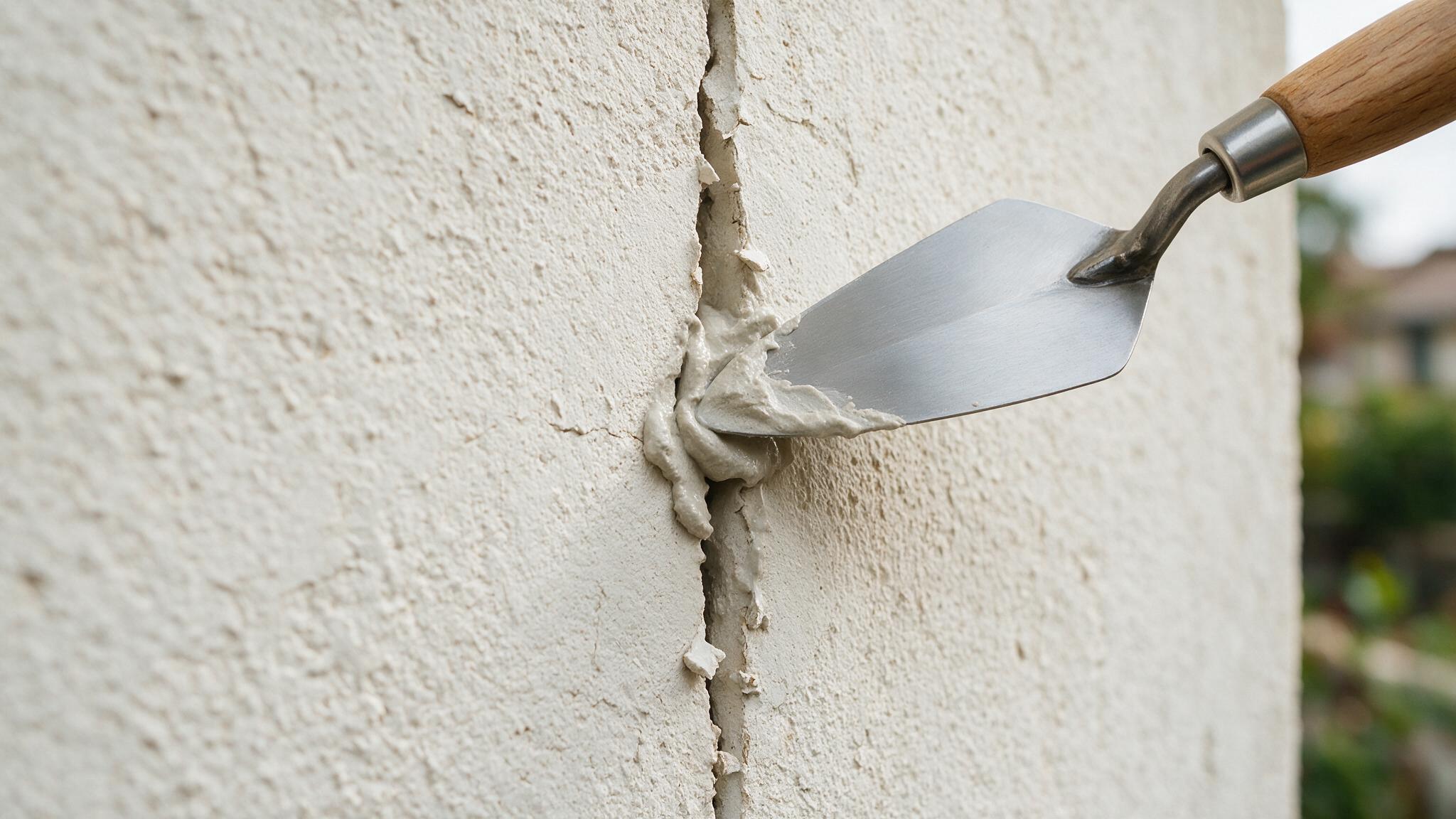
Hairline cracks (less than 1/16th of an inch wide) that do not radiate from the corners of windows are typically harmless settling cracks. They are aesthetic issues, not structural ones. A qualified technician can route out these small cracks, fill them with a specialized elastomeric sealant that flexes with the building, and blend the texture to match the surrounding wall.
Localized Impact Damage
If your stucco was chipped by a flying branch during a storm, or damaged by a misplaced ladder, the repair is straightforward. Assuming the impact did not puncture the waterproof membrane behind the stucco, contractors can remove the loose debris, apply a bonding agent, and trowel on a fresh cement coat. The Portland Cement Association (PCA) provides strict guidelines for curing stucco patches properly to ensure the new material bonds perfectly to the existing wall without shrinking.
When Remediation is Absolutely Necessary
If the problem is not isolated to the exterior surface, superficial patching is worse than useless—it traps water inside the wall and accelerates the destruction of your home.
Missing Flashing and Substrate Rot
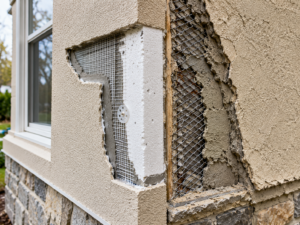
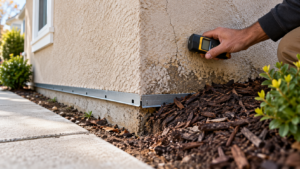
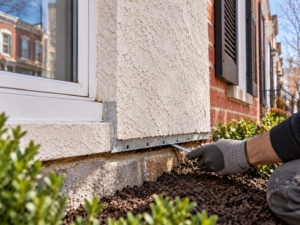
Remediation is mandatory when the system behind the stucco has failed. If your home lacks a weep screed at the foundation line, or if the windows were installed without proper sill pan flashing, water will inevitably saturate the wooden sheathing beneath. You cannot repair missing flashing from the outside with caulk.
If an invasive moisture test reveals that the OSB sheathing behind your stucco has a moisture content exceeding 20 percent, the wood is actively rotting. In this scenario, the heavy stucco must be completely removed, the rotted framing replaced, and a modern drainage plane installed before new cladding is applied. Slapping a fresh coat of cement or heavy paint over a rotting wall is a cosmetic band-aid over a fatal structural wound.
Expert Diagnostics Drive the Decision
The only way to definitively know whether your home needs a $1,500 repair or a full-scale remediation is through professional diagnostic testing. Do not rely on visual inspections alone. For accurate assessments and precise stucco repair services, trust the experts who understand the unique building science of Philadelphia exteriors. Contact Philadelphia Stucco Experts to schedule a thorough evaluation of your Main Line property today.
FAQs:
- Can I seal stucco cracks with regular silicone caulk? No. Standard silicone cannot be painted, and it does not blend with the texture of stucco. Professional repairs require specialized masonry-grade elastomeric sealants covered with a cementitious texture coat.
- Why are there dark streaks under the corners of my stucco windows? Dark streaks are heavily indicative of “tears”—water escaping from behind the stucco system because the window flashing has failed. This is a strong indicator that remediation, not repair, is required.
- Will repairing my stucco make the wall look exactly like new? Depending on the age and fading of the original stucco, a fresh patch may be slightly noticeable. The best visual results often involve patching the damage and then applying a full elastomeric coating to the entire wall to unify the color.