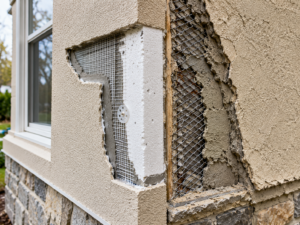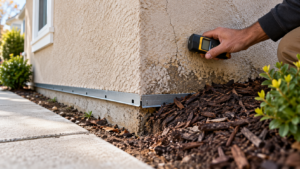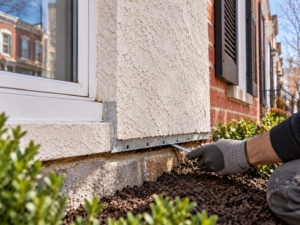


The bottom edge of a stucco wall is easy to overlook because it sits near soil, concrete, mulch, or decking. It is also where water moving behind the cladding may need a safe way to leave the assembly.
Why This Decision Belongs in Preconstruction
Philadelphia properties are frequently altered after the wall is built. Patios are raised, planting beds are added, decks are installed, and concrete is poured against surfaces that were originally exposed.
What Local Properties Change
Find the true bottom of the wall system and identify how the stucco, drainage plane, foundation, and any lower termination components meet. Softness, staining, or deterioration near grade can indicate repeated wetting.
What to Verify Before Work Starts
Do not seal drainage openings or lower termination details indiscriminately with coatings or caulk. The correct detail varies by stucco type and construction, which is why the existing assembly should be identified first.
How the Finished Work Should Perform
Sometimes the durable repair also requires changing soil, paving, or deck conditions so the wall can dry and drain as intended. Rebuilding only the finish while leaving water trapped at the base invites repeat damage.
Frequently Asked Questions
Is it a problem if stucco touches the ground?
Direct contact with soil or later paving can create moisture and inspection problems depending on the wall system and termination detail.
What is a weep screed?
In many stucco systems it is a lower termination component designed to help the assembly drain; existing construction determines the applicable detail.
Can landscaping contribute to stucco damage?
Raised soil, mulch, irrigation, and hardscape can keep the lower wall wet or cover drainage details that need to remain exposed.
Plan the Next Step
Philadelphia Stucco Experts can inspect lower-wall terminations, moisture patterns, and adjacent grade conditions before specifying a repair or waterproofing scope.
Helpful source: City of Philadelphia – Get a Building Permit