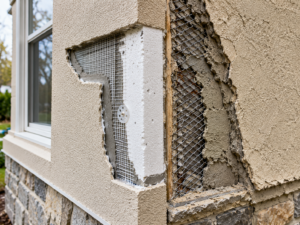

Traditional hard-coat portland cement stucco and Synthetic Stucco / Exterior Insulation and Finish Systems (EIFS) provide durable, attractive exterior cladding for homes across Philadelphia, Montgomery County, and Bucks County. However, stucco is a porous, absorbent material designed as part of a water-managed wall assembly. The most frequent points of catastrophic water intrusion on stucco homes are unsealed wall penetrations—specifically exterior electrical outlets, sconce light fixtures, hose bibbs, exhaust vents, and deck ledger attachments.
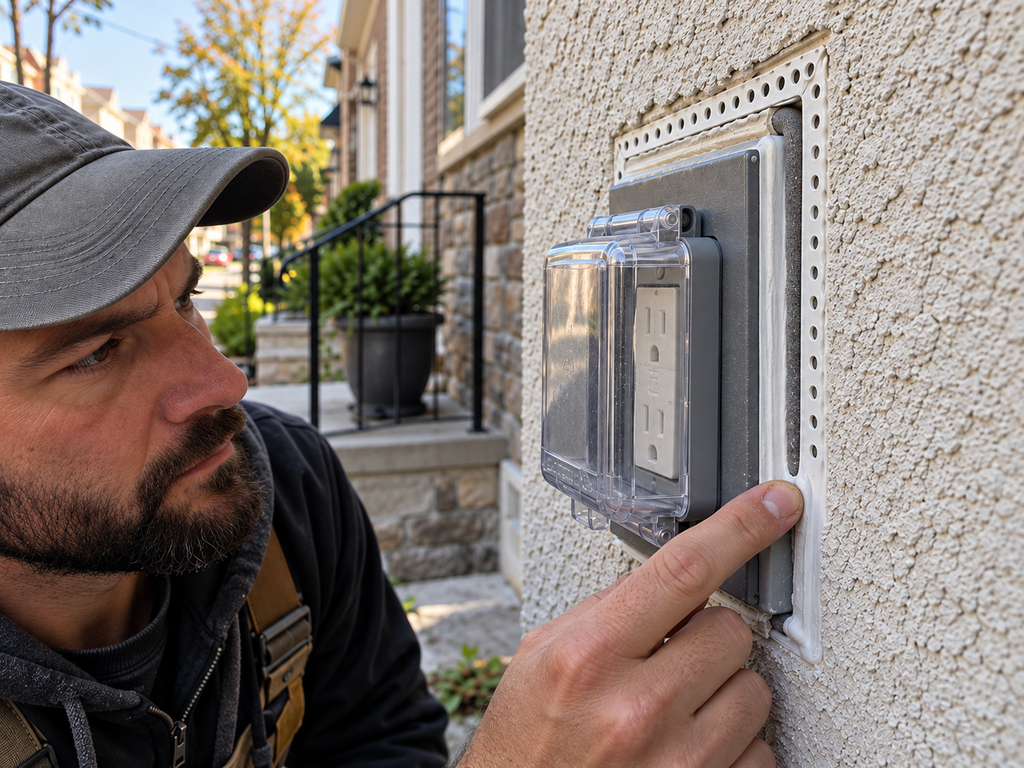
When exterior electrical outlet boxes are installed without proper casing beads, backer rod, and flexible sealant, driven rainwater penetrates behind the hard stucco shell, saturating plywood sheathing and wood wall framing. Because hard stucco traps moisture inside wall cavities, framing rot can progress for years before visible damage appears on interior drywall.
1. The Anatomy of Correct Stucco Penetration Termination
Slathering wet stucco directly against the plastic or metal edges of an exterior electrical box is a primary installation error. Because cementitious stucco expands and contracts at a different rate than plastic electrical boxes, direct contact causes hairline perimeter cracking immediately.
A correct, professional stucco penetration assembly requires four distinct architectural components:
- Self-Adhered Flashing Membrane (Peel-and-Stick): Flashing tape applied over the weather-resistive barrier (WRB) around the electrical rough-in box, layered in shingle fashion to direct water outward.
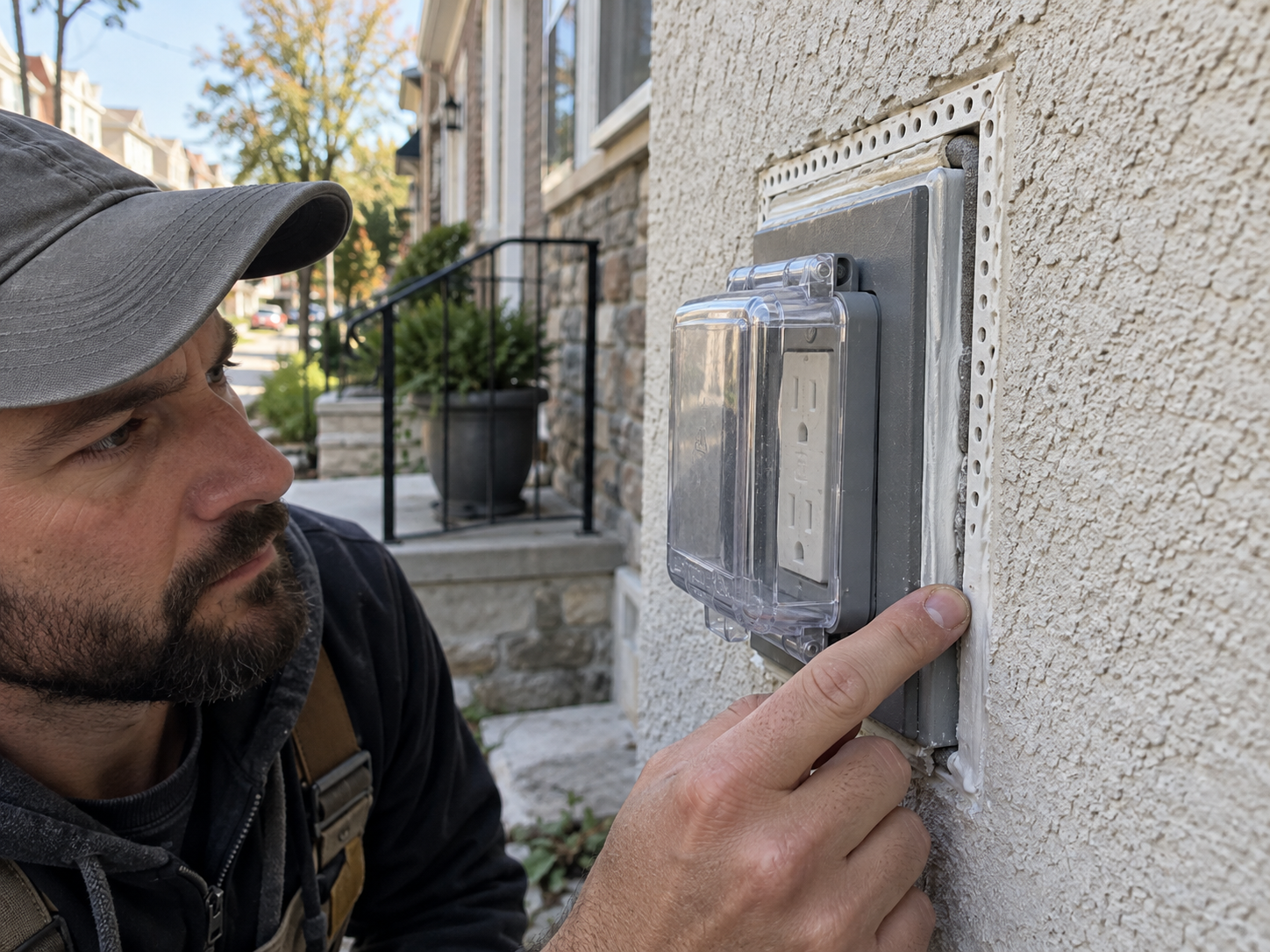
- Casing Bead (J-Bead / Stop Bead): Metal or PVC casing beads installed around the perimeter of the electrical box, providing a clean, rigid edge for scratch, brown, and finish stucco coats.
- Perimeter Joint Gap (1/4″ to 3/8″): A dedicated expansion gap left between the casing bead edge and the electrical fixture box.
- Closed-Cell Backer Rod and Elastomeric Sealant: Inserting flexible closed-cell backer rod into the perimeter gap, covered with a high-performance polyurethane or silicone elastomeric sealant (e.g., MasterSeal NP1 or DOWSIL 790).
2. Repairing Compromised Outlet Seals on Existing Stucco Homes
If an inspection reveals cracked, missing, or caulk-filled stucco joints around exterior electrical outlets, immediate remediation prevents further wall saturation:
Stucco Outlet Repair Steps:
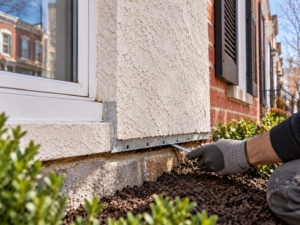
- Remove Old Caulk and Debris: Carefully rake out old, failed latex caulk and loose stucco debris around the outlet box edge.
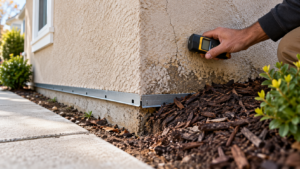
- Inspect Substrate Condition: Utilize a moisture meter or probe to check for soft, rotted wood sheathing inside the wall cavity.
- Install Backer Rod: Press appropriate diameter closed-cell foam backer rod into the perimeter joint to establish proper two-point sealant adhesion.
- Apply High-Movement Sealant: Tool premium elastomeric sealant smoothly along the joint, creating a watertight seal that accommodates building movement.
3. Permitting and Stucco Remediation Guidelines in Philadelphia
Substantial stucco repairs, re-plastering, or exterior envelope remediation in Philadelphia must conform to municipal building standards. Consult official Philadelphia building permit guidelines before undertaking major exterior wall repairs.
Properly sealing exterior wall penetrations protects your stucco system and underlying home framing from costly moisture damage. Explore our specialized stucco repair services to schedule a technical wall inspection with Philadelphia Stucco Experts.