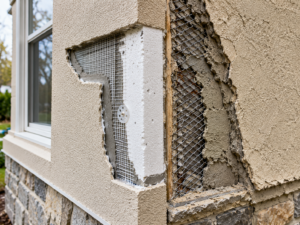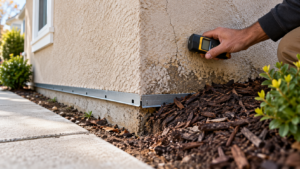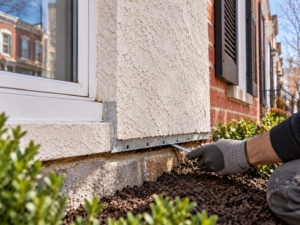


Stucco is a beautiful, classic exterior finish that dominates historic neighborhoods from Manayunk to Chestnut Hill. However, a common misconception among homeowners is that hard-coat stucco is completely impervious to water. In reality, traditional cement stucco is a highly porous material. It naturally absorbs rainwater during a heavy storm. If the exterior surface is not properly maintained and sealed, excessive moisture absorption can lead to severe cracking, freeze-thaw damage, and eventual structural degradation. Implementing a robust waterproofing strategy extends the life of your facade by decades.
The Threat of Moisture Saturation
When rain hits a healthy, unpainted stucco wall, the surface darkens as it absorbs water, and then slowly dries out via evaporation when the sun returns. The danger arises when the stucco becomes oversaturated, or when the microscopic pores are expanded by freezing temperatures.
Freeze-Thaw Cycle Damage
Philadelphia experiences brutal freeze-thaw cycles throughout the winter. If your stucco is saturated with water and the temperature plummets overnight, the trapped water turns to ice. Because water expands when it freezes, it exerts massive outward pressure on the rigid cement, causing the surface to crack, flake, and spall. Preventing water from deeply penetrating the stucco face is the primary goal of exterior waterproofing.
Advanced Waterproofing Solutions
Waterproofing a stucco home is not as simple as painting it with a cheap exterior latex paint. Standard house paints trap internal moisture inside the walls, causing the paint to blister and peel off in massive sheets.
High-Performance Elastomeric Coatings
The premier solution for protecting an aging stucco facade is the application of an elastomeric coating. Unlike standard paint, elastomeric coatings apply 5 to 10 times thicker and are highly elastic. They form a tough, rubberized shell over the entire exterior.
Crucially, an elastomeric coating is vapor permeable (breathable). According to the Building Science Corporation (BSC), exterior coatings applied to masonry must allow interior water vapor to escape; otherwise, the wall cavity will suffer from trapped condensation and mold. Elastomeric coatings bridge existing hairline cracks and stretch with the building as it expands in the summer heat, preventing new cracks from forming while shedding bulk rainwater flawlessly.
Sealing Penetrations and Joints
A coating is only effective if the intersections of the building are secure. Before applying a coating, professionals must rigorously address all penetrations. This includes cutting out old, dried caulking around window frames, door trims, HVAC lines, and light fixtures. These junctions are resealed using premium, masonry-grade polyurethane or silicone sealants. Because elastomeric sealant flexes without tearing, it ensures that water cannot bypass the protective coating at the weakest points of the building envelope.
Maintain Your Investment
Preventative maintenance is drastically cheaper than structural remediation. By sealing hairline cracks and applying a breathable, protective membrane over your facade, you defend your home against harsh weather and preserve its architectural beauty. To ensure the correct products are applied safely and effectively, rely on our team for professional stucco waterproofing in Philadelphia. Contact Philadelphia Stucco Experts to schedule a consultation for your Manayunk or Chestnut Hill property today.
FAQs:
- Can I use regular exterior paint to waterproof my stucco? No. Standard exterior paint is not thick enough to bridge cracks, lacks the elasticity to handle building movement, and can trap moisture inside the stucco, leading to severe peeling and blistering.
- How long does an elastomeric coating last? When applied properly over a thoroughly cleaned and prepared surface, a high-quality elastomeric coating can protect a stucco facade for 10 to 15 years before requiring a recoat.
- Does waterproofing fix water damage behind the stucco? Absolutely not. Waterproofing is a preventative measure for healthy walls. If invasive testing has proven your home already has structural wood rot, applying a waterproof coating will just trap the moisture and accelerate the rot.