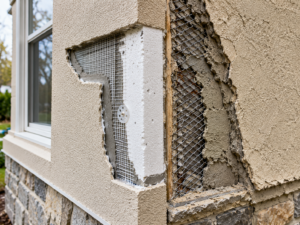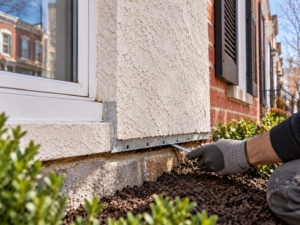

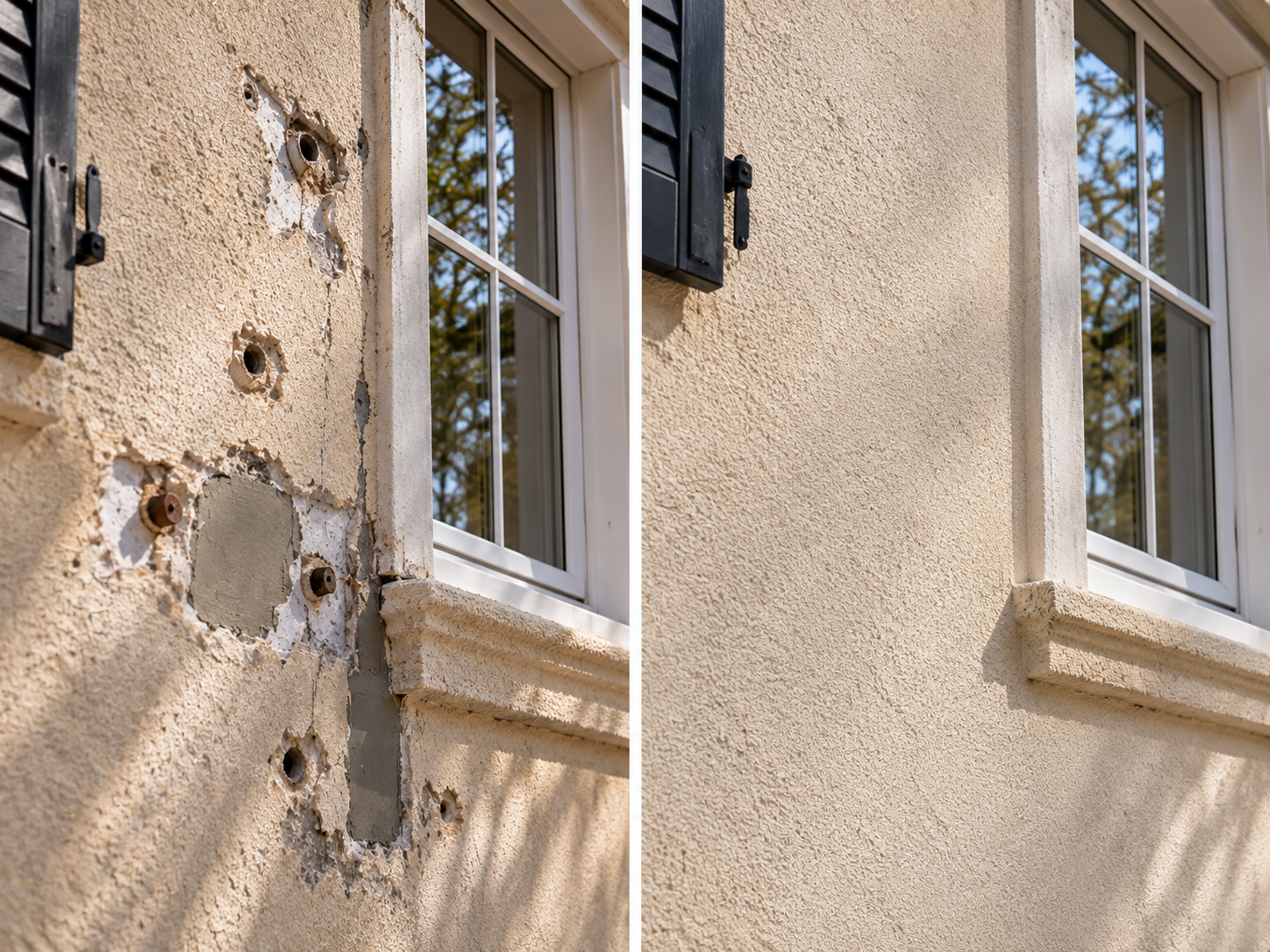
Removing an awning, shutter, sign, camera, or other exterior fixture often leaves more than a few screw holes. Anchors can fracture the base coat, old sealant can hold water, and discolored outlines can make a small patch highly visible on the finished facade. For homeowners in South Philadelphia, Fish-town, Northern Liberties, and Roxborough, this is the kind of detail that can decide whether a renovation or repair remains durable after the visible finish is complete.
The primary search intent behind stucco patch after fixture removal is practical: understand what the condition means, what should be checked before work proceeds, and how to avoid closing the assembly before the real cause is understood. The goal is not to over-complicate the project; it is to make the scope match the condition that is actually present.
The Problem Behind the Visible Symptom
The visible symptom is only one part of the decision. A contractor also needs to understand condition of the substrate after anchors are extracted, cracking or hollow areas around each penetration, and how those findings affect the surrounding work. Resolving those questions before finish work protects the new materials and helps keep a localized detail from turning into avoidable rework later.
A Practical Inspection Checklist
A professional review typically includes:
- Condition of the substrate after anchors are extracted
- Cracking or hollow areas around each penetration
- Depth and shape of the patch needed to rebuild the layers
- Existing texture, aggregate, and color around the repair
Building the Detail Correctly
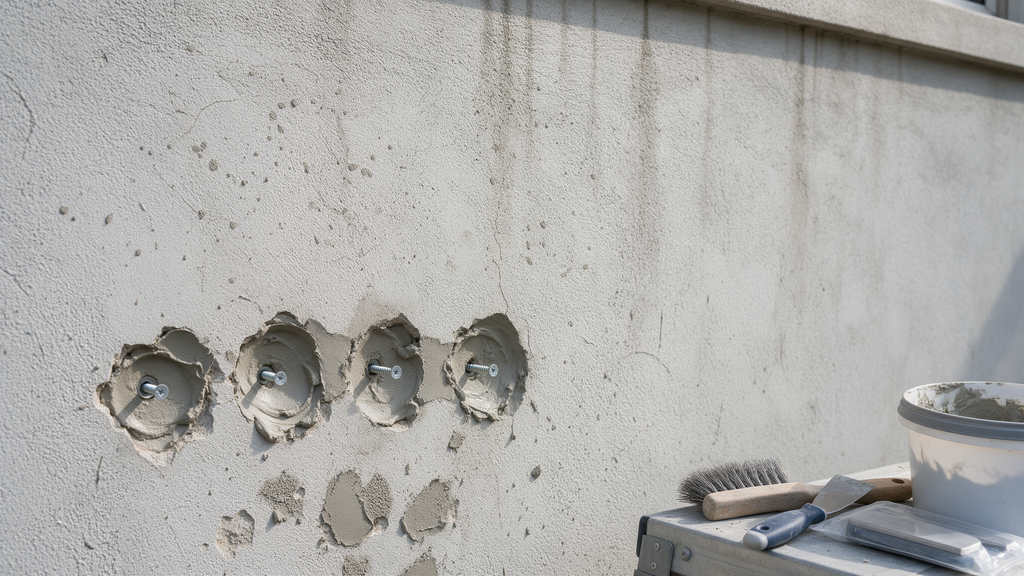
The damaged area should be opened only as far as needed to reach sound material, then rebuilt in compatible layers and finished with attention to texture. Small repairs often look best when the patch edges are feathered and the finish is matched to the existing wall rather than overworked. The best result comes from coordinating the hidden construction with the finish requirements so one trade is not forced to undo another trade’s completed work.
This is where a focused commercial service page should receive the strongest internal support. Learn more about stucco repair and how the broader project can be coordinated around the condition described here.
Shortcuts That Usually Fail
Filling deep anchor holes with surface caulk or finish coat alone can shrink and crack. Painting a small mismatched patch may make it more visible rather than less. A strong scope separates a cosmetic correction from work that affects performance, access, drainage, structure, or serviceability.
Escalation Triggers
If removing the fixture reveals widespread loose stucco or moisture staining, the scope should expand to diagnose that condition before patching. That decision should be made before the area is covered, painted, tiled, sided, or otherwise treated as complete.
Reference: Philadelphia Department of Licenses and Inspections. Requirements and field conditions vary by project, so the applicable authority and project-specific professionals should guide final decisions.
Plan the Next Step
Philadelphia Stucco Experts can evaluate whether a visible defect is limited to the finish coat or points to a deeper attachment, movement, or moisture-management problem before a repair method is selected.
https://www.phila.gov/departments/department-of-licenses-and-inspections