
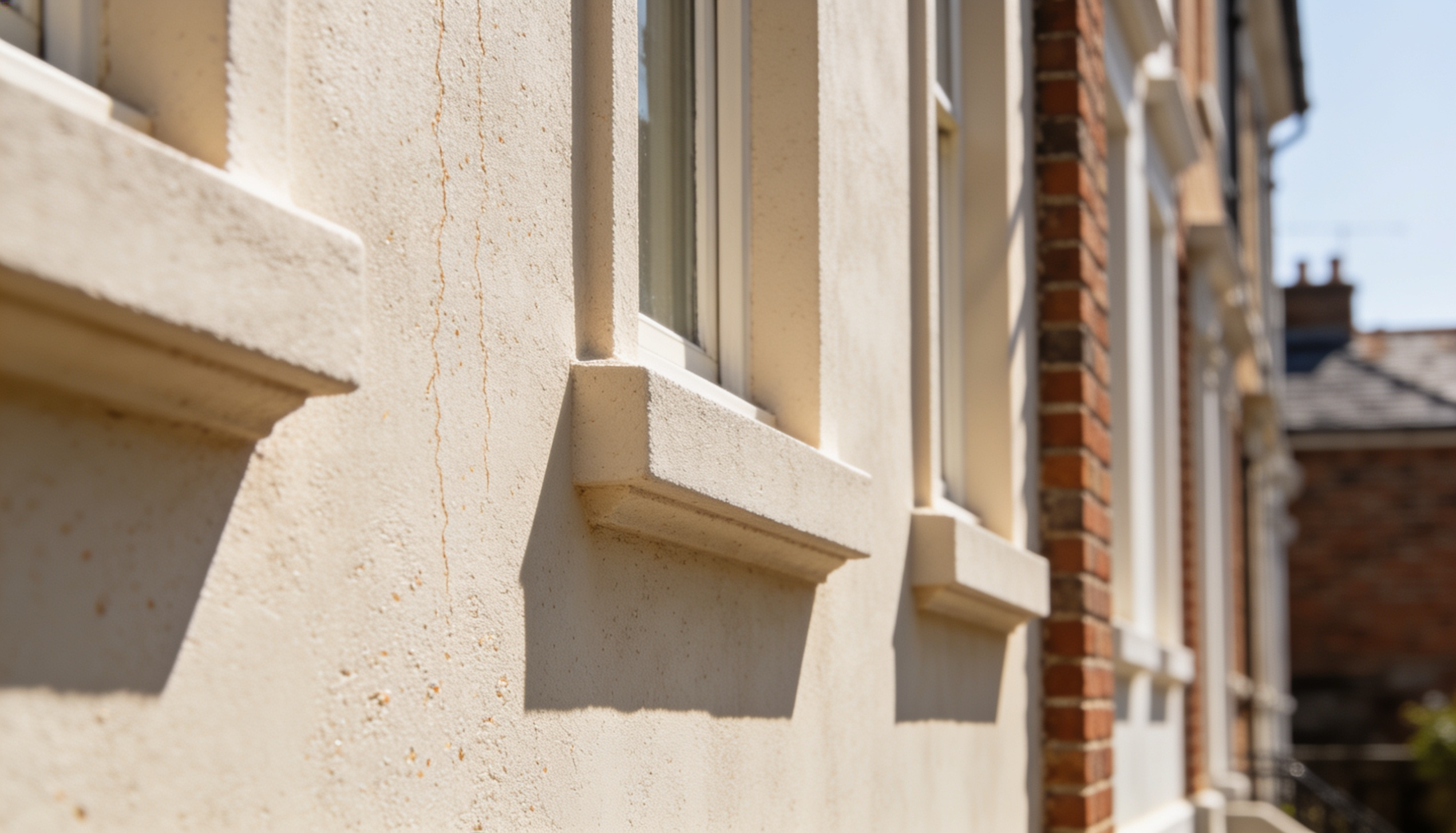
Color gets most of the attention during a stucco repair, but texture often reveals the patch first. Sand size, finish thickness, float technique, previous coatings, and years of weathering all influence how the wall reads.
Start With the Existing Condition
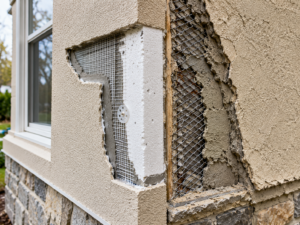
South Philadelphia and Graduate Hospital facades may have cement stucco, acrylic finishes, painted surfaces, or layers of older patches. Identifying the existing system is the first step toward a compatible repair.
How the Building Type Changes the Plan
Create and evaluate texture samples on the wall under natural light. A patch can look close while wet and change as it cures, and directional trowel marks become more obvious when sunlight grazes the facade.
The Details to Resolve Early
Color matching is affected by age, dirt, UV exposure, moisture, and coatings. In some cases, finishing a broader architectural area creates a cleaner result than trying to hide a small irregular patch in the middle of a large wall.
What Separates a Patch From a Durable Result
Choose repair boundaries at corners, control joints, trim, or other natural breaks whenever possible. A sound repair should perform first and blend into the architecture second.
Frequently Asked Questions
Can stucco texture be matched exactly?
A close match is often possible, but age, aggregate, coatings, tool technique, and weathering can make an exact match difficult.
Should a repaired stucco area be painted?
That depends on the existing finish system and repair plan. Any coating should be compatible with the wall and applied after appropriate cure.
Why can a patch look darker after rain?
New and old materials can absorb and release moisture differently, especially while a repair is still relatively new.
Plan the Next Step
Philadelphia Stucco Experts can match the repair method to the existing wall system and plan the finish boundary so the patch performs well and looks intentional.
Helpful source: City of Philadelphia – Get a Building Permit