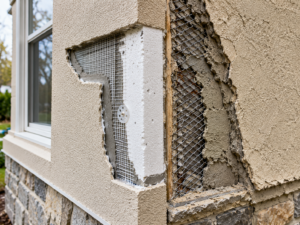


Stucco is a visually striking exterior cladding that defines many of the elegant properties throughout Chestnut Hill and the Main Line. However, a beautiful stucco exterior can easily conceal catastrophic structural failure beneath its surface. During the housing boom of the late 1990s and 2000s, building practices often prioritized speed over proper weather-resistant detailing. The omission of critical flashing and weep screeds has led to an epidemic of trapped moisture in the Philadelphia area. Identifying this hidden water damage before it destroys the wooden framework of your home requires specialized diagnostic testing.
The Flaws in Modern Stucco Application
Traditional hard-coat stucco is highly durable, but it is not completely waterproof. It is designed to absorb a certain amount of moisture, which should then drain safely down the weather-resistant barrier behind the stucco and exit at the bottom of the wall.
Missing Drainage Systems
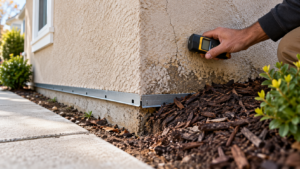
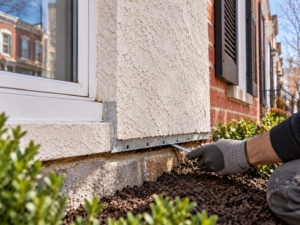
The massive stucco failures seen across the Delaware Valley stem from trapped water. If the original contractor failed to install a weep screed—a metal drainage track at the foundation line—the water absorbed by the stucco has nowhere to escape. It sits against the wooden oriented strand board (OSB) sheathing and the framing studs. Over time, this trapped moisture rots the wood completely, turning the structural supports of the home into a soft, spongy mess that attracts carpenter ants and toxic mold.
Visual Warning Signs
Because the rot occurs behind a hard cement shell, visual symptoms often appear only after severe damage has already been done. Homeowners must be vigilant for dark streaks beneath the corners of windows, bubbling or peeling paint near the foundation, and a persistent musty smell inside the home. Interior drywall buckling beneath windows is also a major red flag indicating that exterior water has breached the wall cavity.
The Importance of Invasive Moisture Testing
Visual inspections cannot determine the extent of the rot behind the stucco. To accurately assess the health of the building envelope, professional diagnostics are required.
How Probe Testing Works
Invasive moisture testing involves drilling small, quarter-inch holes through the stucco at highly vulnerable locations, such as directly beneath window sills, along the roofline, and at deck ledger boards. Technicians insert a specialized moisture probe into the wall cavity to measure the exact moisture content of the wooden substrate.
According to guidelines published by the American Society of Heating, Refrigerating and Air-Conditioning Engineers (ASHRAE), wood with a sustained moisture content above 20 percent is actively rotting and supporting fungal growth. Once the readings are recorded, the small test holes are cleanly sealed with a color-matched elastomeric caulk.
Comprehensive Reporting
A professional testing service provides a detailed report mapping the moisture levels across the entire facade. This data eliminates guesswork, allowing property owners to understand exactly which walls are healthy and which require immediate structural intervention.
Securing the Health of Your Property
Ignoring the warning signs of stucco failure allows structural rot to spread exponentially. If you are purchasing a stucco home on the Main Line or have noticed dark staining under your windows, securing professional stucco moisture testing in Philadelphia is the most critical step you can take. Contact Philadelphia Stucco Experts to schedule a comprehensive diagnostic evaluation and protect your property investment.
FAQs:
- Will invasive moisture testing damage my stucco? No. The procedure requires drilling very small holes (about the diameter of a pencil) that are immediately filled with a high-grade, waterproof elastomeric sealant matched to your stucco’s color.
- Can you test for moisture from the inside of the house? While thermal imaging cameras can sometimes detect cold spots inside, accurate moisture percentages of the exterior sheathing can only be obtained by physically probing the wood from the outside.
- What moisture percentage indicates rot? Wood with a moisture content between 15% and 19% is considered elevated. Anything reading 20% or higher indicates active decay, structural rot, and the potential for severe mold growth.