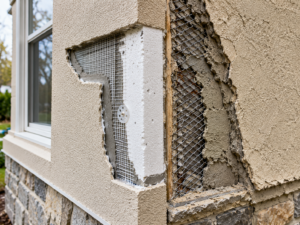


Stucco is an incredibly durable exterior finish when installed correctly. However, because it creates a hard, continuous shell over the home, it can effectively hide catastrophic failures occurring within the wall cavity. By the time a homeowner in Fishtown or South Philadelphia notices a problem, the structural framing may already be compromised.
Identifying the early warning signs of moisture damage behind stucco is critical. Catching water intrusion early can mean the difference between a targeted repair and a massive, full-wall remediation project.
Exterior Warning Signs
Water always leaves a trail. When inspecting the exterior of your rowhome or twin, look for these specific indicators:
- Tear Staining: Dark streaks running vertically down the wall, most commonly originating from the bottom corners of windows, doors, or where the roofline meets a vertical wall.
- Efflorescence: A chalky, white powder on the surface of the stucco. This occurs when water penetrates the material, dissolves the salts within the cement, and brings them to the surface as it evaporates.
- Bulging or Soft Spots: If you press on the stucco and it feels soft, or if sections appear to be bowing outward, the substrate behind it has likely rotted away, and the stucco is detaching from the wall.
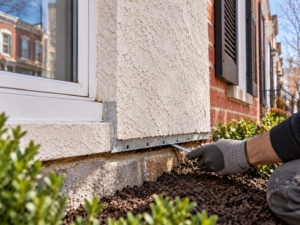
- Missing Flashing: Look at the tops of your windows and doors. If there is no visible metal flashing (drip edge) directing water away from the frame, water is likely seeping directly behind the stucco assembly.
Interior Warning Signs
Often, the most severe signs of exterior stucco failure manifest inside the house. Because the moisture cannot evaporate outward through the stucco, it moves inward through the drywall.
- Peeling Paint and Warped Baseboards: If the paint on your interior walls is bubbling, or if your wooden baseboards are warping and separating from the wall, water is pooling at the base of the framing.
- Musty Odors: A persistent smell of mold or mildew in specific rooms, even if you cannot see visible mold, strongly indicates damp insulation within the wall cavity.
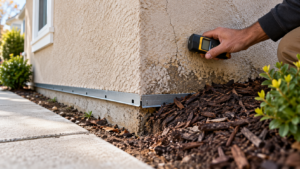
- Wet Floors: In severe cases of missing weep screeds, water will travel down the interior of the wall and soak the perimeter of the carpeting or hardwood floors.
Taking Action
If you observe any of these symptoms, do not attempt to caulk over the stains or paint the interior walls. Sealing the surface only traps the moisture further, accelerating the rot. A professional evaluation using specialized moisture meters and thermal imaging is required to determine the exact extent of the water intrusion.
CTA
Don’t ignore the warning signs of water damage. Contact Philadelphia Stucco Experts today to schedule a comprehensive moisture evaluation and protect the structural integrity of your home.