
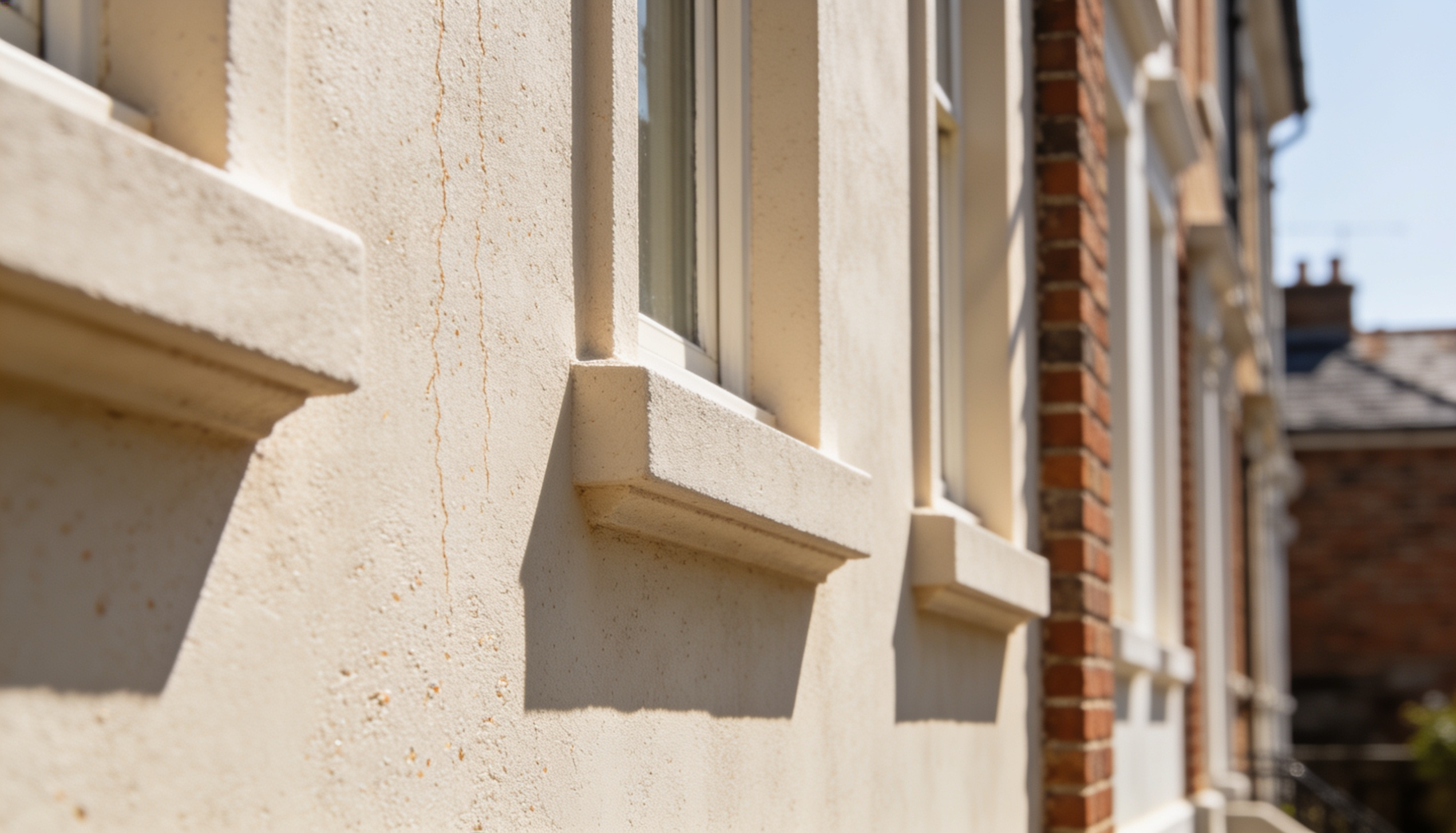
When property owners in Kensington and Center City look at the smooth, textured exterior of their homes, most simply refer to the material as “stucco.” However, the architectural reality is often much more complex. Over the past few decades, the construction industry has heavily utilized a modern alternative known as Exterior Insulation and Finish Systems (EIFS).
While EIFS and traditional hard-coat stucco look virtually identical to the untrained eye, they function in completely different ways. Knowing exactly which system is installed on your home is vital, because executing an EIFS repair requires vastly different techniques and materials than patching a traditional cement wall.
The Anatomy of Traditional Stucco
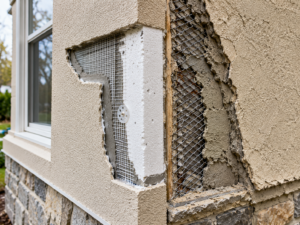
Traditional stucco has been used for centuries. It is a massive, heavy material composed of Portland cement, sand, lime, and water. During a classic stucco installation, this wet mixture is applied in three distinct coats (the scratch coat, the brown coat, and the finish coat) over a metal wire lath that is mechanically fastened to the home’s wooden sheathing.
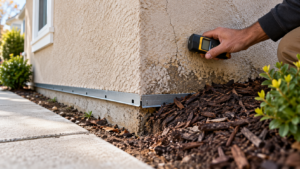
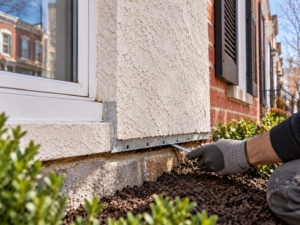
Because it is highly porous, traditional stucco is designed to absorb a certain amount of water during a rainstorm. The moisture hits a weather-resistant barrier behind the cement and safely weeps down to the bottom of the wall, exiting through specialized flashing.
The Anatomy of EIFS (Synthetic Stucco)
EIFS, often referred to as synthetic stucco, is a multi-layered exterior cladding system that provides superior energy efficiency. Instead of heavy cement, EIFS utilizes large panels of expanded polystyrene (EPS) foam insulation glued directly to the exterior sheathing. This foam is then covered with a thin fiberglass mesh embedded in a polymer-based base coat, and finished with an acrylic, highly flexible topcoat.
EIFS is designed to be a perfect barrier system. Unlike traditional stucco, it is completely impenetrable to water. The system relies entirely on perfect surface seals around windows, doors, and rooflines to keep water out.
The Unique Challenge of EIFS Repair
The greatest strength of EIFS is also its greatest vulnerability. If the caulking around a window frame fails, water will slip behind the synthetic exterior. Because EIFS is a perfect barrier, that water cannot evaporate back out through the front of the wall. It becomes permanently trapped inside the wooden framing, causing catastrophic, rapid rotting.
When a traditional stucco repair Philadelphia contractor attempts to patch an EIFS system using hard cement, the rigid cement will crack the flexible synthetic foam, making the problem significantly worse. Proper EIFS repair requires expertly cutting away the damaged foam, replacing the degraded wooden substrate, and meticulously blending new acrylic polymer coats into the existing facade to ensure the barrier is 100% watertight.
If you suspect water is infiltrating your exterior cladding, don’t guess what material you have. Contact Philadelphia Stucco Experts to have a specialized technician identify your system and implement the correct, lasting repair.