

As you walk through neighborhoods in Roxborough or Center City, many homes feature a smooth, uniform exterior that looks like perfect stucco. However, many of these modern buildings are actually clad in Exterior Insulation and Finish Systems (EIFS), commonly known as synthetic stucco.
If your home’s exterior is damaged, assuming all stucco is the same is a costly error. Applying traditional cement to a synthetic system will cause immediate failure. Homeowners must seek specialized EIFS repair in Philadelphia to ensure compatibility and structural safety.
The Core Differences
Traditional Cement Stucco is exactly what it sounds like: a heavy, rock-hard mixture of Portland cement, sand, lime, and water applied over a wire mesh (lath) attached to the house. It is highly impact-resistant but brittle, meaning it cracks easily as the house settles. It is also highly porous, absorbing and releasing water.
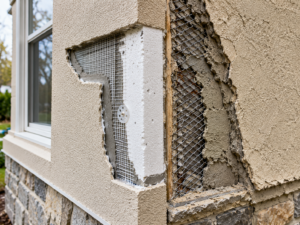
EIFS (Synthetic Stucco) is a multi-layered system designed for superior energy efficiency. It consists of rigid foam insulation boards glued or screwed to the exterior wall, covered by a thin base coat embedded with fiberglass mesh, and topped with a flexible acrylic finish.
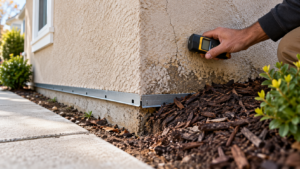
If you knock on traditional stucco, it feels like solid rock. If you knock on EIFS, it sounds hollow due to the foam insulation beneath.
Why EIFS Fails
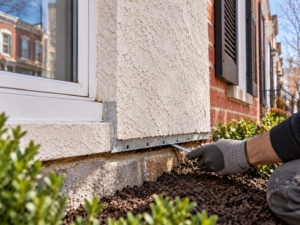
While EIFS provides incredible insulation, older systems (barrier EIFS) installed without drainage planes are notorious for trapping water. Because the acrylic topcoat is completely waterproof, any moisture that gets behind the system—usually through poorly sealed windows, roof kick-out flashing, or penetrations like exterior lights—cannot evaporate. It sits against the wooden framing, causing rapid, severe rot.
Additionally, because the surface is essentially a thin layer of acrylic over foam, EIFS is highly susceptible to impact damage from hail, wayward baseballs, or even woodpeckers.
Specialized Repair Techniques
Fixing a hole in an EIFS wall requires rebuilding the specific layers.
- Cutting Back: The damaged acrylic and base coat must be carefully cut away to expose the underlying foam.
- Foam Replacement: If the foam is crushed or wet, it is cut out and a new, perfectly sized piece of EPS foam is glued into place.
- Mesh Integration: The most critical step is applying a new base coat and embedding a new piece of fiberglass mesh. This mesh must overlap the existing, undamaged mesh by at least two inches to restore the structural strength of the wall.
- Acrylic Finish: Finally, a custom-tinted acrylic topcoat is floated over the repair to match the surrounding texture seamlessly.
CTA
Ensure your synthetic stucco is repaired with the correct materials. Contact Philadelphia Stucco Experts today for certified EIFS inspection and specialized repair services.