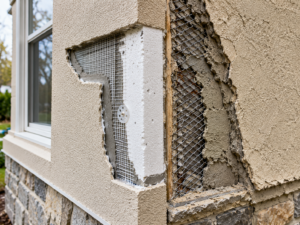

Historic and mid-century rowhomes throughout South Philadelphia, Port Richmond, Kensington, and Fishtown possess unique architectural characteristics that make exterior wall management vital. Among the most complex issues facing homeowners in these neighborhoods is hidden moisture accumulation behind exterior stucco cladding. Hard-coat plaster can look structurally sound even as the wood sheathing behind it decays. Property owners often remain unaware of severe damage until interior walls show dampness or timber framing loses load-bearing strength.
Understanding how moisture becomes trapped behind urban stucco systems—and how to identify early warning signs—is essential for preserving property values and structural safety.
Why Philadelphia Rowhomes Are Vulnerable to Trapped Water
Philadelphia’s residential building stock relies heavily on party-wall construction and narrow building envelopes. When modern synthetic stucco or traditional hard-coat renders were applied over older brick or wood sheathing during late 20th-century renovations, installation details often lacked adequate ventilation gaps or flashing systems.
+—————————————————————–+
| MOISTURE TRAPPING IN ROWHOMES |
| |
| Wind-Driven Rain –> Porous Stucco –> Trapped Water |
| | |
| Rotting Sheathing <– No Drainage Cavity <——–+ |
+—————————————————————–+
Several localized factors contribute to hidden moisture saturation:
- Zero-Lot-Line Side Walls: Rowhomes built directly adjacent to neighboring structures often experience poor air circulation in tight alleyways, preventing exterior walls from drying naturally after rainfall.
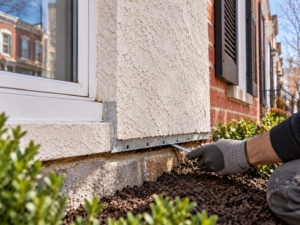
- Unflashed Window and Penetration Rims: Historic rowhome window openings retrofitted with vinyl inserts frequently lack head flashings or pan flashings, allowing driven rain to trickle down behind the stucco plane.
- Parapet Wall Seams: Upper roof parapets on flat-roof rowhomes subject exterior stucco capping to severe weather. Micro-cracks in top ledges draw water downward into the core of the front facade.
US EPA guidance for Mold and Moisture Control in Buildings notes this risk. Moisture intrusion left unaddressed inside building envelopes fosters microbial growth. It also degrades indoor air quality.
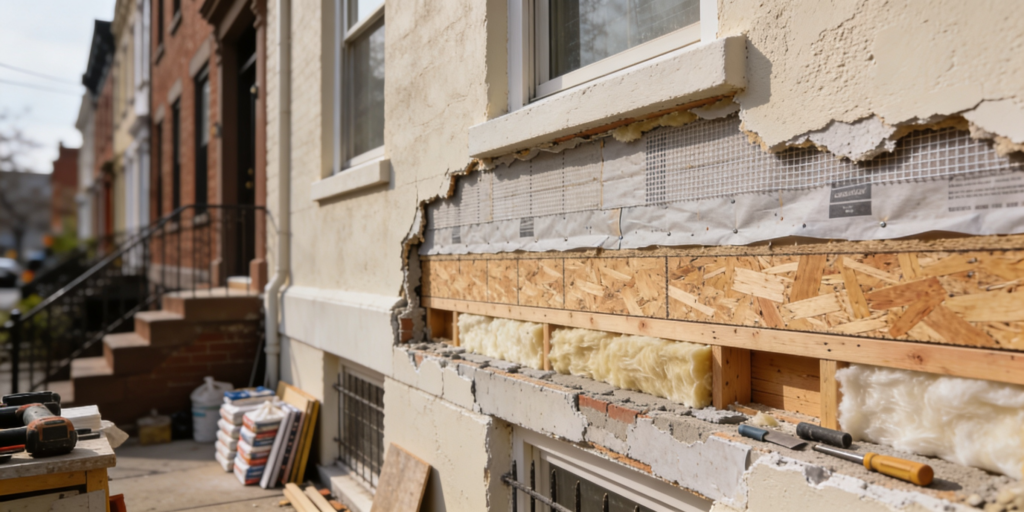

Identifying Hidden Moisture Damage Before Structural Failure
Because stucco plaster is rigid, it frequently masks severe timber decay behind its surface. Property owners must look for subtle physical clues that indicate elevated moisture levels behind the wall:
- Dark Mineral Stains around Wall Openings: Dark staining underneath window sills, hose bibs, or exhaust vents indicates water washing through corrosion-prone wire lath mesh within the rendering coat.
- Peeling Interior Wallpapers and Bubbling Paint: When water fills wood sheathing, it migrates inward toward interior living spaces, causing drywall tape to peel and paint to blister along exterior walls.
- Persistent Efflorescence Deposits: White crystalline residue accumulating on exterior plaster surfaces shows that water is migrating outward through the cementitious matrix, leaving dissolved mineral salts behind.
- Musty Odors near Baseboards: Organic decay occurring inside wall cavities releases lingering earth-toned odors near perimeter floorboards.
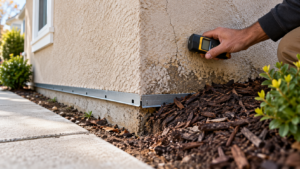
Homeowners suspecting hidden damage should schedule a [Internal link: comprehensive stucco moisture inspection → /stucco-inspection-philadelphia/] to assess substrate conditions using non-destructive moisture meters and electronic probe tools.
The Testing Process for Trapped Moisture
Accurately diagnosing moisture trapped behind stucco requires specialized diagnostic testing. Standard visual checks are insufficient for evaluating substrate health.
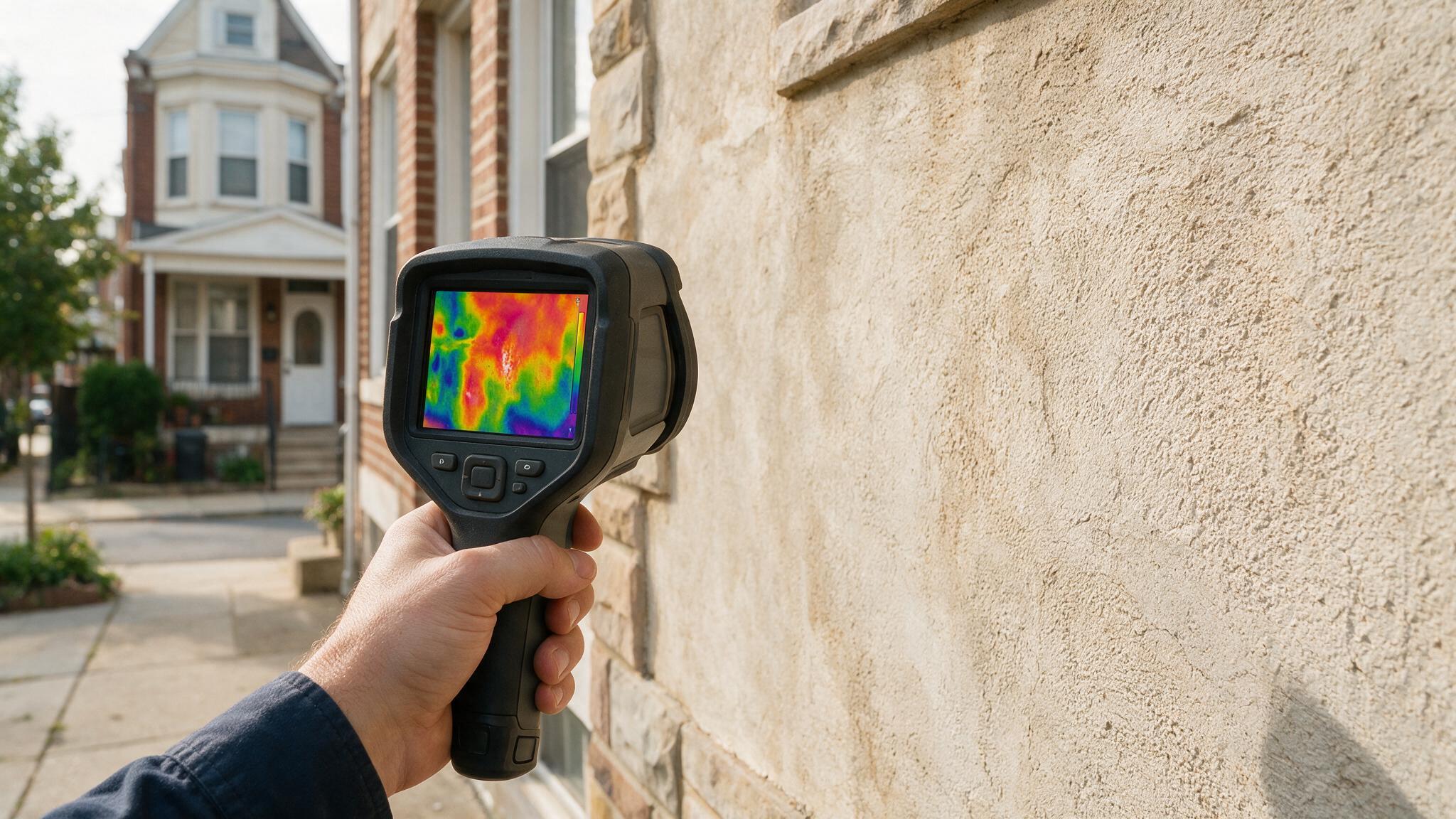
- Infrared Thermography: Infrared cameras detect surface temperature variances caused by water evaporation within wall cavities, pinpointing saturated zones for further probe analysis.
- Electronic Moisture Meter Testing: Technicians drill tiny 3/16-inch probe holes through the plaster layer at strategic locations (such as under window corners and roof lines) to measure the exact moisture content of wood sheathing. Moisture levels exceeding 19% signal active wood decay conditions.
Frequently Asked Questions
Why does stucco retain water instead of drying naturally?
Standard stucco is a cementitious product that absorbs moisture. Without an integrated drainage space or secondary weather barrier behind the render, trapped water cannot drain or evaporate, keeping wood sheathing continuously wet.
Can visual inspection alone confirm stucco moisture damage?
No. Stucco plaster can remain firm and unchanged visually while wood studs and sheathing behind it have completely rotted away. Electronic moisture probe testing is necessary for precise verification.
Will applying a coat of waterproof paint fix trapped moisture?
No. Sealing the exterior surface with waterproof paint traps existing moisture inside the wall cavity, accelerating wood decay and causing exterior paint layers to blister and peel off rapidly.
How are testing holes repaired after a stucco inspection?
Technicians fill all probe holes with color-matched sealant and surface plaster compound, restoring the wall’s weather seal without altering its appearance.
Protecting Your Rowhome Envelope
Detecting trapped moisture early prevents structural compromise and costly full-scale frame rebuilding in South Philadelphia, Kensington, and Port Richmond properties. Professional inspection provides exact data regarding your wall’s moisture content and underlying substrate condition. Contact Philadelphia Stucco Experts today to arrange a detailed stucco moisture assessment for your residential or commercial property.