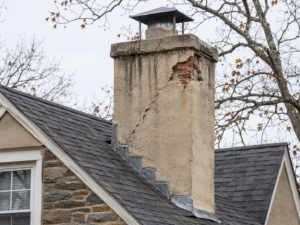

Once the leaves drop, many Philadelphia homeowners finally notice the stucco problems they ignored all summer: a crack that has grown near a window, a stain below a sill, a soft spot by the foundation. The natural next question is whether the repair can happen now or has to wait until spring.
The honest answer is that it depends on the temperature, both on the day the work is done and for the days after. Stucco is a cement-based material that needs the right conditions to set and gain strength. Applied in the cold without protection, a patch can look fine on day one and fail by March.
This guide explains why temperature matters, what the common cold-weather limits are, how contractors work through the winter, and which stucco work can usually move forward while it is cold.
Why Temperature Matters for Stucco
Traditional stucco, also called portland cement plaster, does not simply dry. It hardens through a chemical reaction between cement and water called hydration. That reaction slows down as temperatures fall, and it can effectively stop when the material gets too cold.
In Philadelphia, late fall and winter regularly bring nights near or below freezing, even when afternoons feel mild. That swing is exactly what makes cold-weather stucco work tricky. A wall can be comfortable to work on at 1 p.m. and well below the safe range by midnight, while the new stucco is still in its most vulnerable stage.
The 40°F Rule and the First 24 to 48 Hours
Industry guidance consistently points to 40°F as the key threshold. In its article on hot and cold weather stucco applications, Building Enclosure quotes the International Building Code provision for cement plastering: plaster coats must be protected from freezing for at least 24 hours after initial set, and plaster should be applied when the ambient temperature is higher than 40°F unless provisions are made to keep the work above 40°F during application and for 48 hours afterward.
The same article cites the American Concrete Institute’s guide to cement plastering, which states that plaster installed when ambient temperatures are below 40°F must be kept in a sheltered and heated environment with continued curing. It also notes that cementitious materials are typically restricted to 40°F and rising.
In practical terms, that means a contractor is not only looking at today’s temperature. They are looking at the forecast for the next two days and asking whether the new stucco will stay warm enough through that window.
What Happens When Fresh Stucco Freezes
Water makes up part of fresh stucco. When that water freezes before the material has set and gained strength, the damage can be serious. The Building Enclosure article explains that at 32°F and below, plaster will freeze on the wall and weaken, and that the damage can be so severe that the plaster can be rubbed off the wall by hand.
Even when the damage is less dramatic, cold can cause problems that show up later:
- Slower set and strength gain, which can leave a patch weaker than the surrounding wall.
- Cracking, flaking, softening and delamination when material is applied in cold or freezing conditions.
- Higher porosity in a wall that froze during curing, which can lead to further deterioration if wind-driven rain soaks it and it freezes again.
- More efflorescence, the white salt deposits that tend to appear on stucco in cooler weather.
For homeowners, the takeaway is simple. A repair done in the wrong conditions can turn a small problem into a bigger one and add a second repair bill.
Why Fall and Winter Patches Are Especially Vulnerable
Repair patches face a challenge that full new walls do not. According to Building Enclosure, thermal cycling is most frequent in the fall months. Cracks that look narrow in the afternoon, when the wall is warm and expanded, can widen significantly at night as temperatures fall. In repair work, the article notes, cracking can be even more severe because the new patching material has not yet developed full strength.
That is why a patch that is pressed into an old crack on a cold November afternoon, with no protection afterward, is a common source of callbacks. The old wall keeps moving, the new material is still weak, and the joint between them opens up.
How Contractors Work Through the Cold
Cold weather does not always mean stucco work stops. It means the job has to be planned around temperature. Common practices described in the Building Enclosure article include:
- Not applying stucco to frozen surfaces, and checking the substrate temperature as well as the air.
- Watching the extended forecast for sudden temperature drops during application and curing.
- Storing materials at 45°F or higher when possible.
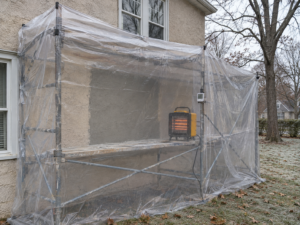
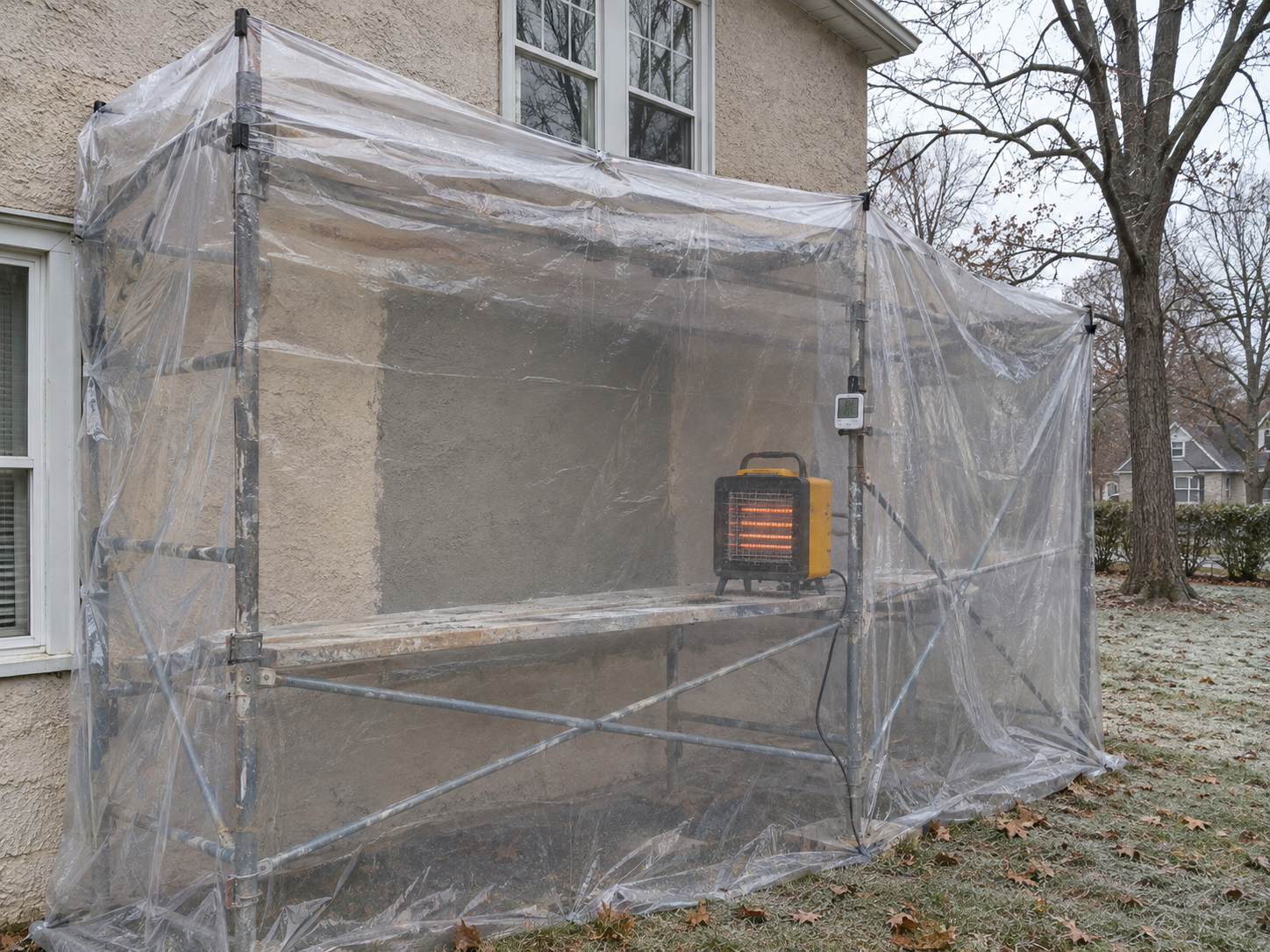
- Enclosing the work area with tarps or plastic, a process called tenting, so the wall is protected from wind, rain and snow.
- Heating the enclosure before and after application, with enough ventilation for safety and curing.
- Avoiding gas, kerosene and other fossil fuel heaters that can cause rapid carbonation of the material during initial set.
- Warming the mixing water, without exceeding 120°F, and using preblended materials to avoid frozen sand.
Tenting and heating add cost and time, so it is worth discussing early whether the repair needs to happen now or can be scheduled for a warmer stretch.
Winter Work That Can Usually Move Forward
Many important steps do not involve applying new stucco at all. These can often happen in winter:
- Inspections and moisture testing. Cold, wet months can be a useful time to see where water is getting in, and testing helps define the scope of repair.
- Documenting damage. Photos of cracks, stains and soft areas taken now help compare changes later.
- Planning and scheduling. Getting the scope, materials and timing settled in winter can help you get on a contractor’s schedule early for spring.
- Temporary measures to slow water entry, when your contractor recommends them, until permanent repairs can be done in suitable conditions.
- Small repairs on mild stretches, when the forecast shows 40°F and rising for the days the stucco needs.
Work That Should Wait or Needs a Heated Enclosure
Larger jobs are more sensitive to cold. Full re-coats, large patches, finish coats over wide areas and work on walls that stay shaded all day are usually better scheduled for warmer weather or done inside a heated enclosure. Acrylic and synthetic finishes have their own temperature limits, so the manufacturer’s instructions for the specific product apply.
If the wall has active water damage behind it, waiting is not always the right answer either. A contractor can explain whether the investigation and framing repairs should start now, with the final stucco coats planned for when conditions allow.
Questions to Ask Before Approving Winter Stucco Work
- What are the forecast temperatures for application and the following 48 hours?
- Will the wall be tented and heated, and what kind of heater will be used?
- How will you check that the surface is not frozen or frosted?
- Which parts of the job can happen now, and which should wait?
- How will the new patch be protected while it cures?
- If we wait until spring, what can be done now to limit further water entry?
Frequently Asked Questions
How cold is too cold for stucco? Industry guidance generally treats 40°F as the minimum for unprotected application, with the stucco kept from freezing while it sets and cures. Below that, the work area should be enclosed and heated.
Can stucco be patched in November? Sometimes. It depends on the forecast for the day of the work and the days after. A mild, stable stretch may allow small repairs; a cold snap may not.
What happens if new stucco freezes? It can weaken, crack, flake or delaminate, and in severe cases the material can be rubbed off by hand.
Is winter a good time for a stucco inspection? Yes. Inspections, moisture testing and repair planning do not depend on curing conditions.
Plan Winter Stucco Repairs Around the Weather
Cold weather does not have to mean ignoring stucco problems, but it does mean planning repairs carefully. Philadelphia Stucco Experts LLC can inspect your walls this winter, explain which work can move forward safely and schedule the rest for the right conditions. Learn more about our stucco installation and repair services in Philadelphia.