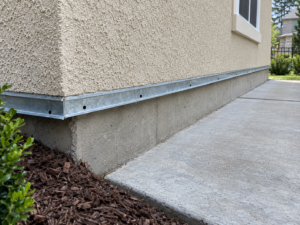

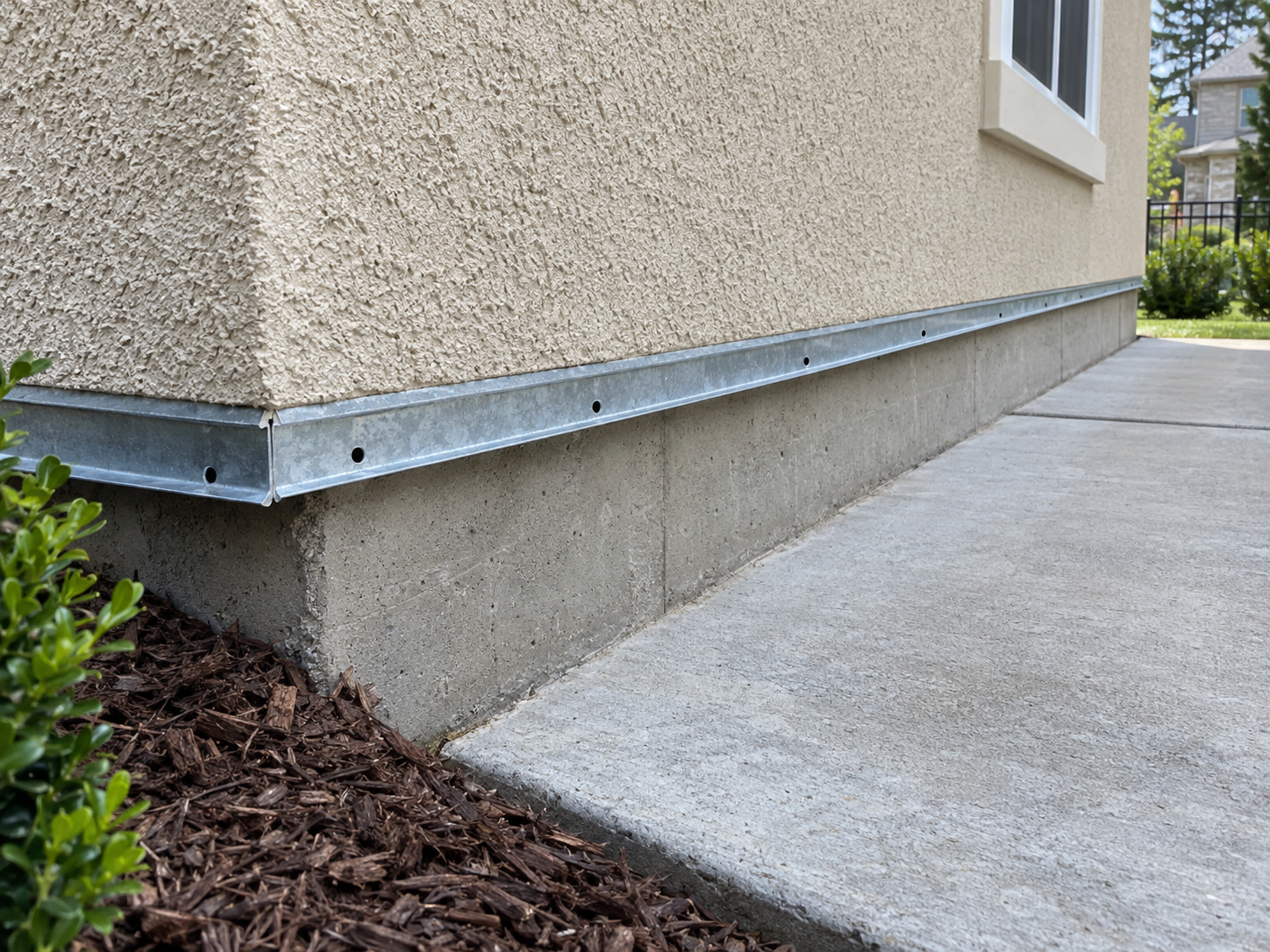
Most stucco problems are hidden, but many start at the very bottom of the wall. A stucco weep screed is the metal edge that lets water drain out from behind the stucco.
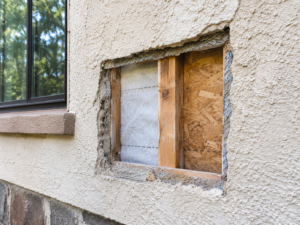
During inspections in Chester County, Montgomery County and the Main Line, we often find screeds buried in mulch, concrete or soil. When that happens, water stays trapped inside the wall.
This guide explains how a weep screed works and what correct clearance looks like.
What a Stucco Weep Screed Does
Stucco is not waterproof. Therefore, walls need a way to release water.
- Drainage path. Water flows down the weather barrier.
- Exit point. The screed lets that water leave the wall.
- Clean edge. It stops stucco from touching the ground.
- Pest barrier. It helps seal the bottom of the wall.
Correct Stucco Weep Screed Installation
Small details decide whether the wall can drain.
- Screed at least 4 inches above soil or mulch.
- At least 2 inches above paved surfaces.
- Weather barrier lapped over the screed flange.
- Drainage mat or gap behind the stucco.
- Open weep holes, free of paint and sealant.
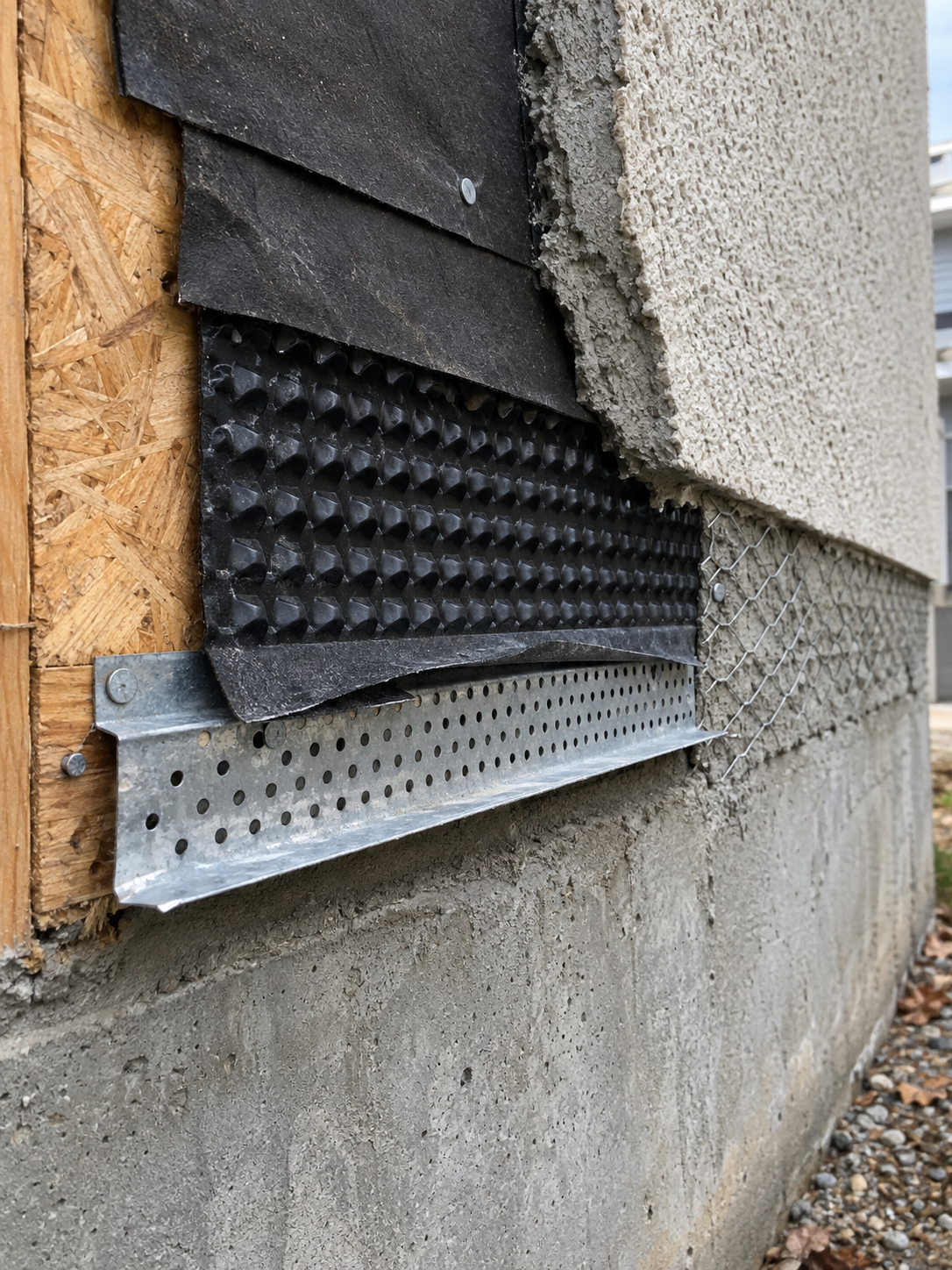
The International Residential Code sets minimum clearances for weep screeds above grade and paving.
Repairing a Buried or Missing Weep Screed
A simple fix may work when:
- Moisture readings are normal.
- Only soil or mulch is too high.
- The screed is present and intact.
Remediation is needed when:
- Readings are high at the base.
- No screed was installed.
- Sheathing feels soft or shows rot.
Warning Signs at the Base of Stucco Walls
- Stucco touching soil, mulch or patios.
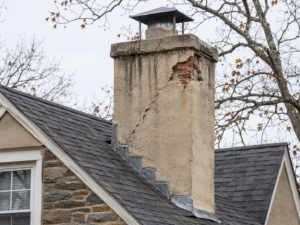
- Staining or cracks near the bottom.
- Soft spots when pressed.
- Musty smells in lower rooms.
A moisture test is the best way to know what is happening inside.
Frequently Asked Questions
Can a weep screed be added to an old wall? Yes, but the lower stucco must be removed and rebuilt.
Should I lower my mulch? Yes. Keeping mulch below the screed is an easy first step.
Is sealant at the bottom a good idea? No. Sealing the weep holes traps water inside.
How do I know if there is damage? A probe moisture inspection gives clear answers.
Get a Stucco Weep Screed Inspection
Philadelphia Stucco Experts inspects, repairs and remediates stucco across Greater Philadelphia. Explore our stucco services, see our residential stucco project, or contact our team to schedule an inspection.