
Many Philadelphia homes have chimneys finished in stucco. Sometimes it was part of the original design. Often it was added later to cover worn brick. Either way, the chimney is the hardest-working piece of stucco on the house, and it is usually the first place where cracks, stains and loose sections show up.
The difficulty is that a crack on a chimney is rarely just a crack. Water can come in from the top, from the roofline or through the stucco itself, and a patch on the surface will not hold if the water source is somewhere else.
This guide explains why chimney stucco fails, where water usually enters, which signs to look for and how a lasting repair is planned.
Why Chimneys Are Hard on Stucco
A chimney is exposed on every side. Unlike a wall, it has no roof overhang above it and no neighbor beside it. Rain hits it from any direction, the top collects water and snow, and the part above the roofline takes the full force of wind.
Chimneys also move with temperature. A chimney that serves a fireplace or an older heating system can warm up and cool down from the inside, while Philadelphia winters freeze and thaw it from the outside. Stucco is rigid. When the masonry behind it expands, contracts or absorbs water, that movement shows up as cracks in the finish.
Finally, many chimney stucco jobs were applied directly over old brick that was already wet or deteriorating. If the brick underneath keeps absorbing water, the stucco over it is unlikely to stay bonded.
Water Is the Main Threat
The Chimney Safety Institute of America (CSIA) states plainly that water causes more damage to masonry chimneys than fire. In its recommendations for preventing chimney water damage, CSIA lists the problems water can cause, including broken brickwork, rusted fireplace dampers, rotted wood, ruined wall coverings and cracked flue liners. It also notes that this damage is usually slow and easy to ignore until it becomes serious.
That slow pace is what makes chimney stucco tricky. By the time stucco is cracking or falling off, water has often been getting into the masonry behind it for several seasons.
Where Water Gets Into a Stucco Chimney
Water rarely enters a chimney at only one point. A good inspection looks at each of these areas:
- The cap. CSIA describes a well-designed cap as one that keeps rainwater out of the flue and keeps animals from nesting inside. A missing or damaged cap lets rain fall straight into the chimney.
- The crown. This is the concrete or mortar slab across the top of the chimney. CSIA recommends that crowns project beyond all sides by two inches to help prevent erosion of the brick and mortar below, and calls a cast crown with an expansion joint a long-lasting replacement for common sand and mortar washes. A flat, cracked or flush crown sends water down the face of the chimney and behind the stucco.
- The flashing. Flashing seals the joint between the roof and the chimney. CSIA explains that when it fails, water can run down the chimney into living spaces and damage ceilings, walls and framing.
- The masonry itself. CSIA notes that common brick acts like a sponge and that defective mortar joints increase how much water it absorbs and carries inward. Stucco over saturated brick is under constant stress.
- The stucco surface. Cracks, open edges and failed sealant joints let rain in directly, especially where the stucco meets the crown or the roof.
Signs Your Stucco Chimney Needs Attention
From outside, look for:
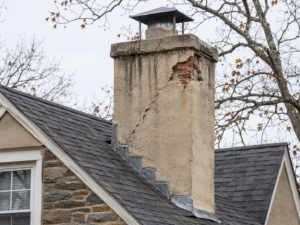
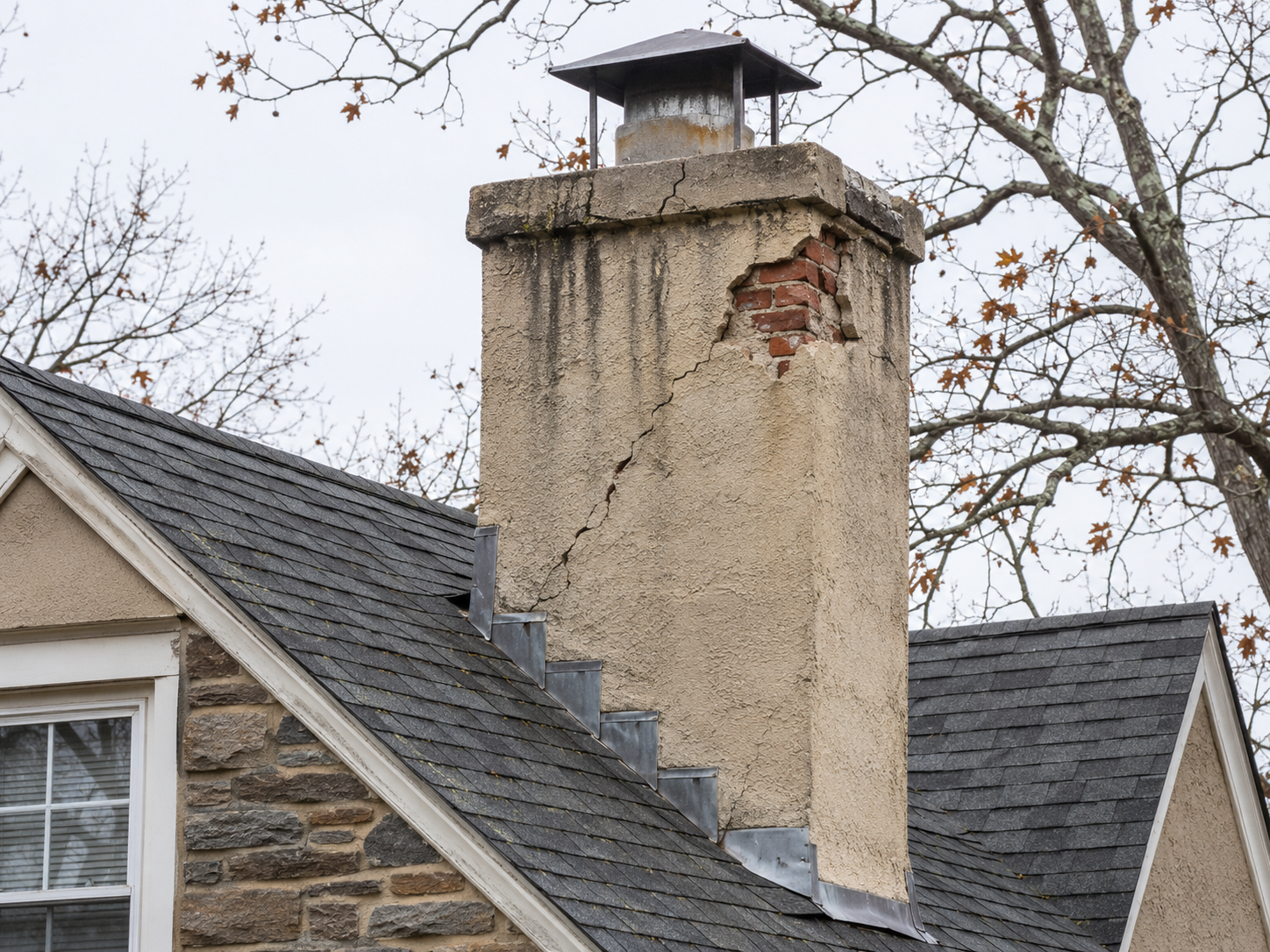
- Cracks running across or down the chimney, especially near the top.
- Stucco that sounds hollow when tapped, bulges or has already fallen off in sections.
- Dark streaks, white mineral deposits or rust stains on the stucco.
- Exposed brick or crumbling mortar where stucco has come loose.
- A crown that looks cracked, flat or flush with the sides.
Inside the house, look for:
- Stains on the ceiling or wall next to the chimney.
- Water or rust around the fireplace damper.
- A damp or musty smell from the fireplace, especially after rain.
- Peeling paint or soft plaster on the chimney breast.
Why Patching the Crack Usually Does Not Last
It is tempting to fill a chimney crack with caulk or a bag of patching mix and call it done. On a chimney, that approach usually fails for three reasons.
First, the crack is often a symptom. If water is coming in through a cracked crown or failed flashing, the masonry behind the stucco keeps getting wet, and the patch eventually cracks or pops off.
Second, sealing the surface without fixing the source can trap moisture inside the chimney. Water that cannot drain or dry out has more time to freeze, expand and push the stucco away from the brick.
Third, stucco that has lost its bond to the masonry will not be held on by a patch. If a section sounds hollow, the loose material usually needs to be removed back to sound stucco before any repair goes on.
How a Stucco Chimney Repair Is Usually Planned
Because water often enters from the top, chimney repairs are typically planned from the top down:
- Inspect the whole chimney: cap, crown, flashing, stucco and the interior where the chimney passes through the house.
- Address the top first. Crown and cap repairs are usually handled by a mason or chimney professional, and flashing by a roofer, before the stucco is finished.
- Remove loose and delaminated stucco back to a sound edge.
- Check the masonry underneath for soft brick, open mortar joints or moisture that needs to dry out.
- Repair or rebuild the stucco in layers, matching the existing system where possible.
- Keep proper joints and clearances where the stucco meets the crown, the roof and the flashing, so water is shed away instead of trapped.
- Match the finish texture and color as closely as the existing wall allows.
For larger failures, removing all of the stucco from the chimney and starting over may be more reliable than a series of patches. Your contractor can explain which approach fits the condition they find.
Who Does What on a Chimney
Chimney repairs often involve more than one trade. A stucco contractor handles the stucco surface and the transitions where it meets other materials. A roofer handles the flashing. A mason or certified chimney professional handles the crown, the cap, the flue and any brick rebuilding. CSIA recommends that annual chimney inspections and maintenance be done by a qualified chimney professional.
When these trades work in the right order, each repair protects the next. When they do not, a new stucco finish can be damaged by a leak that nobody fixed above it.
Timing Repairs Around the Weather
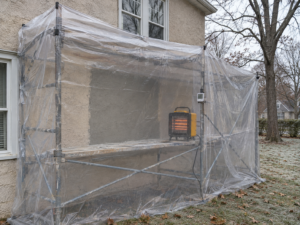
Stucco is a cement-based material and needs the right temperatures to cure. In late fall and winter, inspections, documentation and repairs to the crown, cap or flashing can often move forward, while the final stucco coats may need a mild stretch of weather or a protected, heated enclosure. A chimney is also hard to tent, so scheduling matters even more than on a wall.
If water is actively getting into the house, temporary measures your contractor recommends can limit damage until permanent repairs can be done.
Questions to Ask Before a Stucco Chimney Repair
- Where do you think the water is getting in, and how did you confirm it?
- Will the crown, cap and flashing be checked or repaired before the stucco?
- Who will do each part of the work, and in what order?
- How much of the stucco is loose, and will it be removed back to sound material?
- What is the condition of the brick under the stucco?
- How will you match the texture and color of the existing stucco?
- What can be done now, and what should wait for warmer weather?
Frequently Asked Questions
Why is the stucco on my chimney cracking? The most common reasons are water getting into the masonry from the crown, cap or flashing, freeze-thaw cycles, and movement in the brick behind the stucco.
Can stucco on a chimney be patched? Small, stable cracks sometimes can be, once the water source is fixed. Loose or hollow-sounding stucco usually needs to be removed and rebuilt.
Who fixes a stucco chimney, a roofer or a stucco contractor? Often both, plus a mason or chimney professional for the crown and cap. The stucco work should come after the top of the chimney and the flashing are sound.
Can stucco chimney repairs be done in winter? Inspections and some repairs can. Final stucco coats need suitable temperatures or a heated enclosure.
Protect the Chimney From the Top Down
Cracked or loose stucco on a chimney is a sign to look for the water source, not just a surface to cover. Philadelphia Stucco Experts LLC inspects stucco chimneys, explains where the water is coming from and repairs the stucco once the top and roofline are sound. Learn more about our stucco installation and repair services in Philadelphia.