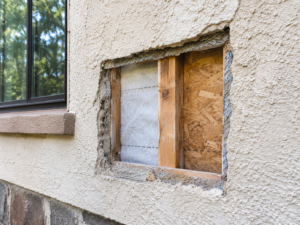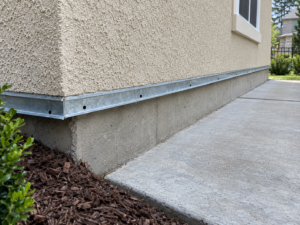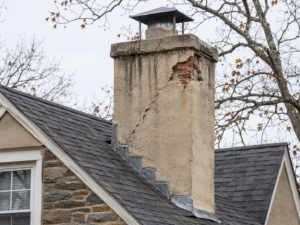

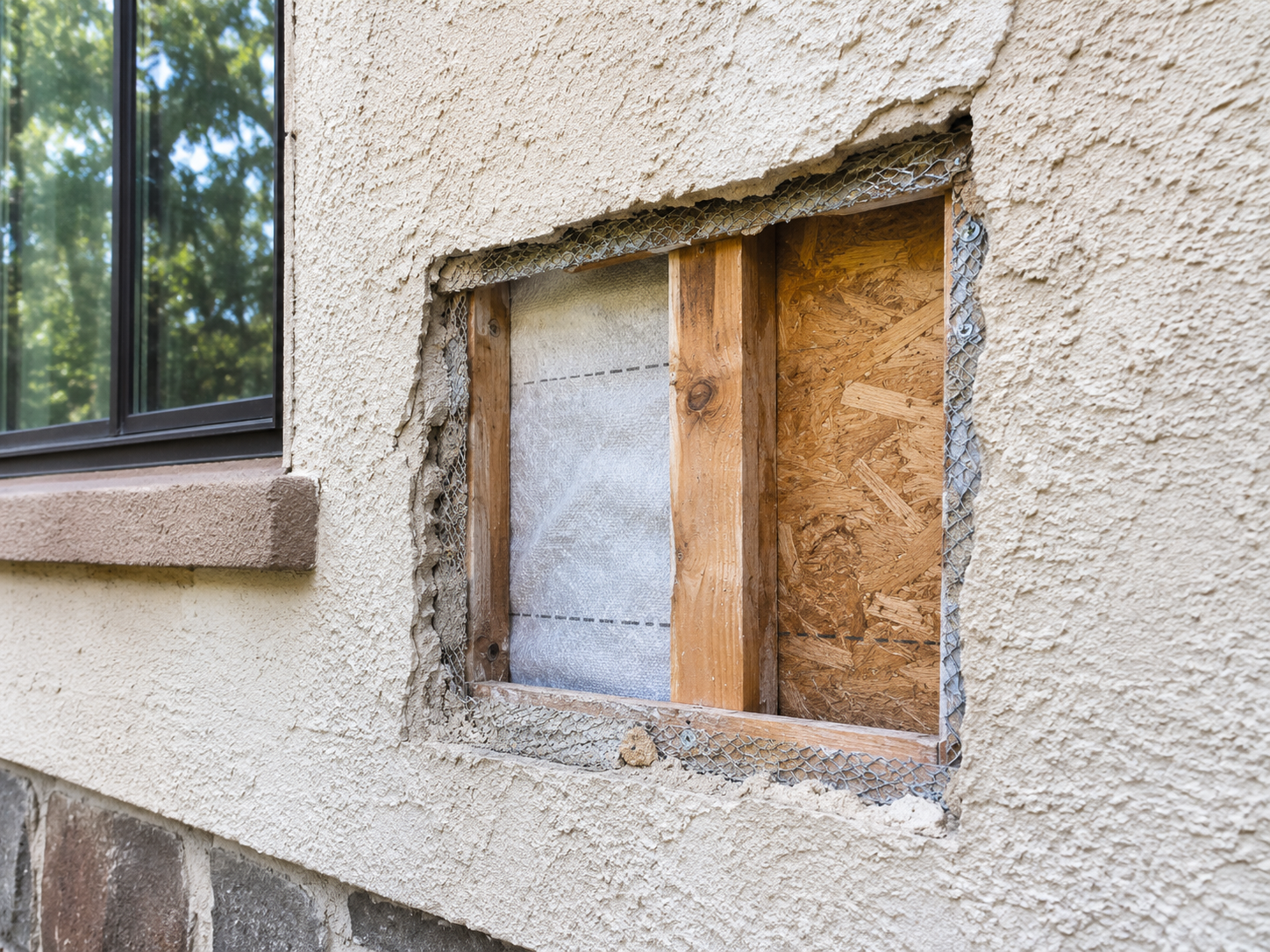
A visible crack or damaged patch can lead a homeowner to picture a repair of the same size. The final scope may differ because the surrounding assembly and concealed conditions also need consideration.
For stucco repair in Roxborough and Chestnut Hill, ask how the proposed repair boundary was selected. A clear proposal should distinguish the visible concern, the initial investigation area, and any additional work that depends on what is uncovered.
Start with the purpose of the repair
Explain what prompted the assessment. Is the concern a surface defect, recurring dampness, loose material, or damage around an opening? Photographs and a history of earlier repairs can help frame the discussion.
The inspection should guide the recommendation. A photograph of the surface alone should not be treated as proof that every underlying layer is sound—or that the entire wall requires replacement.
Separate the opening from the finishing area
The area removed for investigation or repair may differ from the area receiving a finish treatment. Ask the contractor to identify both.
This distinction matters when discussing appearance. Texture, color, weathering, and previous coatings can influence how a repair blends with the surrounding wall. Agree on expectations before work begins rather than assuming a small patch will disappear completely.
Discuss the source of moisture when relevant
Where dampness is part of the concern, ask how the suspected source will be evaluated and addressed. The EPA’s moisture guidance emphasizes correcting moisture sources when dealing with mold and damp materials.
That principle does not diagnose a particular stucco wall. It explains why a finish-only repair should not be assumed to resolve a separate water-entry problem.
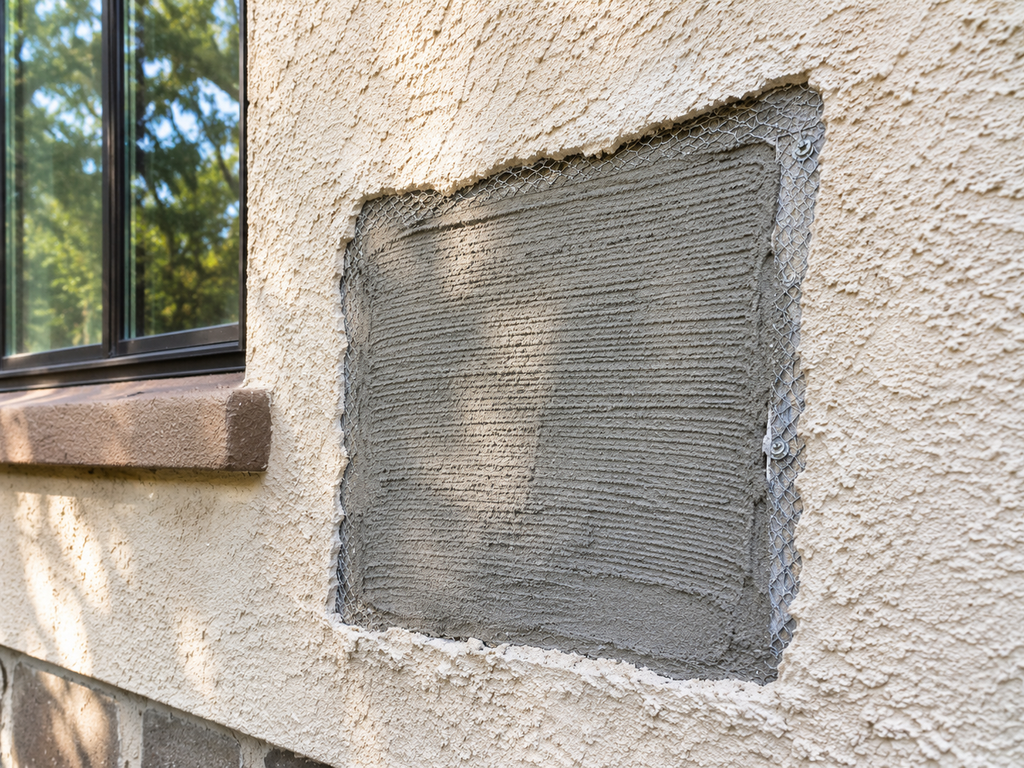
Ask how new work meets retained materials
The proposal should describe the intended transition to the surrounding assembly and identify the repair system. Details depend on the existing wall and the selected materials, so request an explanation tied to your property.
For work involving windows, doors, or another trade, record who handles those elements. A stucco estimate should not leave the owner guessing whether related removal and reinstallation are included.
Establish the process for additional findings
Ask for photographs of concealed damage if it is discovered and a written description of proposed additional work. Agree on how changes will be approved before the original repair area is expanded.
Keep the completed-work photographs and product information with your property records. They can help explain what was repaired during a later assessment.
Review Philadelphia Stucco Experts’ exterior services, consult Philadelphia’s permit information for the proposed scope, and request a stucco assessment. Ask for a repair plan that explains both the starting boundary and the process if conditions require a change.