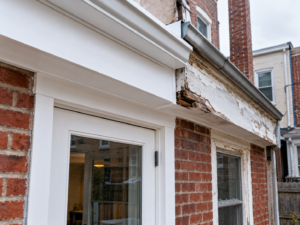

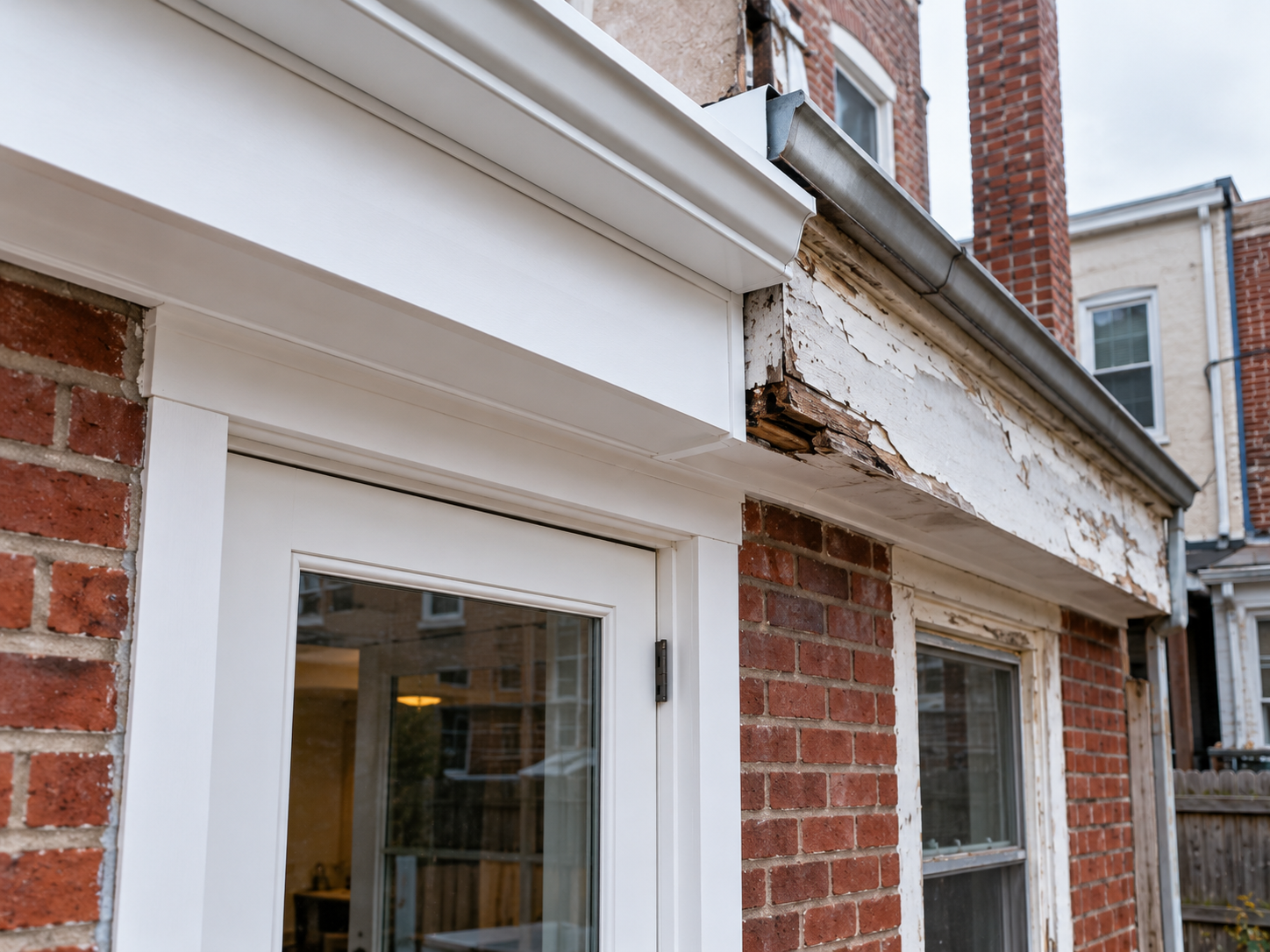
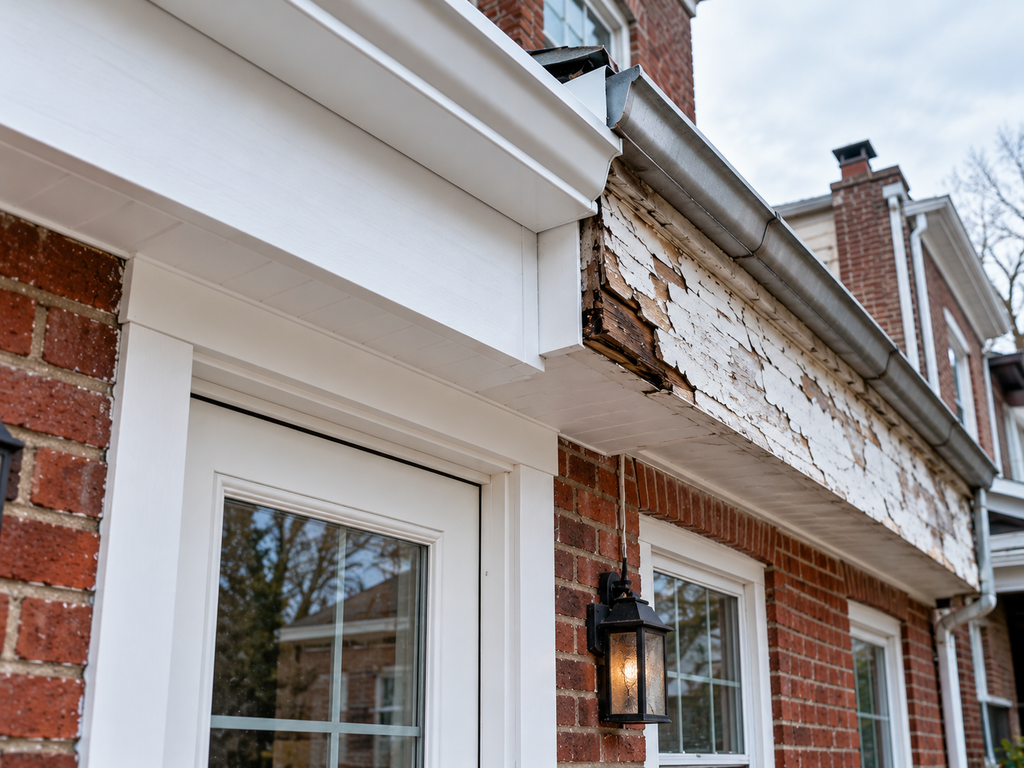
Walk any block in Fish-town, Point Breeze, Germantown or Mount Airy and you can usually spot the weak points of a house before you see anything else: a fascia board with paint peeling off in strips, a door casing that has gone soft at the bottom, a corner board split along the grain where water has been sitting for years. Exterior trim is a small share of the surface area of a Philadelphia home, but it sits exactly where water, sun and freeze-thaw cycles do the most damage. When it is time to replace it, most homeowners end up asking the same question: stay with wood, or switch to cellular PVC or a composite trim product?
There is no single right answer for every house. Each material behaves differently, needs different fasteners and installation details, and takes paint in its own way. This guide explains how wood, PVC and composite trim compare on rot resistance, movement, fastening, painting and the trouble spots around doors and along the fascia, so you can have a more useful conversation with your contractor before any boards come off the wall.
Why Trim Fails First on Philadelphia Homes
Trim is where different parts of the exterior meet. It covers the joint between siding and a door frame, caps the edge of a roof at the fascia, and finishes corners where two walls come together. Those are the places water collects and lingers. On older row-homes and twins, the conditions that wear out trim fastest include:
- Clogged or undersized gutters that overflow behind the fascia during heavy rain.
- Missing or failed flashing above doors and at roof edges, which sends water behind the trim rather than over it.
- Paint failure at end grain. The cut ends of wood boards soak up water quickly, and that is usually where rot starts.
- Freeze-thaw cycles that open small cracks in paint and caulk each winter.
- Shaded, damp elevations on narrow side yards and rear alleys, where boards never fully dry out.
- Decades of layered paint that hide soft wood until a screwdriver goes straight through it.
Swapping the material alone will not fix any of these. The first step is always to find out why the old trim failed.
Wood Trim: Strengths and Weak Spots
Wood has been the standard for Philadelphia exteriors for more than a century, and it still has real advantages. It is easy to shape, mill and match to historic profiles, it takes paint well when properly primed, and it can be patched or partially replaced without tearing out an entire run. On houses in historic districts, or on facades where original details matter, wood is often the material that looks most correct.
The trade-off is moisture. Wood absorbs water, swells and shrinks with changes in moisture content, and eventually rots if water is allowed to stay in it. To get a long life from wood trim, plan on:
- Priming all sides and every cut end before installation, not just the face.
- Choosing rot-resistant species or treated stock where it is available and appropriate.
- Repainting on a regular schedule and touching up cracked caulk before water gets in.
- Keeping boards off horizontal surfaces such as roofs, stoops and porch decks so the end grain is not sitting in water.
With those steps and the water sources handled, wood can perform well for many years.
PVC and Composite Trim: How They Differ
Cellular PVC trim is a solid plastic board made to look and machine like wood. It does not absorb water the way wood does, so it does not rot, and it is a popular choice for parts of the house that stay wet: the bottom of door casings, corner boards near grade, and fascia under gutters. Composite trim is a broader category that can include engineered wood and other blended products, and each one has its own installation and finishing requirements.
The biggest difference homeowners need to understand is how these materials move. Wood moves mainly with moisture. Cellular PVC moves mainly with temperature, and that movement happens along the length of the board. According to the VERSATEX technical bulletin on fastening cellular PVC trim, all cellular PVC trim expands and contracts on average about 3/16 inch in an 18-foot length, and the movement matters most on long runs such as rakes, fascia and frieze boards made up of three or more 18-foot boards.
Fasteners and Joints: Where Installations Go Wrong
Many PVC trim problems are really installation problems. Open joints, wavy boards and rust streaks usually trace back to the wrong fasteners or too few of them. The same VERSATEX bulletin lays out several practices worth asking your contractor about:
- Fasten into framing, not just sheathing. The bulletin states fasteners should penetrate the substrate at least 1-1/4 inches and that the substrate must be the frame of the house.
- Use a tight fastening schedule. It recommends a maximum of 16 inches on center, with added blocking where framing is spaced wider.
- Choose stainless steel. The bulletin recommends stainless fasteners and notes that galvanized fasteners can lose their coating during nailing and may lead to rust stains on the boards.
- Bond and ship-lap the joints. In visible areas, joints should be bonded and secured with fasteners on both sides, and butt joints are not recommended.
- Watch the weather. Pre-drilling is typically not required unless large fasteners are used or the board is installed below about 40 degrees Fahrenheit, when the material becomes less impact resistant.
Other brands publish their own instructions, so a good installer follows the guide for the specific product going on your house.
Painting and Finishing Each Material
Wood trim needs paint to survive outdoors. Bare wood weathers, checks and rots, so a quality primer and exterior topcoat are part of the system, not decoration.
PVC trim does not need paint to resist rot, but many homeowners paint it anyway to match the house color or a historic palette. A few points to keep in mind:
- Check the manufacturer’s finishing guidance before choosing a paint, especially for darker colors, since dark finishes make boards absorb more heat and move more.
- Clean the surface first so the paint bonds properly.
- Use compatible sealants at joints, as recommended by the trim manufacturer.
- Expect paint to last differently on PVC than on wood, because the substrate is not absorbing moisture underneath.
Composite and engineered products vary widely. Some come pre-primed and must be painted, and some require cut edges to be sealed. Read the product literature rather than assuming it behaves like PVC or like wood.
Around Doors, Fascia and Corners
The best location for each material often depends on where it sits on the house. A practical mixed approach is common on Philadelphia homes:
- Door casings and brick molding. The bottom of a door casing near a stoop or threshold stays wet, which makes PVC a strong candidate there. Flashing above the head of the door still matters, whatever the material.
- Fascia and rake boards. These long runs see the most sun and gutter overflow. PVC resists the rot, but it needs proper joints, fastening and expansion allowances. Fixing the drip edge and gutter apron comes first.
- Corner boards. Corners near grade or behind downspouts benefit from a moisture-resistant material, while corners higher on the wall may do fine in well-primed wood.
- Historic front facades. On a brick front in Queen Village or a Victorian twin in West Philadelphia, matching original wood profiles may matter more than switching materials, and historic review may apply.
Regardless of the material you choose, rotted sheathing or framing behind the trim must be repaired before new boards go on.
Permits and Local Review
Replacing trim in kind is often treated as routine maintenance, but larger exterior projects, structural repairs behind the trim, and work on properties listed on the Philadelphia Register of Historic Places can involve additional review. Requirements change, so confirm with Philadelphia L&I, the Philadelphia Historical Commission where it applies, and your contractor before work begins.
Frequently Asked Questions
Is PVC trim better than wood trim for Philadelphia homes? It depends on the location. PVC resists rot and works well in areas that stay wet, while wood is easier to match to historic details and repair in sections. Many homes benefit from using both.
Does PVC trim expand and contract? Yes. Cellular PVC moves mainly with temperature and mostly along its length, so long runs such as fascia need proper fastening, bonded joints and allowances for movement.
Can I paint PVC or composite trim? Generally yes, but follow the manufacturer’s finishing guidance, especially for darker colors. Composite products vary, so check whether yours must be painted and how cut edges should be sealed.
Why does my trim keep rotting even after replacing it? The water source was probably never fixed. Overflowing gutters, missing flashing and failed caulk joints will keep soaking new wood. Those problems should be corrected along with the trim.
Can new trim be installed over old rotted wood? It should not be. Rotted boards, sheathing and framing behind the trim should be removed and repaired first so the new material is fastened into sound wood.
If your trim is peeling, soft or splitting, Philadelphia Exterior Contractors LLC can assess why it failed, recommend whether wood, PVC or composite makes sense for each part of your home, and coordinate the repair with your siding and water management. Learn more about our siding installation services in Philadelphia and request an estimate before the next season of weather sets in.