
Traditional Hard-coat Stucco Repair: Techniques for Philadelphia HomesThe majority of historic and mid-century homes in Philadelphia and the surrounding suburbs feature traditional hard-coat stucco. Valued for its incredible impact resistance, fireproof qualities, and timeless aesthetic, hard-coat stucco is a heavy, durable cladding that can last for generations when properly maintained.However, when traditional stucco cracks, bulges, or suffers impact damage, repairing it is not as simple as smearing spackle over the hole. Traditional stucco is a rigid, multi-layered cementitious system.
If a repair patch is mixed incorrectly, applied over improperly prepped lath, or fails to cure properly, it will quickly shrink, crack, and pop right back out of the wall.At Philadelphia Stucco Experts, we specialize in the lost art of traditional hard-coat stucco restoration. Here is a technical guide to understanding the mechanics of hard-coat stucco and how to execute a permanent, seamless repair.
Philadelphia Stucco Experts — official website.
Philadelphia L&I: Building Permits.
Distinguishing Hard-coat Stucco from EIFSBefore executing a repair, you must correctly identify the cladding system on your home.EIFS (Exterior Insulation and Finish System): Often referred to as “synthetic stucco,” EIFS consists of a layer of rigid foam insulation glued to the wall, covered by a thin base coat embedded with fiberglass mesh, and topped with an acrylic finish. If you knock on an EIFS wall, it sounds hollow and feels slightly yielding.Traditional Hard-coat Stucco: This is essentially exterior concrete.
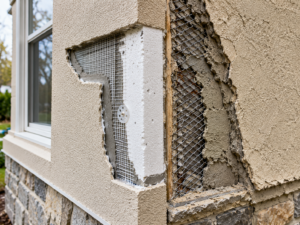
It is composed of Portland cement, sand, lime, and water, applied over a heavy wire mesh (metal lath). It is typically 3/4-inch to 1-inch thick. If you knock on hard-coat stucco, it feels like solid rock and will bruise your knuckles.You cannot use synthetic EIFS patching compounds to structurally repair traditional hard-coat stucco, nor can you slap heavy Portland cement directly over soft EIFS foam. The materials are entirely incompatible.The Three-Coat System AssemblyTo repair traditional stucco, the craftsman must recreate the original layers within the patch area.
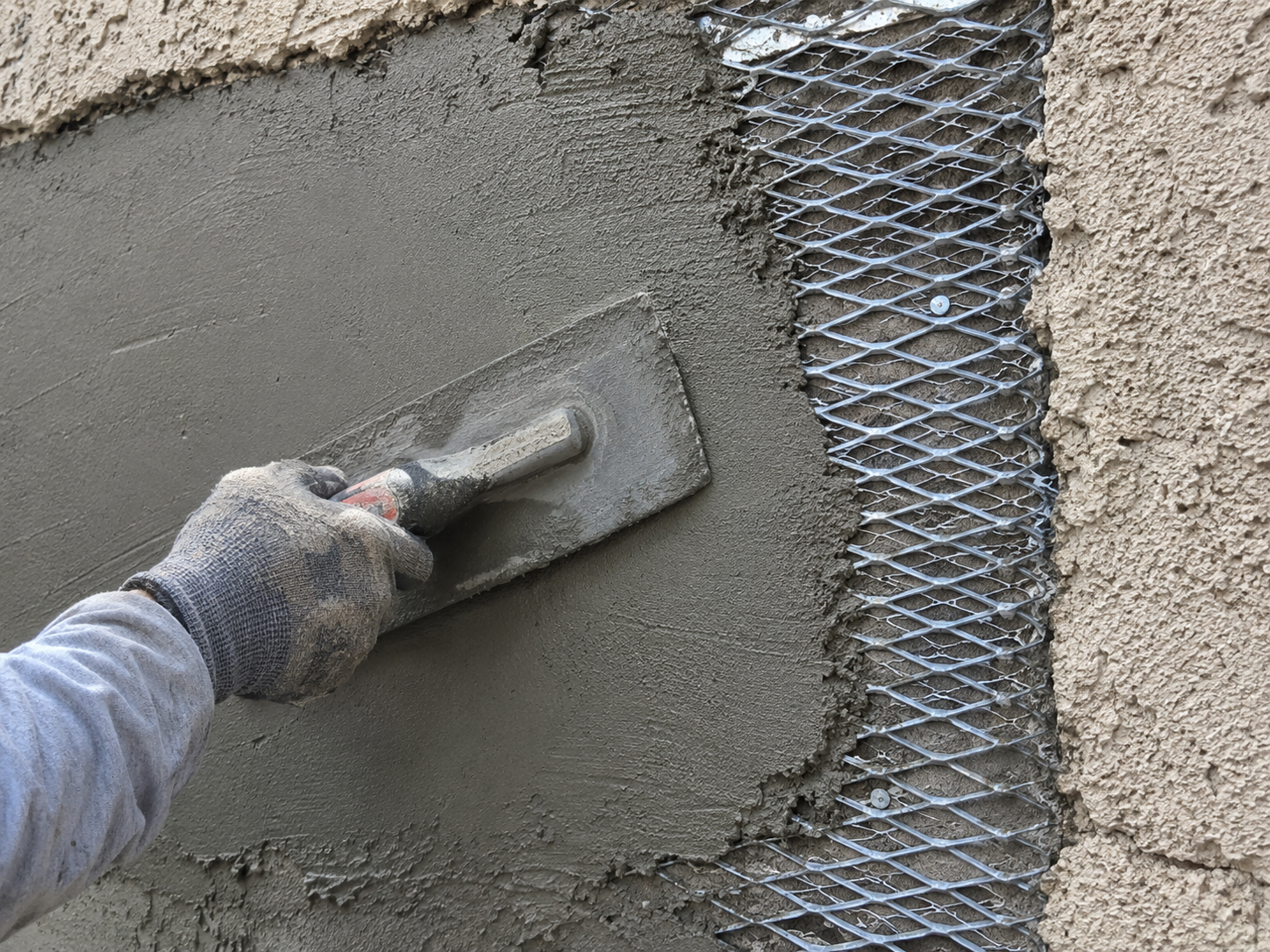
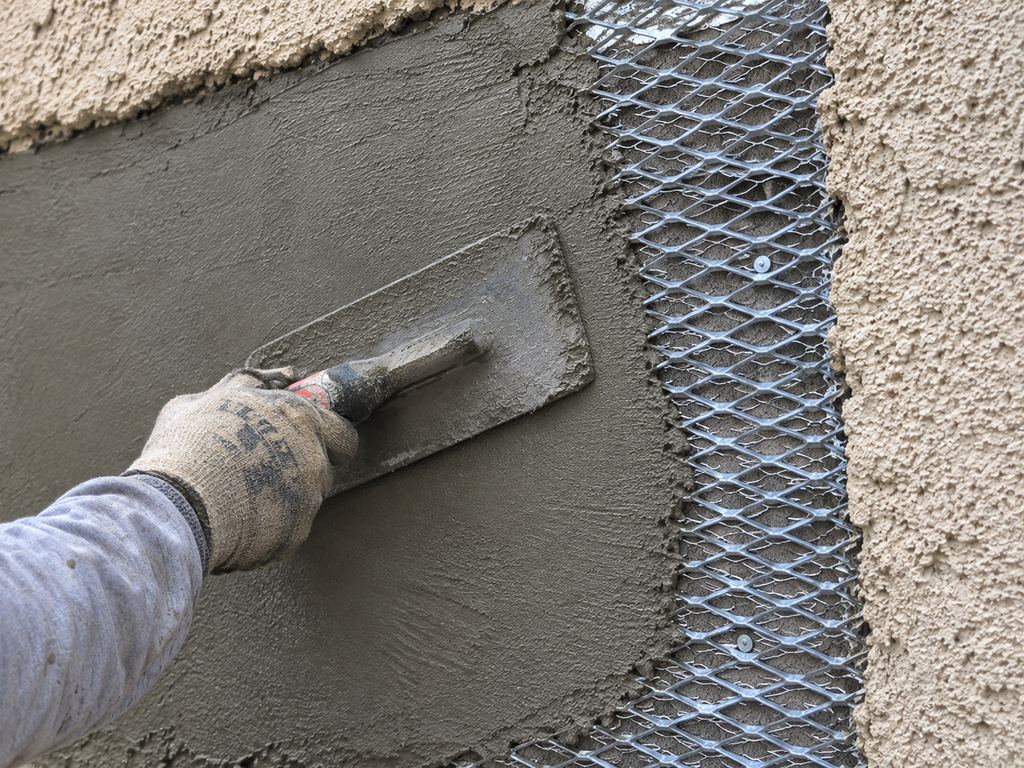
Hard-coat stucco is historically applied in three distinct layers over the Weather-Resistant Barrier (WRB) and metal lath:The Scratch Coat: The base layer of cement is aggressively troweled into the metal lath. Before it hardens, the surface is deeply scratched with a specialized tool to create horizontal grooves, providing a mechanical “key” for the next layer.The Brown Coat: The leveling layer.
This coat is applied over the scratch coat and meticulously floated to ensure the wall is perfectly flat and plumb.The Finish Coat: The thin top layer, often containing integral mineral pigments and fine aggregates to create the desired texture (e.g., dash, sand float, or Spanish lace).Proper Substrate and Lath PreparationThe success of a stucco patch relies entirely on the preparation of the perimeter edges and the mechanical bonding to the wall.Squaring the Edges: When removing damaged stucco, the contractor must not leave feathered or jagged edges.
The perimeter of the repair area must be cut cleanly with a masonry saw or chisel, undercutting the edges slightly so the new patch physically locks into the old stucco.Lath Integration: The old, rusted metal lath must be cut out. New, galvanized expanded metal lath is securely fastened to the wall framing. Crucially, the new lath must overlap the existing, healthy lath protruding from the edges of the patch by at least 2 to 3 inches.
If the lath is not tied together, the patch will immediately crack around its perimeter as the building settles.Bonding Agents: The exposed edges of the old stucco must be coated with a professional-grade liquid bonding agent or a Portland cement slurry to ensure the new wet cement chemically adheres to the dry, cured cement edge.Material Composition: Matching Compressive StrengthOne of the most frequent mistakes made by general contractors is patching historic stucco with a modern, ultra-high-strength concrete mix.Stucco must be compatible with the wall it sits on.
If a modern, rigid cement patch is applied to an older, softer lime-based stucco wall, the harder patch will not yield to thermal expansion. As the wall moves, the dense patch will literally rip itself away from the softer surrounding stucco, causing severe stress cracking.A skilled stucco mason tailors the mix ratio of Portland cement, Type S hydrated lime, and clean masonry sand to match the compressive strength of the existing wall.
Adding lime makes the mortar more workable (plastic) and allows the cured patch to remain slightly flexible, accommodating minor building movement without cracking.The Critical Role of CuringStandard spackle or paint dries via evaporation. Traditional Portland cement stucco cures via a chemical process called hydration.Hydration requires the continuous presence of water over several days. If the sun bakes the water out of a fresh stucco patch too quickly, the chemical reaction stops abruptly.
The patch will shrink violently, resulting in a spiderweb of deep map-cracking and a weak, powdery finish.To prevent this, the contractor must perform wet curing. The newly applied scratch and brown coats must be gently misted with a water hose twice a day for a minimum of 48 to 72 hours, keeping the cement damp so the hydration process can reach maximum strength before the finish coat is applied.
FAQs About Hard-coat Stucco RepairCan I just caulk the cracks in my stucco?
Hairline settling cracks (less than 1/16-inch) can be sealed with high-quality elastomeric caulk. However, large structural cracks, or cracks where the stucco feels loose or bulges off the wall (delamination), cannot be caulked. The delaminated section must be physically chipped out and re-patched.How long do I have to wait to paint a new stucco patch?Traditional Portland cement is highly alkaline when freshly applied. If you paint a fresh patch immediately, the alkalinity will burn through the paint, causing it to peel and chalk.
You must allow a new traditional stucco patch to cure for a minimum of 28 days before applying standard acrylic exterior paint, or use specialized masonry primers that tolerate high pH levels.What is a stucco control joint?A control joint is a specialized V-shaped metal or plastic accessory installed into large expanses of stucco. Because cement shrinks as it cures and expands when heated, the wall will inevitably crack.
A control joint forces the stucco to crack in a straight, predetermined, waterproof line rather than randomly across the facade.Traditional stucco repair requires an artisan’s touch and a chemist’s understanding of cement. Contact Philadelphia Stucco Experts for flawless, permanent hard-coat restorations.