
Stucco Remediation vs. Stucco Repair in Philadelphia: Defining the ScopeStucco is a durable, fire-resistant, and aesthetically versatile exterior cladding.
However, in the unforgiving climate of Philadelphia—with its high humidity, wind-driven rain, and aggressive freeze-thaw cycles—stucco assemblies are highly vulnerable to moisture intrusion.When homeowners notice dark stains beneath windows, cracking along expansion joints, or bulging sections on their facade, the immediate question is a matter of scope and budget: Do I need a simple repair, or am I facing a total remediation?Unfortunately, the stucco industry is plagued by contractors offering cheap surface patches that merely hide catastrophic underlying rot. At Philadelphia Stucco Experts, we believe in accurate diagnostics.
Philadelphia Stucco Experts — official website.
Philadelphia L&I: Building Permits.
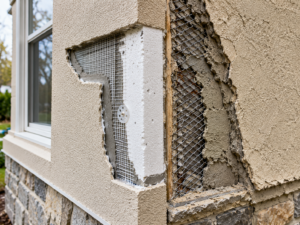
Not every crack requires tearing off the entire wall, but ignoring a failing drainage plane will ultimately destroy your home’s structural framing. Here is a technical guide to understanding localized stucco repair versus comprehensive stucco remediation.Understanding the Stucco AssemblyTo understand how stucco fails, you must understand how a modern stucco wall is built. A modern wood-framed stucco assembly relies on a concealed drainage plane.Because stucco is inherently porous, building scientists expect a certain amount of water to penetrate the outer cement layer.
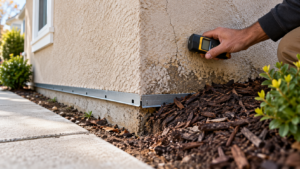
This water is supposed to hit a Weather-Resistant Barrier (WRB)—typically two layers of asphalt-saturated felt or a specialized house wrap—installed over the wooden Oriented Strand Board (OSB) or plywood sheathing. The water then travels down this WRB and safely exits the wall at the bottom through a perforated metal strip called a weep screed.When this concealed drainage system functions properly, the wood framing remains completely dry.
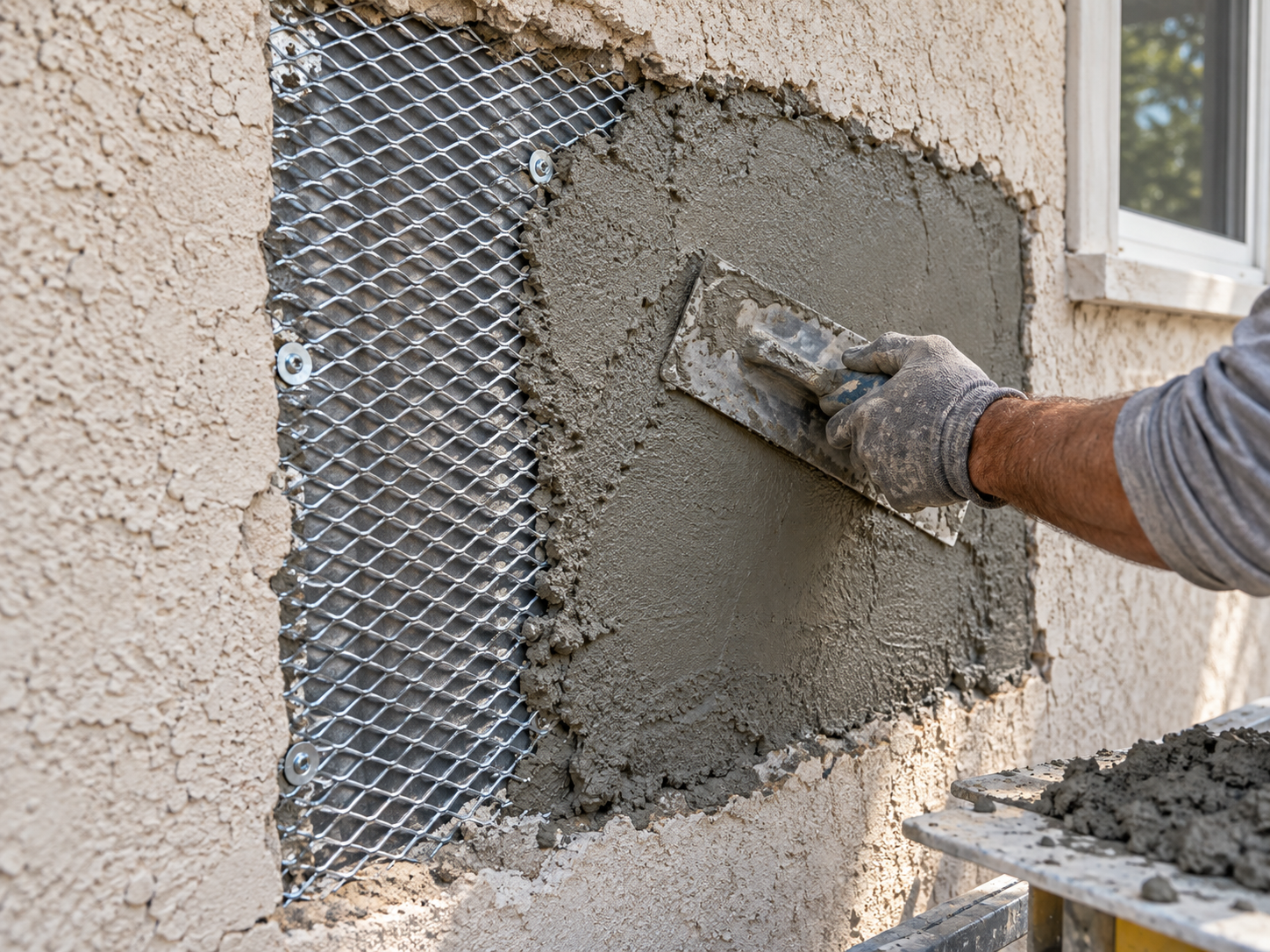
When it fails, water gets trapped against the OSB, leading to rapid, catastrophic rot.Localized Stucco Repair (When It Makes Sense)Localized stucco repair is the process of fixing isolated damage on a wall where the underlying drainage plane and structural substrate remain intact and healthy.We typically recommend targeted repairs for the following scenarios:Impact Damage: If a heavy branch strikes the house, or a ladder dents the facade, the localized crushed stucco can be chipped out, the metal lath repaired, and new stucco patched in to match the surrounding texture.Minor Settling Cracks: Hairline cracks (less than 1/16-inch wide) caused by normal building settlement or thermal expansion can often be repaired by routing out the crack and sealing it with a high-quality, UV-resistant elastomeric sealant.Isolated Flashing Defects: If a small piece of step flashing near a lower roof-line is damaged, we can often remove a small section of stucco, repair the flashing integration, and re-patch the wall without touching the rest of the facade.A localized repair addresses the surface and re-establishes the weather seal.
However, it is only viable if moisture testing proves that the OSB sheathing directly behind the damage is completely dry and structurally sound.Stucco Remediation (When Complete Removal is Necessary)Stucco remediation is a structural intervention. It involves tearing off the existing stucco, removing the water-damaged substrate (OSB, plywood, and framing studs), treating the wall cavity for mold, and completely rebuilding the exterior envelope.Remediation is mandatory when the failure is systemic, rather than isolated.
You cannot “repair” rotten wood by smearing fresh cement over it.Indicators for Full RemediationWidespread Drainage Plane Failures: If the original builder failed to install a weep screed, or buried the bottom of the stucco below the dirt grade, water has nowhere to exit the wall. It wicks upward into the framing. The entire wall must be removed to establish a functional drainage plane.Missing Window Pan Flashing: The majority of systemic stucco failures in Philadelphia originate at improperly flashed windows.
If windows were installed without proper sill pan flashing or head flashing, water has likely been pouring into the wall cavities for years. The stucco surrounding these windows must be remediated.Saturated Insulation and Structural Rot: If invasive probe testing reveals that the moisture content of the OSB sheathing exceeds 20%, or if the wood is soft and degraded, structural remediation is the only code-compliant path forward.Criteria for Choosing the Right ScopeHow do you know which path is required? You cannot diagnose hidden rot purely by looking at the surface of the stucco.
A wall can look perfectly pristine on the outside while the OSB behind it has the consistency of wet cardboard.Choosing the correct scope requires Invasive Moisture Testing (detailed in Article 47).
By drilling small 1/4-inch holes in strategic locations and inserting moisture probes directly into the wooden sheathing, technicians can map the exact moisture content of the wall.If the probes read normal moisture levels (typically below 15%) in all high-risk areas, cosmetic repairs and preventative maintenance (like elastomeric coatings) are appropriate.If the probes sink effortlessly into soft, rotted wood, or read elevated moisture levels across multiple elevations, full or partial remediation is required to save the home.The Remediation ProcessWhen Philadelphia Stucco Experts performs a remediation, we do more than just replace the wet wood.
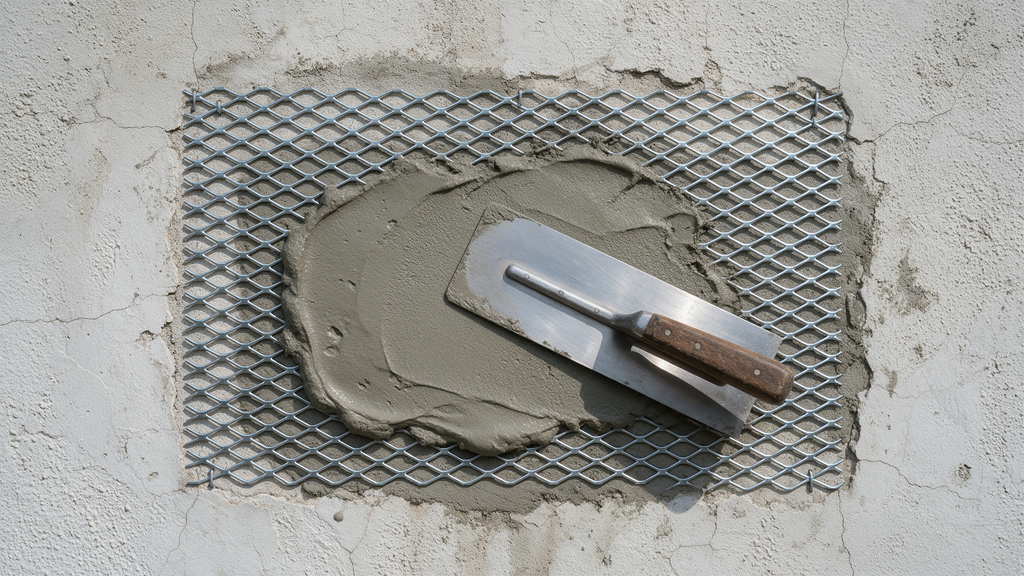
We upgrade the building envelope to prevent future failures. This includes:Installing a high-performance, self-adhering vapor-permeable WRB.Integrating an advanced drainage mat (a three-dimensional mesh that creates a physical air gap between the WRB and the stucco, guaranteeing immediate drainage).Installing robust PVC or stainless steel weep screeds exactly 2 inches above paved surfaces or 4 inches above soil, per local Philadelphia building codes.Applying three coats of traditional hard-coat stucco, expertly blended to match the remaining elevations of the home.
FAQs About Stucco Repair and RemediationCan I just paint over stucco cracks to seal them
?No. While specialized elastomeric coatings can bridge microscopic hairline cracks, applying standard exterior house paint over structural cracks will trap moisture inside the wall and accelerate the decay of the underlying wood.Will my homeowners insurance pay for stucco remediation?Standard homeowners insurance policies typically exclude damage caused by gradual water seepage, poor workmanship, or defective construction. Unless the stucco was suddenly damaged by a covered peril (like a fallen tree or a severe windstorm), remediation is usually an out-of-pocket expense for the homeowner.Does stucco remediation require a building permit in Philadelphia?Yes.
Removing and replacing exterior wall cladding and repairing structural sheathing requires a standard Building Permit from the Philadelphia Department of Licenses and Inspections (L&I). EZ permits are generally not applicable for structural remediation.Don’t let a minor flashing defect turn into a catastrophic structural failure. Contact Philadelphia Stucco Experts for a comprehensive, honest evaluation of your home’s exterior.