
Repairing Impact Damage on Ground-Level Stucco Walls is a practical planning question for property owners in Philadelphia. The right approach depends on the existing conditions, the way the space or system is used, and how the proposed work interacts with surrounding materials. Understanding those details early helps prevent a cosmetic decision from creating a larger construction, maintenance, or code problem later. That review should happen before demolition, fabrication, or installation begins.
Ground Level Areas Receive Different Abuse
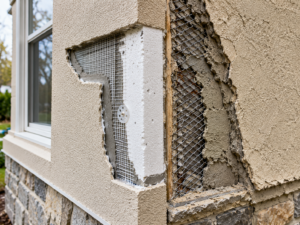
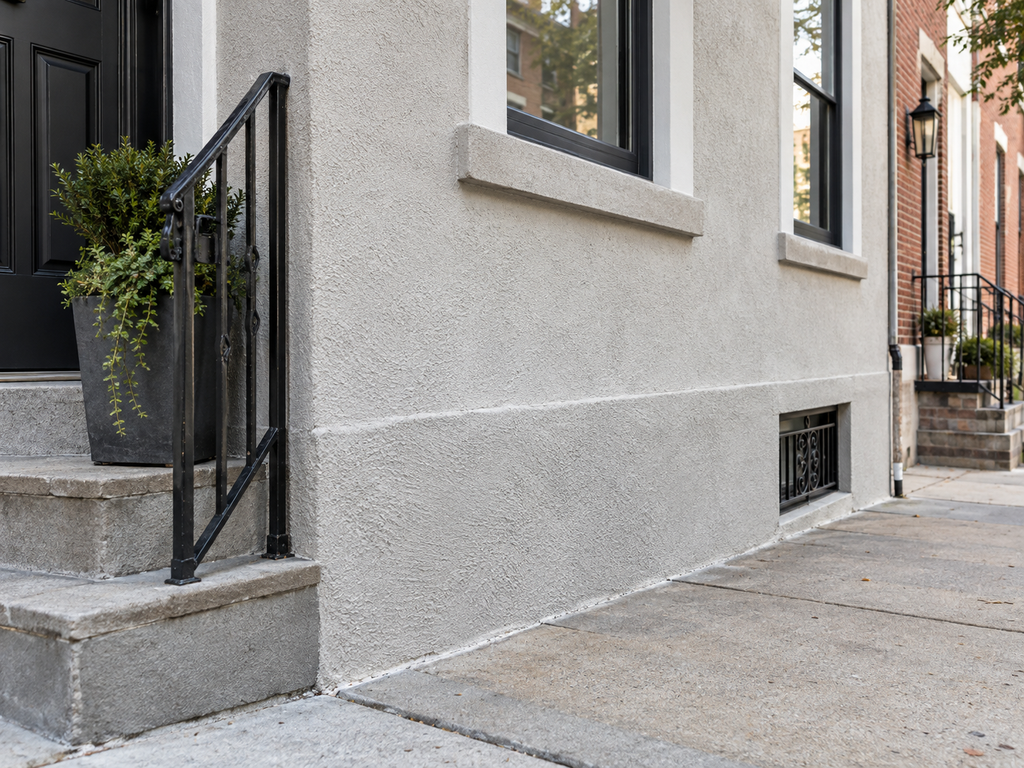
Stucco near walks, driveways, patios, and landscaping can be struck by equipment, bicycles, furniture, vehicles, or tools. EIFS may crush beneath the finish, while hard-coat stucco may crack or break away. A small surface mark can conceal damaged reinforcement or substrate that extends beyond the obvious edge.
Inspect for Moisture Paths and Soft Material
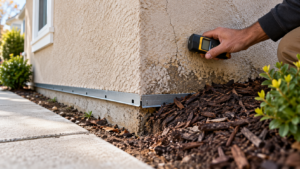
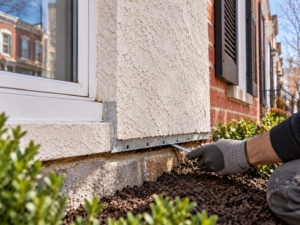
Probe only as appropriate to determine whether the area is stable, damp, hollow, or soft. Check nearby grade, splash-back, downspouts, sealant joints, and termination height. Repeated wetting at the base can weaken the assembly and turn a simple impact repair into a broader moisture-related problem.
Restore the Full Reinforced Assembly
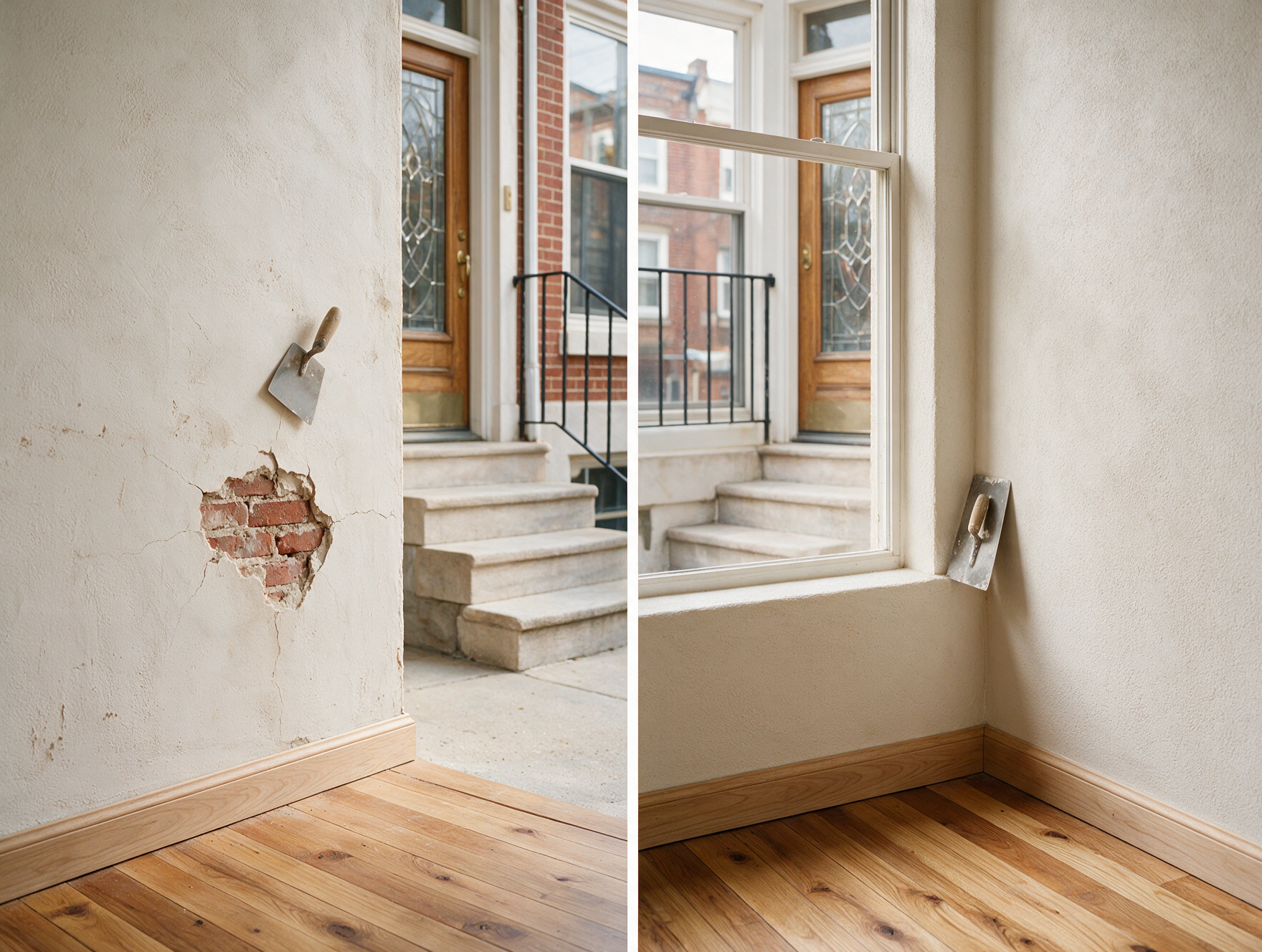
The repair should remove loose material to sound boundaries and rebuild compatible layers. EIFS patches need suitable insulation, mesh overlap, base coat, and finish; hard-coat patches require compatible lath and coat thickness. Feathering only finish over crushed material may conceal the dent briefly without restoring strength.
Protect the Vulnerable Area After Repair
Landscaping clearance, wheel stops, downspout extensions, equipment routes, or protective details may reduce repeat damage. The solution should not trap water or create an incompatible hard edge against the stucco. Where impact exposure is unavoidable, a more durable base-zone detail may be appropriate during a larger renovation.
Questions to Resolve Before Work Begins
Before authorizing a repair, document when the symptom appears, what changed before it started, and which areas or fixtures are affected. Ask the contractor to separate observation from diagnosis, explain what testing or selective opening is needed, and identify the condition that would change the proposed solution. The written scope should state what is included, how adjacent finishes will be protected, how concealed damage will be handled, and what will be tested before the repair is considered complete. Request photographs of concealed conditions and completed work where access will later be closed. Keep model numbers, material information, test results, permits, and care instructions with the property records so a future service provider can understand what was repaired and how the finished system is intended to perform.
Planning the Next Step
Property owners should compare the visible condition with the broader assembly, confirm any permit or manufacturer requirements that apply, and document the proposed scope before materials are ordered. Guidance from EIFS Industry Members Association can help frame the technical questions, while an on-site evaluation determines what is appropriate for the individual property. Contact Philadelphia Stucco Experts to discuss the visible condition, the wall assembly, and an appropriate approach to stucco or exterior wall repair.
Learn more about stucco installation and repair.