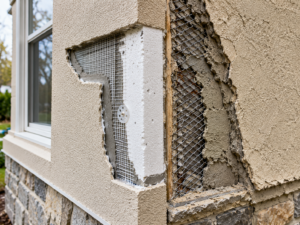


A crack that returns along the same straight line is telling you the wall moves there. Filling the surface with a rigid patch may hide the line temporarily, but stress often concentrates in the same location again.
Design From Function Backward
Port Richmond and Fishtown facades may combine masonry, wood framing, sheathing, additions, old window openings, and patched stucco. Vertical cracks frequently align with those hidden substrate changes.
What Is Different About These Local Homes
Map the crack to the building behind it. Review width, length, nearby openings, whether the line changes seasonally, and whether moisture or movement is affecting the substrate.
Resolve These Details Before Ordering Materials
In some locations, a properly designed flexible joint or control strategy can be more durable than repeatedly forcing rigid stucco across a line that continues to move. The correct detail depends on the actual wall system.
The Takeaway for Homeowners
Once the movement strategy is clear, damaged edges can be cut back to sound material and rebuilt with compatible layers and finish. Texture and color blending should follow the technical repair.
Frequently Asked Questions
Why does my stucco crack return every year?
Seasonal movement, substrate transitions, unresolved moisture, or a repair material that cannot accommodate movement can all contribute.
Should every recurring crack become a control joint?
No. Joint placement depends on wall construction, crack cause, and design; some cracks are better repaired conventionally.
Can flexible coating stop movement cracks?
It may bridge limited surface movement, but it does not correct significant substrate or structural movement.
Plan the Next Step
Philadelphia Stucco Experts can evaluate recurring crack patterns and determine whether the wall needs a patch, flexible joint, moisture correction, or a larger repair.
Helpful source: City of Philadelphia – Get a Building Permit