

When property owners in West Philadelphia, Roxborough, Manayunk, or Center City observe cracking, staining, or loose plaster on exterior walls, determining the correct restoration strategy is essential. A common challenge in exterior building maintenance is understanding whether a wall assembly requires localized stucco repair or full stucco remediation.
Mishandling this decision can lead to unnecessary expenses or repeated wall failure. Applying superficial patches to a system with internal structural rot only delays inevitable wall replacement, while fully stripping a sound plaster wall with simple surface hairline cracks incurs unnecessary disruption. Evaluating project scope based on objective structural criteria ensures long-term wall envelope performance.
Defining the Scope: Stucco Repair vs. Stucco Remediation
The choice between repair and remediation hinges entirely on the condition of the hidden weather barrier and structural timber sheathing beneath the visible render.
| Scope Factor | Localized Stucco Repair | Full Stucco Remediation |
| Primary Objective | Seal surface fractures, repair isolated impacts, address localized aesthetic defects. | Strip entire wall system, replace rotted framing, install modern dual-barrier drainage system. |
| Target Depth | Outer finish and scratch/brown plaster coats. | Entire wall assembly down to bare wood or masonry framing studs. |
| Substrate Condition | Intact, dry (moisture content below 18%), structurally sound. | Saturated, soft, decayed, or infested timber sheathing (moisture above 19%). |
| System Modification | Preserves existing drainage and flashing configurations. | Redesigns weather barrier, flashings, weep screeds, and trim transitions entirely. |
| Typical Application | Minor shrinkage cracks, impact chips, isolated surface patching. | Systemic water intrusion, extensive lath corrosion, rotted rim joists, failed EIFS. |
For properties with localized surface impacts or thin hairline fractures where the underlying substrate remains completely dry, choosing reliable stucco repair options offers a cost-effective, targeted solution.


Key Factors That Dictate Project Complexity and Scope
Several technical factors determine whether a property’s exterior requires targeted repairs or complete cladding replacement:
1. Extent of Substrate Moisture Saturation
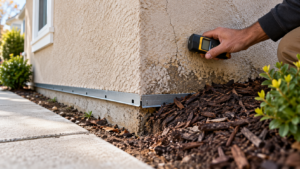
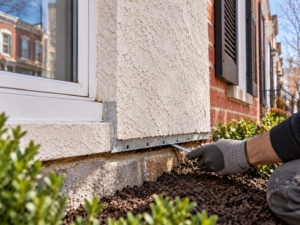
During pre-project planning, probe testing determines moisture distribution. If elevated moisture readings are confined to a single two-foot area around an unsealed utility wire, a localized cut-out repair may suffice. However, if elevated readings appear across multiple wall sections, moisture has migrated behind the primary weather barrier, making full remediation necessary.
2. Condition of Lath Mesh and Fasteners
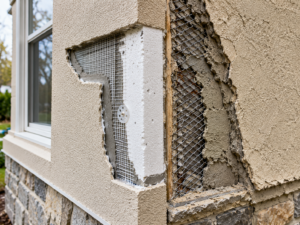
Traditional hard-coat stucco relies on galvanized wire lath secured to framing studs. Prolonged water exposure causes steel lath to rust, expand, and snap. Once the lath loses structural hold, the plaster matrix delaminates from the home framing, requiring complete section removal.
+—————————————————————–+
| STUCCO FAILURE DIAGNOSTIC MATRIX |
| |
| Hairline Fractures + Dry Substrate –> LOCALIZED REPAIR |
| |
| Delaminated Render + Wet Sheathing –> FULL REMEDIATION |
+—————————————————————–+
3. Compliance with Local Building Codes
The Pennsylvania Department of Labor & Industry: Building Codes → https://www.dli.pa.gov enforces Uniform Construction Code standards governing exterior wall envelopes. Major exterior alterations involving significant wall area removal require updated drainage assemblies, weep screeds, and window pan flashings compliant with modern codes.
4. Property Accessibility and Urban Density
Planning wall work in dense Philadelphia neighborhoods involves spatial logistics. Manayunk rowhomes on steep inclines or West Philadelphia properties with narrow side alleys require specialized scaffolding, sidewalk permits, and safety netting, influencing overall project scheduling.
Planning Your Exterior Wall Project
Effective planning prevents scope creep during exterior wall restoration. Property owners should follow a structured evaluation sequence:
- Independent Diagnostic Assessment: Perform moisture probe testing and thermal imaging prior to selecting a scope of work.
- Reviewing Permitting and Zoning Requirements: Coordinate with local building authorities regarding scaffolding placements, pedestrian rights-of-way, and historical district guidelines where applicable.
- Evaluating Material Alternatives: If full remediation is required, select replacement claddings such as modern drained hard-coat stucco, fiber cement siding, or continuous insulation systems engineered for Mid-Atlantic freeze-thaw cycles.


Frequently Asked Questions
Can hairline cracks in stucco lead to full structural remediation if left untreated?
Yes. Hairline cracks wider than 1/16 inch allow wind-driven rain to enter behind the render. Over time, freeze-thaw cycles expand these cracks, allowing water to saturate wood sheathing and turning a repairable surface issue into a remediation project.
How can I tell if my stucco cracks are structural or superficial?
Superficial cracks are typically narrow, web-like, and confined to the top plaster coat. Structural cracks are usually wider, run diagonally from window or door corners, or produce bulging plaster along floor lines.
Is scaffolding always required for stucco remediation on Philadelphia rowhomes?
Multi-story rowhomes and tight urban properties require OSHA-compliant scaffolding or aerial platforms to ensure safety and allow proper installation of multi-layer drainage barriers.
Does localized stucco patch repair visually match existing walls?
Experienced technicians texture and custom-tint patch materials to closely blend with existing surfaces. However, because older walls experience weathering and sun exposure, slight tonal variations may occur until the entire facade is refinished.
Selecting the Right Strategy for Your Property
Choosing between stucco repair and full remediation requires accurate diagnostics rather than guesswork. Identifying surface issues early helps avoid systemic wall failures across West Philadelphia, Manayunk, and Center City homes. Contact Philadelphia Stucco Experts today to arrange a professional assessment of your stucco facade.