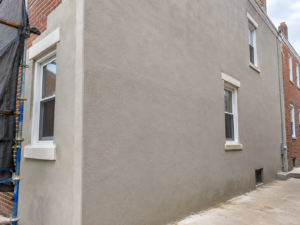

Exterior cladding failures on residential and commercial structures across Northern Liberties, Fishtown, and South Philadelphia often stem from systemic moisture intrusion beneath the surface plaster. When water penetrates behind a hard-coat stucco wall and becomes trapped against wood framing, structural framing damage, rot, and mold growth inevitably follow. Addressing these failures requires a clear distinction between superficial patching and systematic, permanent correction.
Stucco remediation represents a complete, engineering-focused resolution to exterior wall failure. Unlike surface repairs that mask symptoms, remediation targets the root cause of water intrusion by removing the defective system down to the framing and rebuilding the entire exterior wall envelope.

Understanding the Scope of Professional Stucco Remediation
True stucco remediation involves full systemic replacement rather than localized cosmetic touch-ups. When moisture compromises the structural sheathing beneath exterior plaster, reapplying new plaster over decayed wood only accelerates internal structural decay.
+——————————————————————-+
| COMPLETE STUCCO REMEDIATION PROCESS |
| |
| [1. Cladding Removal] –> [2. Structural Framing Repair] |
| | |
| [4. Exterior Cladding] <– [3. Dual-Barrier WRB Installation] |
+——————————————————————-+
A complete remediation project encompasses several continuous stages:
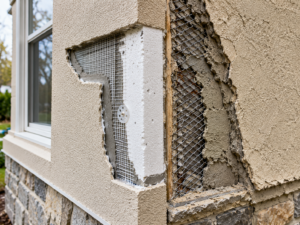
- System Stripping: Demolition and removal of existing stucco, wire lath, compromised building paper, and flashings down to the bare wood framing.
- Substrate Evaluation & Timber Repair: Removing decayed plywood or oriented strand board (OSB) sheathing and replacing damaged wall studs or header beams.
- Advanced Drainage Envelope Installation: Applying modern weather-resistant barriers (WRB), integrated drainage mats, and heavy-duty self-adhered flashing membranes around windows and doors.
- New Cladding Application: Installing modern, fully integrated exterior systems such as engineered fiber cement, modern hard-coat stucco with explicit weep screeds, or brick veneer.
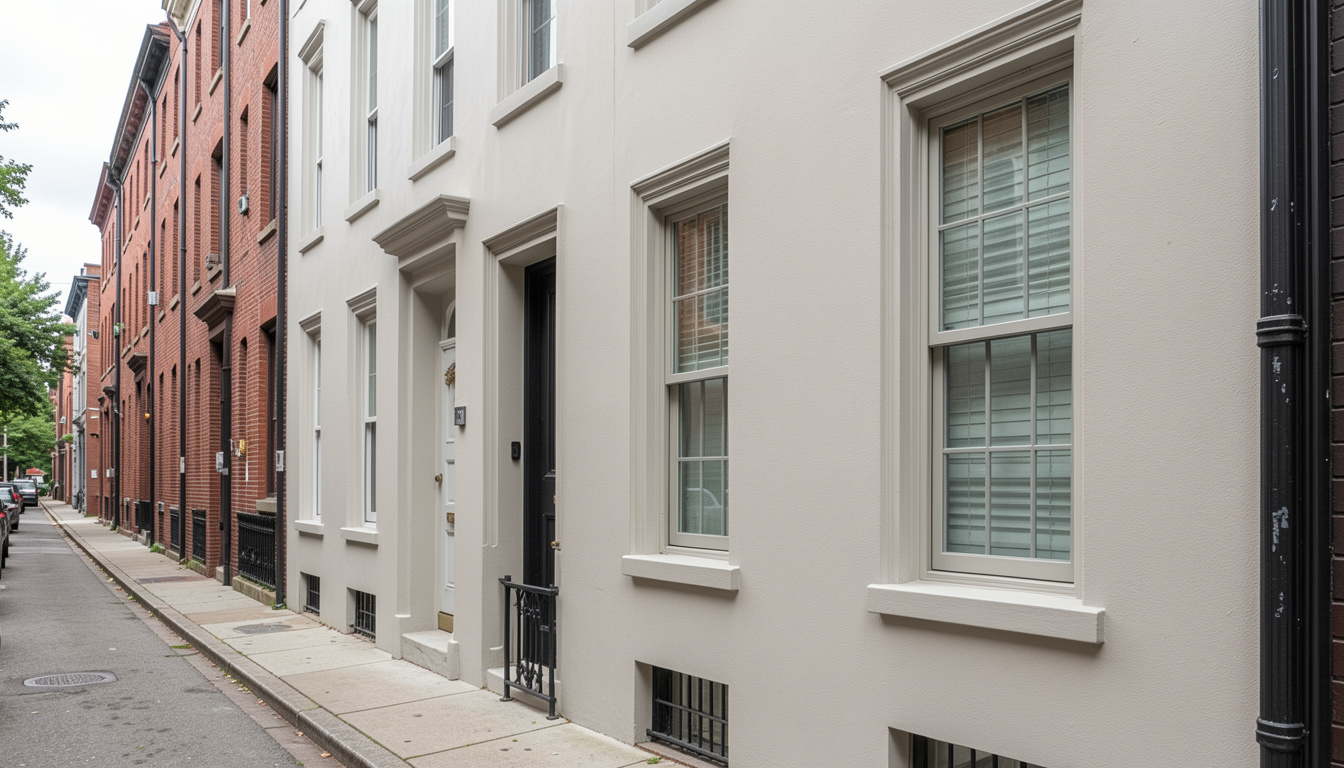
Properties in dense urban corridors like Center City and South Philadelphia frequently exhibit concealed moisture damage due to tight property lines and historic framing materials. Identifying the scope early prevents structural compromise. Property owners seeking long-term structural integrity rely on
Primary Indicators That Remediation Is Required
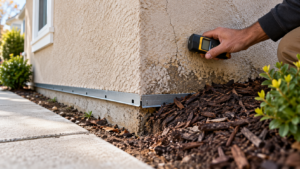
While microscopic moisture meters provide definitive proof, physical signs on exterior and interior surfaces indicate advanced cladding failure:
- Staining and “Stucco Tears”: Dark vertical streaks descending from window corners, trim intersections, or floor-line transitions indicate water washing internal rust and debris through the plaster.
- Soft Spots or Delamination: Plaster that bulges forward or yields under direct pressure reveals that the underlying wood substrate has lost structural density.
- Efflorescence and Spalling: White, powdery mineral deposits on the exterior surface show that water is migrating through the wall matrix and dissolving salt deposits.
- Interior Water Intrusion: Damp drywall, bubbling interior paint, or persistent musty odors along exterior-facing walls point toward deep framing saturation.
The Role of Water-Resistive Barriers and Flashings
The primary reason traditional stucco fails in Mid-Atlantic climates is the absence or misapplication of flashing systems and drainage cavities. Hard-coat plaster is naturally porous; it absorbs rainwater. Without a functional secondary drainage plane, water remains trapped between the plaster render and the wood structure.
Modern remediation installs heavy-duty, dual-layer weather-resistive barriers along with integrated drainage spacers. These components create an air space behind the cladding, allowing absorbed moisture to drain freely to the base of the wall via perforated weep screeds. Window kick-out flashings are also installed where rooflines intersect exterior walls, directing concentrated runoff into gutters rather than behind the stucco cladding.
Frequently Asked Questions
What is the primary difference between stucco repair and stucco remediation?
Stucco repair involves fixing localized surface cracks or cosmetic issues on walls where the underlying moisture barrier remains intact. Stucco remediation involves removing all exterior cladding to repair concealed structural damage and installing a completely redesigned, waterproof wall assembly.
How do professionals determine if my home requires full remediation?
Technicians conduct non-destructive moisture testing, thermal imaging, and targeted core-drilling probes behind the plaster to measure timber sheathing moisture content. Readings exceeding safe thresholds indicate hidden rot requiring remediation.
Can new stucco be applied over my existing failed stucco?
No. Applying new materials over failed stucco traps existing moisture inside the structural wall envelope, accelerating timber rot and risking mold growth within interior living spaces.
How long does a full stucco remediation project take?
Project duration depends on property size and structural repair needs, but a typical residential remediation on a Philadelphia rowhome or single-family dwelling generally spans two to three weeks from initial scaffolding to final trim work.
Long-Term Property Protection
Ignoring ongoing stucco failure compromises structural stability and diminishes property value across Philadelphia neighborhoods. Investing in full wall remediation replaces compromised assemblies with modern, fully drained wall systems built to withstand heavy Mid-Atlantic weather. Contact Philadelphia Stucco Experts today to schedule a comprehensive evaluation of your property’s exterior wall envelope in South Philadelphia, Fishtown, or Northern Liberties.