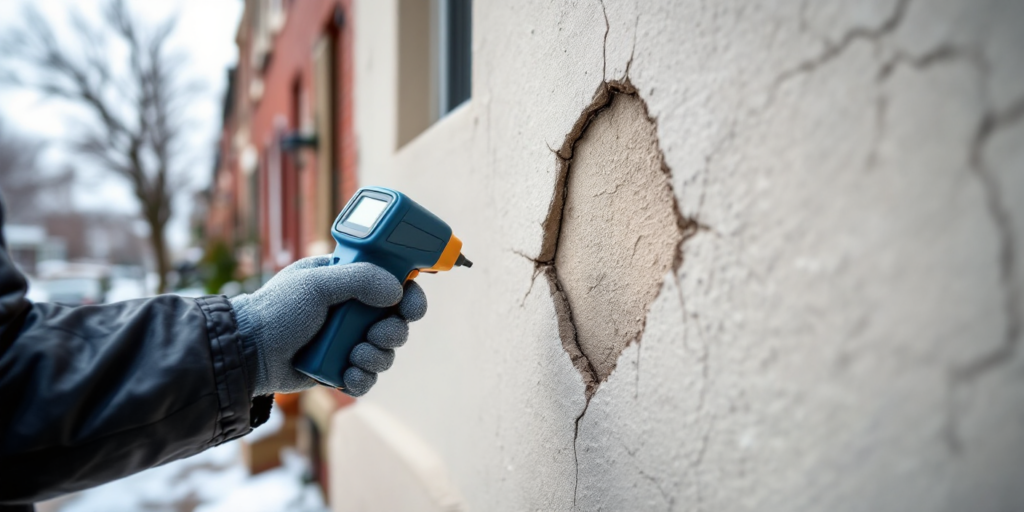
Stucco damage is rarely just cosmetic—especially in Philadelphia rowhomes where parapet walls, window edges, and sealant transitions make or break the envelope. In winter, cracks widen, sealant lines separate, and moisture can migrate behind the stucco. That can lead to bubbling paint inside, staining, or hidden sheathing damage.
In neighborhoods like Port Richmond, Kensington, Fishtown, and West Philly, we commonly see failures where the wall meets:
- windows and lintels
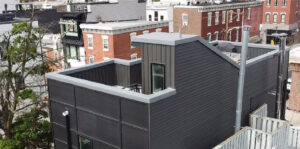
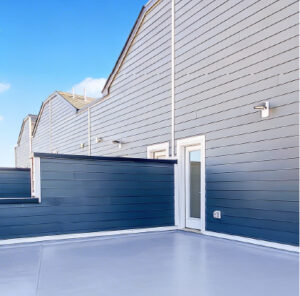
- roof edges and parapets
- material transitions (brick-to-stucco, stucco-to-siding)
The right way to diagnose stucco issues
1) Identify water pathways
Cracks matter, but pathways matter more. Water usually enters at transitions, penetrations, and flashing points.
2) Check sealant and edge detailing
If sealants fail, moisture follows. A “patch-only” exterior approach is why problems recur.
3) Inspect for interior symptoms
Stains, odors, peeling paint, and soft drywall can signal hidden moisture.
Why this topic converts “near me” searches
People searching “stucco repair near me” want:
- confidence you understand moisture
- clarity on what you inspect
- a plan that prevents repeat damage
Mini-FAQ
Can stucco cracks cause mold?
Moisture intrusion can create conditions for mold. The EPA emphasizes moisture control as prevention. (epa.gov)
- Home: https://philadelphiastuccoexperts.com/
- Stucco repair service page: https://philadelphiastuccoexperts.com/stucco-repair/
- EPA mold guidance (moisture control) (epa.gov)