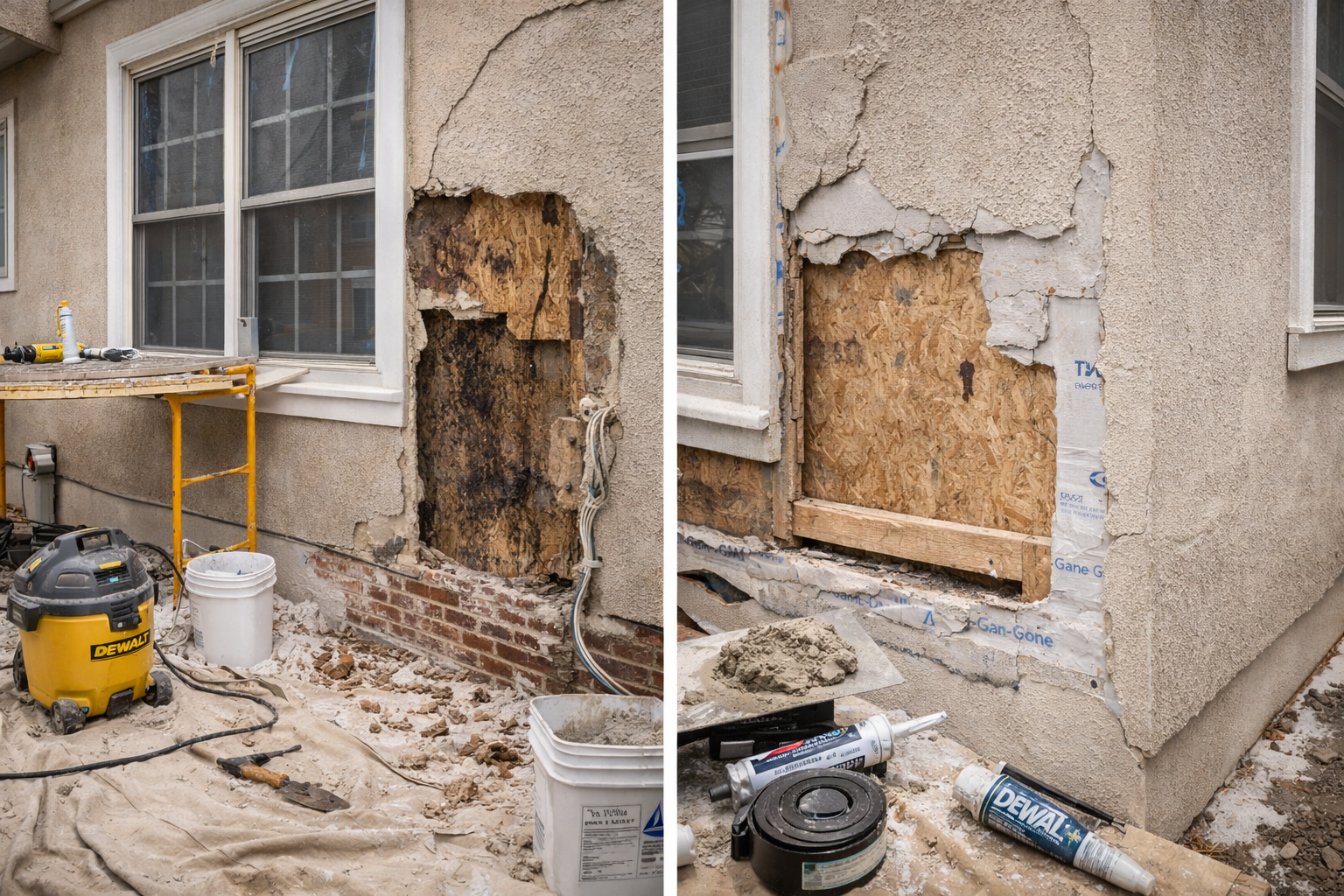
Stucco issues are often misunderstood. A small crack may look cosmetic, but in Philadelphia winter conditions, it can become a pathway for moisture—especially around windows, parapets, and roofline transitions. In 2026, homeowners in West Philly, South Philly, and Center City are treating stucco as part of the building envelope: water management first, appearance second.
Common stucco warning signs
- Hairline cracks that expand seasonally
- Bulging or soft spots (possible delamination)
- Staining around openings
- Failed caulk joints and poor flashing details
- Repeated patching in the same areas
Repair vs. remediation: how it’s decided
A professional evaluation looks at where water might be trapped. Sometimes a targeted repair + waterproofing details is enough. Other times, repeated failure suggests moisture is behind the system and remediation becomes the safer long-term choice.
What quality stucco work includes
- Substrate evaluation (what’s behind the finish)
- Correct flashing transitions
- Texture matching + proper coatings
- Waterproofing focus at joints, edges, penetrations
Quick FAQs
Can stucco fail without visible damage? Yes—moisture can travel behind the system.
Is more caulk a solution? Not if flashing or drainage details are wrong.
When should I inspect? As soon as cracks or staining appear—before spring rain.