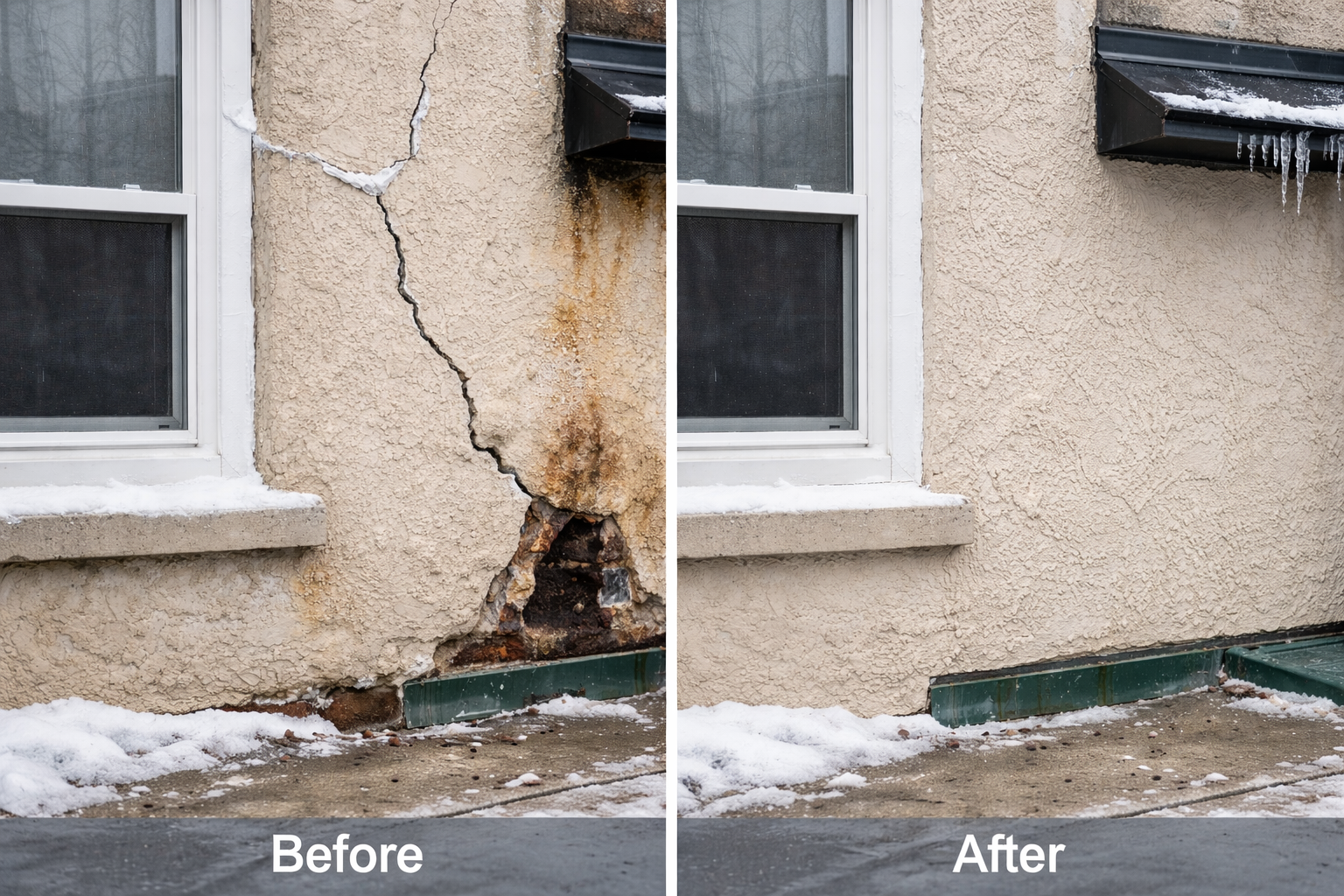
Stucco is common across Philadelphia neighborhoods like South Philly, Fairmount, Manayunk, and Germantown—but not all stucco cracks are equal. Some are normal hairline movement. Others are warning signs that moisture is getting behind the surface and damaging the wall assembly.
The 3 most common stucco crack types
- Hairline surface cracks: often cosmetic, usually repairable with proper patching and coating
- Step cracks near corners/openings: may indicate movement or stress around windows/doors
- Wide cracks with staining: higher risk—can signal water intrusion and trapped moisture
If you see cracks paired with bubbling paint inside, musty smells, or soft areas, treat it as more than cosmetic.
Why moisture behind stucco is a big deal
When water enters behind stucco, it can affect:
- Sheathing and framing (rot)
- Interior drywall (staining, swelling)
- Mold growth in wall cavities
- Brick tie issues on older assemblies
A proper inspection often includes checking flashing, transitions, penetrations, and sealant failures—not just patching the visible crack.
Proper stucco repair is a system, not a patch
Long-lasting repairs typically include:
- Removing compromised areas (if needed)
- Repairing substrate and flashing transitions
- Rebuilding with compatible materials
- Finishing with a breathable coating (when appropriate)
- Sealing joints where stucco meets windows/doors correctly
Trusted external resource (mold + moisture basics)
EPA guidance on moisture and mold is a strong reference:
https://www.epa.gov/mold
CTA
If you’re seeing stucco cracking, staining, or recurring interior moisture, Philadelphia Stucco Experts LLC can evaluate the cause and recommend the right repair strategy—so the issue doesn’t return next season.