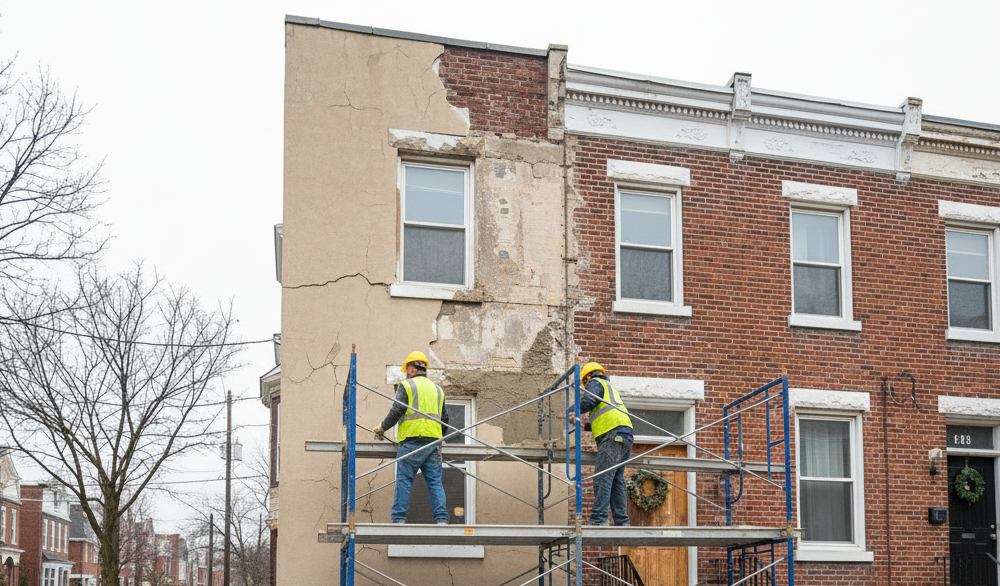
In Philadelphia, stucco issues often look harmless at first. A hairline crack near a window. A tiny bubble on a wall. A seam that looks “a little tired.” However, winter weather changes everything. As temperatures swing and materials expand/contract, cracks widen, sealants separate, and moisture gets behind the finish. That’s why searches for stucco repair Philadelphia spike in colder months—because winter makes problems visible.
Why winter is the danger zone for stucco
Winter creates a cycle that accelerates deterioration:
- Freeze-thaw expansion turns small cracks into larger openings
- Wind-driven rain pushes water behind weak joints
- Trapped moisture can’t dry efficiently, especially on shaded walls
- Water moves behind the surface and causes bubbling, staining, and delamination
Therefore, what started as cosmetic damage can become a water management problem that affects sheathing, framing, and interior plaster/drywall.
The most common failure points we see in Philly
Stucco isn’t just a surface—it’s a system. Most failures happen at transitions, such as:
- Window and door perimeters (failed sealant lines)
- Parapets and roofline transitions
- Deck ledger connections and exterior penetrations
- Base of walls where moisture wicks upward
- Inconsistent flashing at corners or bump-outs
If flashing and sealant details were skipped (or installed incorrectly), water will find a path—especially on older rowhomes.
“Patch” vs. “proper repair”: what’s the difference?
A cheap patch might hide the crack temporarily, but it usually fails because it doesn’t address the cause. A proper repair includes:
- Moisture-aware inspection (where is water entering, and where is it traveling?)
- Material compatibility (acrylic finishes, cementitious stucco, EIFS—each requires correct products)
- Crack treatment and reinforcement (not just surface smear)
- Sealant and flashing corrections at transitions
- Waterproofing strategy so the wall can shed water correctly
As a result, the repair lasts longer and reduces the chance of recurring staining or bubbling.
Signs your stucco needs more than a quick fix
Call for inspection if you notice:
- Bubbling or bulging areas
- Staining streaks below windows or parapets
- Soft spots or hollow sound when tapped
- Repeated cracking in the same area
- Interior wall stains aligned with exterior cracks
These symptoms can indicate moisture behind the system. If so, the sooner you address it, the less likely it becomes a major remediation project.
Local Philly context: rowhomes + tight transitions
Philadelphia rowhomes often share party walls and have tight setbacks, which means:
- Less drying time on shaded elevations
- More reliance on correct flashing and sealant
- Higher risk when roof drainage or gutters are poor
So, stucco work should be coordinated with roofing and exterior drainage. If water is hitting the wall constantly, even “good stucco” will struggle.
If you see cracks, staining, or bubbling—especially near windows—schedule a moisture-aware assessment with Philadelphia Stucco Experts and get a repair plan that prevents repeat damage.